


Mid 18th Century Writing Table
A mid 18th century writing table brings practical Georgian and French craftsmanship into a room, offering genuine period utility.
Mid 18th Century Writing Table
A mid 18th century writing table encompasses versatile forms built during the Georgian and Louis XV periods for domestic correspondence and daily administration. Buyers searching this phrase meet a variety of related desk and table formats designed for functional use.
The selection on this page centres on compact forms like lowboys, kneehole desks, and side tables rather than massive library desks. These pieces reflect 18th century proportions suited for smaller rooms while maintaining dedicated drawer space.
English and French origins dominate the available pieces, ranging from straightforward provincial oak to refined mahogany and kingwood veneers. Each specimen demonstrates the specific regional furniture design priorities of the 1750 era.
How they were made
Cabinet makers constructed these tables using dense timbers such as mahogany, oak, and walnut, often applying decorative veneers like kingwood and tulipwood on continental pieces. Solid secondary woods like pine appear in drawer linings and internal framing.
Metalwork played a structural and decorative role, incorporating brass handles, escutcheons, and occasional gilt bronze mounts. Joinery relied on traditional hand-cut methods, resulting in sturdy drawer construction and stable carcases designed to withstand daily use.
Listings feature mahogany, oak, and walnut alongside exotic veneers like kingwood and tulipwood, spanning English and French regional workshops.
What varies in quality
The choice of primary timber and veneer selection dictates much of the visual hierarchy among these tables. Figured mahogany and carefully matched exotic veneers represent a higher tier of workshop output compared to standard domestic oak.
Refinement of hardware and secondary details separates utilitarian pieces from high-style examples. Integrated fittings, such as fitted drawers with multiple compartments or secure kneehole enclosures, indicate greater original investment and design complexity.
BVRB
The Mid 18th Century Writing Table Glossary
- Lowboy
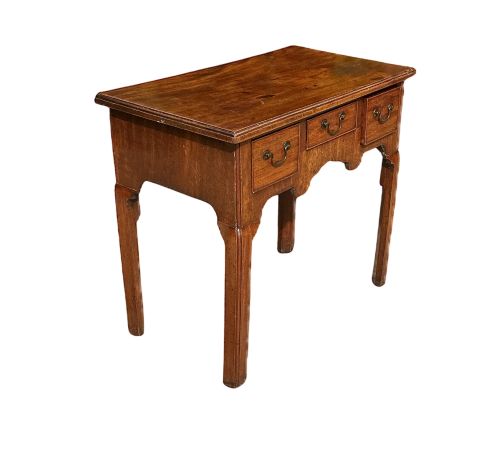
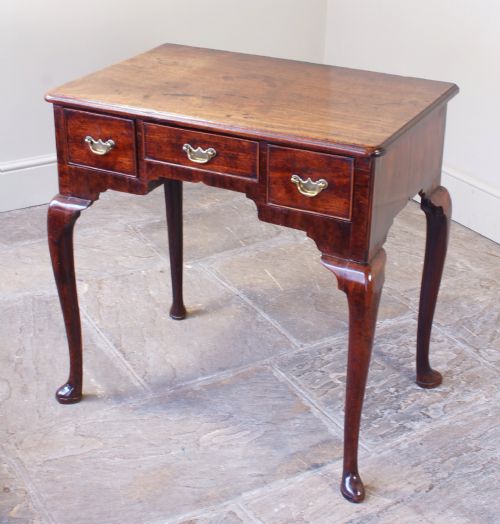
- A small dressing table or side table featuring one or more rows of drawers beneath a flat top. They typically stand on slender legs and date frequently from the mid 18th century.
- Kneehole desk
- A compact desk featuring a central recessed space for the legs, flanked by pedestals of small drawers. This form provides substantial storage while maintaining a modest footprint.
- Secretaire en pente
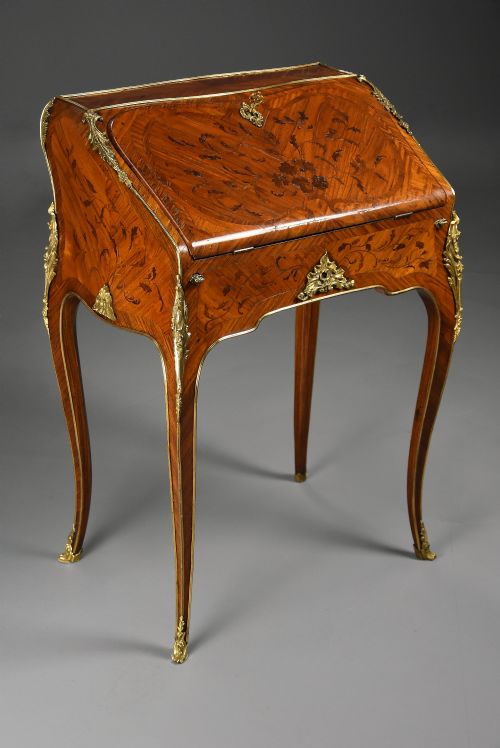
- A French slope-front desk designed with a hinged writing flap that opens to reveal internal compartments. These pieces often employ sophisticated veneering techniques.
- Bracket feet
- A type of furniture foot formed by two mitred pieces of wood shaped in an L-profile. They support corner pillars on chests and desks of the Georgian period.
- Escutcheon
- A protective plate surrounding a keyhole, usually cast in brass. They prevent the wood around the lock from splitting during daily use.
Mid 18th Century Writing Table: Frequently Asked Questions
How were mid 18th century writing tables used?
These tables served primarily for personal correspondence, reading, and keeping household accounts before the era of fitted office furniture. Owners utilised the surface for writing letters with quill and ink, storing paper and sealing wax in the fitted drawers.
In larger houses, smaller desks were kept in private chambers or dressing rooms rather than formal libraries. Their portability allowed them to be positioned near windows to catch natural daylight.
How do I tell English and French styles apart?
English pieces from this period, such as George II lowboys and kneehole desks, typically favour clean rectangular lines, straight or cabriole legs, and solid mahogany or oak construction. They emphasise structural restraint and practical joinery.
French examples, such as Louis XV petite secretaires, embrace serpentine shapes, asymmetric curves, and decorative parquetry veneers like kingwood and tulipwood. Gilt bronze mounts often accent the exterior contours.
Where should I place one at home?
A mid 18th century writing table works effectively as a hall table, an occasional desk in a study, or a console surface in a living room. Their modest proportions allow them to fit into alcoves or behind sofas without dominating the space.
Keep these tables away from direct heat sources and strong sunlight to protect historic wood finishes and delicate veneers. Maintaining stable indoor humidity prevents timber movement.
What is the difference between a lowboy and a side table?
A lowboy is specifically a low table equipped with one or more tiers of drawers, historically used as a dressing table or a compact writing surface. They usually feature shaped aprons and elegant cabriole or straight legs.
A side table may simply provide a flat surface with or without drawers, designed to stand against a wall in a hall or parlour. Many lowboys function as side tables today due to their versatile rectangular proportions.