
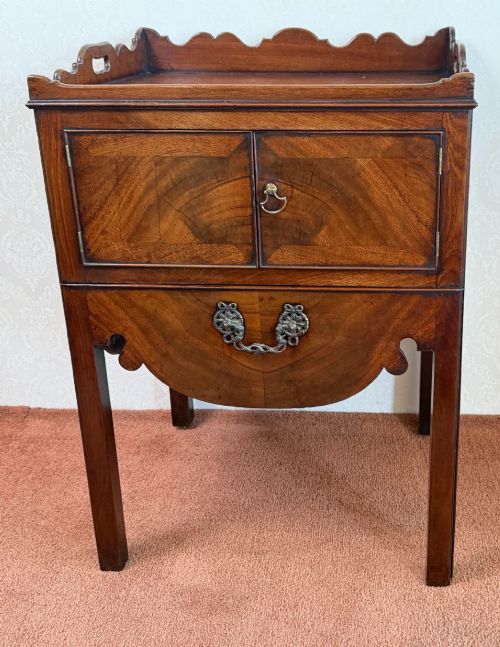


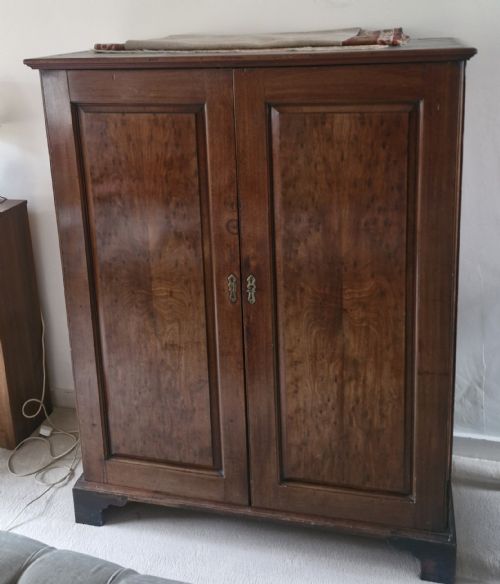


Mid 18th Century Cupboard
A mid 18th century cupboard delivers practical storage through solid eighteenth-century craftsmanship, offering the warm tones of period timber and time-tested joinery.
Mid 18th Century Cupboard
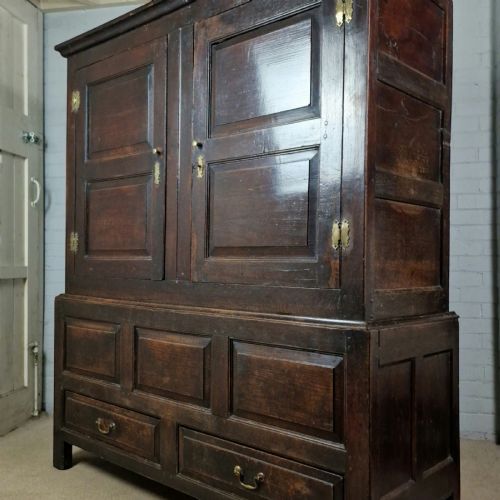
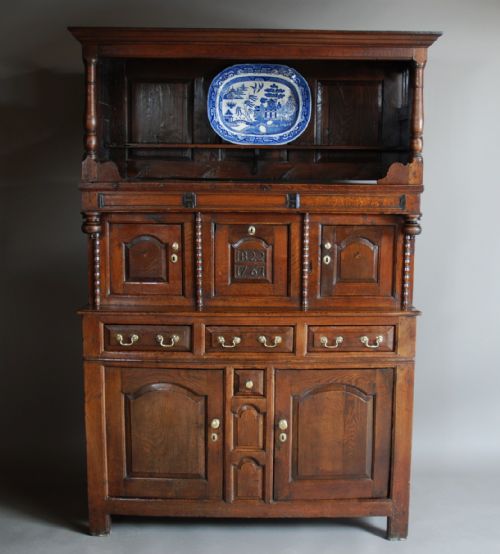
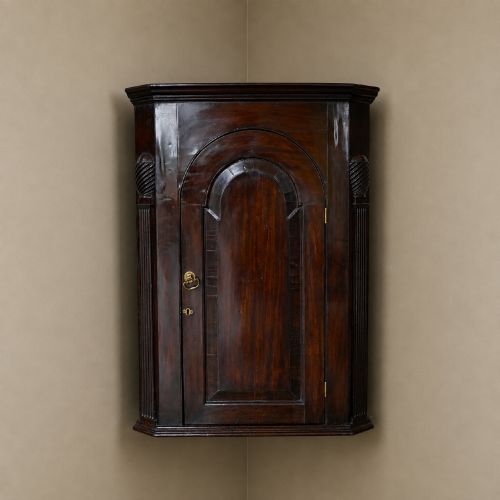
A mid 18th century cupboard covers a range of domestic timber storage forms, from hanging corner cabinets to larger linen presses and housekeepers cupboards, rooted in Georgian and Georgian Country design. Buyers searching for a mid 18th century cupboard most frequently encounter oak and mahogany examples, reflecting the primary woods utilised during the period.
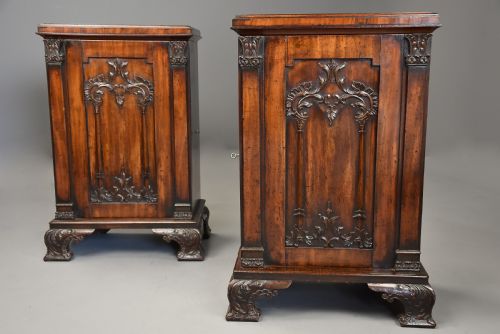
The selection includes specialised regional pieces such as Welsh oak cwpwrdd tridarn and spice cupboards alongside standard wall-mounted corner cabinets and pedestal cabinets. These items served essential storage functions in Georgian homes, housing provisions, linens, or household goods.
The survival of these pieces ranges from compact bedside tables to tall press cupboards, demonstrating the diverse scales produced in the mid eighteenth century. Oak and mahogany dominate the offerings, occasionally accompanied by burr oak, pine, walnut, and brass hardware.
Materials and construction
Makers constructed these cupboards primarily using solid oak and mahogany, relying on the natural grain and strength of the timber for both structural integrity and visual depth. Regional pieces frequently utilise native oak, sometimes enhanced by burr oak sections, while finer urban furniture employs mahogany.
Joinery methods of the period involved traditional panel construction, dovetailing, and mortise and tenon joints designed to accommodate wood movement over centuries. Iron and brass hinges, locks, and handles secure doors and drawers, completing the functional assembly of each cabinet.
Spice cupboards often feature tiny internal drawers behind a single locked door, designed to keep precious imported seasonings safe from sticky fingers.
Quality variations
The refinement of the timber and the crispness of any carved detail separate standard vernacular items from exceptional metropolitan pieces such as Chippendale pedestal cabinets. Superior examples exhibit rich surface patination and carefully selected grain patterns on primary display surfaces.
Proportion and the integrity of original construction, including period brassware and timber backs, distinguish pieces that retain their original character. Finer cabinets demonstrate superior spatial balance and more sophisticated joinery, reflecting the skill of the original workshop.
The Mid 18th Century Cupboard Glossary
- Corner cabinet
- A storage piece designed to fit neatly into the corner of a room, saving floor space while providing display or concealed storage. These frequently feature panelled doors or curved fronts.
- Press cupboard
- A large storage furniture item, often featuring an upper section for linen or clothing above lower drawers or cupboards. They are typically executed in solid oak or mahogany.
- Patina
- The surface sheen and colour developed by wood over centuries through handling, polishing, and oxidation. A desirable patina shows depth and warmth unique to age.
- Cwpwrdd tridarn
- A traditional Welsh three-tier cupboard used for storage and display, often featuring open plate racks in the middle section. They are typically constructed from local oak.
- Housekeepers cupboard
- A large utility cupboard designed for storing household linens, provisions, or china, usually featuring multiple panelled doors and internal shelving.
Mid 18th Century Cupboard: Frequently Asked Questions
What is a mid 18th century cupboard?
A mid 18th century cupboard is a domestic storage piece built between approximately 1740 and 1760, encompassing forms from corner cabinets to large housekeepers presses.
These items reflect Georgian design standards and utilise solid timbers such as oak, mahogany, and walnut to serve functional household needs.
How do I identify a Georgian cupboard?
Georgian cupboards are identified by their construction materials, typically solid oak or mahogany, combined with period joinery techniques like hand-cut dovetails.
Stylistic markers include classic proportions, regional characteristics such as Welsh framing, and period hardware like brass hinges and escutcheons.
Where were these cupboards made?
These cupboards originated across Britain and Europe, with specific regional variations such as Welsh oak pieces hailing from areas like Snowdonia.
Urban workshops produced refined mahogany pieces under stylistic influences like Chippendale, while rural makers utilised local oak for sturdy domestic furniture.
How do I care for antique timber?
Care for antique timber involves maintaining stable room temperatures and avoiding direct sunlight to protect the wood and its natural surface patination.
Applying appropriate wax polishes occasionally helps nourish the dry wood without building up harmful residues on the antique finish.