



Metal Standard Lamp
A metal standard lamp brings height and focused illumination to a room, drawing the eye upwards while anchoring a seating area.

Metal Standard Lamp
A metal standard lamp is a tall floor-standing lighting fixture designed to illuminate a space from an elevated position. When you search for a metal standard lamp, you encounter forms ranging from heavy Victorian cast iron and brass oil standards to sleek 1930s Art Deco chrome uplighters.
The pieces listed on this page span several decades, featuring robust forged iron, polished brass, and patinated copper. You will frequently find adjustable telescopic mechanisms that allowed the Victorians and Edwardians to alter the height of the light source according to their needs.
Common variants include heavy brass scroll-arm designs, wrought iron pieces with adjustable arms, and French Neoclassical or Art Nouveau interpretations incorporating mixed metals. These vertical lights serve both a functional purpose and a decorative role within period interiors.
Materials and construction methods
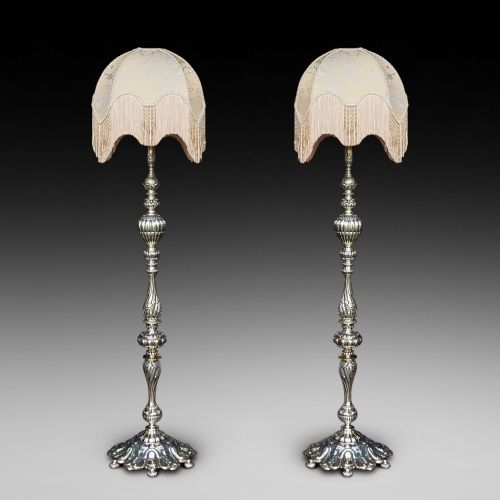
Construction relies heavily on durable metals such as brass, cast iron, wrought iron, copper, and bronze, often shaped by hand or cast in heavy sections to ensure stability. Blacksmiths and metalworkers utilised forging, turning, and riveting techniques to build rigid vertical shafts and weighted bases.
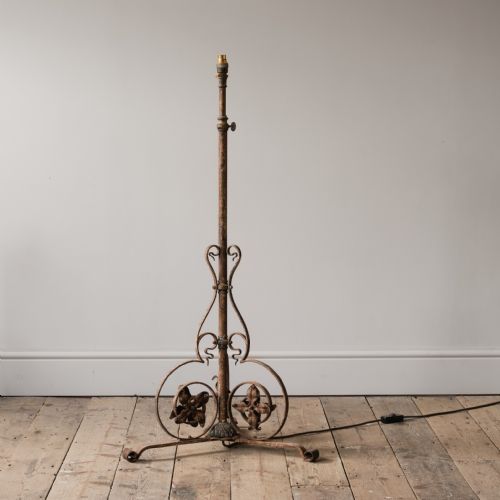
Many early examples incorporate adjustable telescopic rods or articulated arms, allowing the user to modify the reach and height via threaded keys or sliding collars. Surface finishes vary from natural patinated bronze and silvered metal to gilded ormolu and applied tole paintwork.
The listings span the Victorian, Edwardian, and Art Deco periods, utilising materials such as brass, wrought iron, bronze, and chrome.
Distinguishing marks of superior manufacture
Quality in a metal standard lamp rests on the heft of the metalwork, the precision of the joints, and the integrity of any adjustable mechanisms. Superior examples feature heavy cast bases that prevent tipping, solid brass or forged iron components rather than thin plated alternatives, and well-executed decorative detailing.
Design cohesion also separates standard pieces from exceptional ones. The finest examples display thoughtful proportions, integrated wiring channels where converted, and authentic period patination that indicates genuine age and careful use.
W A S Benson·RENE MATHIEU
The Metal Standard Lamp Glossary
- Telescopic
- A mechanism allowing a lamp shaft to extend vertically and lock at various heights. This feature was particularly popular during the Victorian and Edwardian periods for reading.
- Uplighter
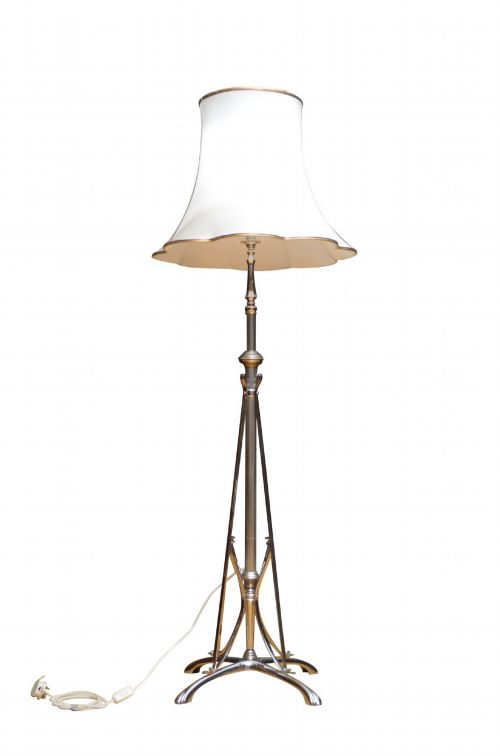
- A floor lamp designed to direct its illumination upward toward the ceiling rather than downward through a shade. These became especially common during the Art Deco era.
- Cairoware
- Metalwork featuring intricate inlaid patterns of silver and copper on a brass ground, produced in Egypt and imported into Europe during the late nineteenth and early twentieth centuries.
- Torchere
- A tall ornamental stand or floor lamp historically designed to carry a torch or candle, later adapted for electricity. They often feature slender shafts and decorative tripod or weighted bases.
- Ormolu
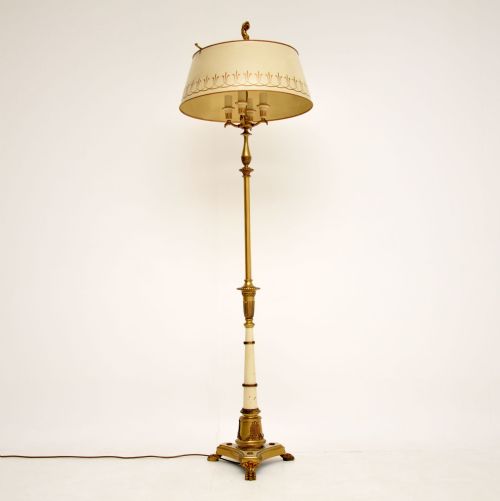
- Cast bronze that has been gilded with a finely ground gold-mercury amalgam, creating a bright golden surface finish. It appears frequently on French Neoclassical and Louis XVI style pieces.
Metal Standard Lamp: Frequently Asked Questions
How do I wire an old metal standard lamp?
Older lamps often require modern rewiring to meet contemporary safety standards. A qualified electrician can safely thread new heat-resistant flex through the central stem.
It is important to retain original lampholders where possible while updating the internal wiring and adding a compliant plug.
Are these lamps stable on carpets?
Many period pieces feature heavy cast iron or weighted brass bases specifically designed to support the height of the standard lamp. This weight prevents the tall structure from tipping easily.
When placing them on thick carpets, ensure the base sits level to maintain proper balance.
How do I identify the period of a metal lamp?
Dating relies on stylistic clues, manufacturing methods, and materials such as wrought iron, brass, or chrome. Victorian and Edwardian pieces often display heavier casting and adjustable telescopic stems.
Later pieces from the 1920s and 1930s tend to show Art Deco geometric lines or polished chrome finishes characteristic of the period.
Can I adjust the height on all models?
Not all metal standard lamps are adjustable. Many feature fixed heights determined by their original function as oil lamps or gas standards.
Those described as telescopic or fitted with adjustable arms allow you to alter the height or reach using original thumb screws or sliding collars.