




Metal Fireside Accessories
Metal fireside accessories are practical hearth pieces crafted in brass and copper, bringing period character and utility to an active fireplace.
Metal Fireside Accessories
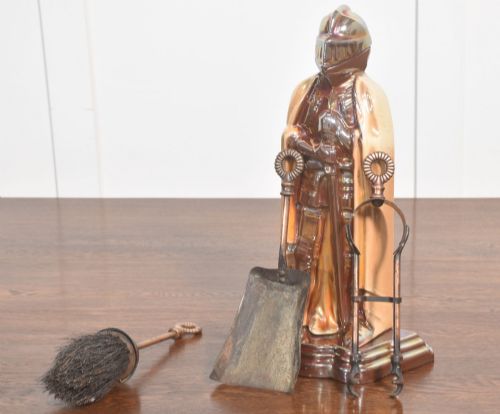
Metal fireside accessories encompass functional hearth equipment designed for fuel storage and fire tending, ranging from coal scuttles and log bins to companion sets and trivets. These utility items were essential in period homes for managing solid fuel fires before central heating.
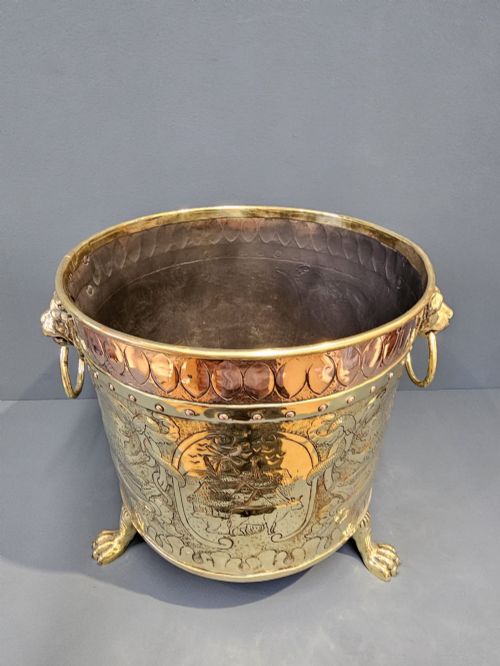
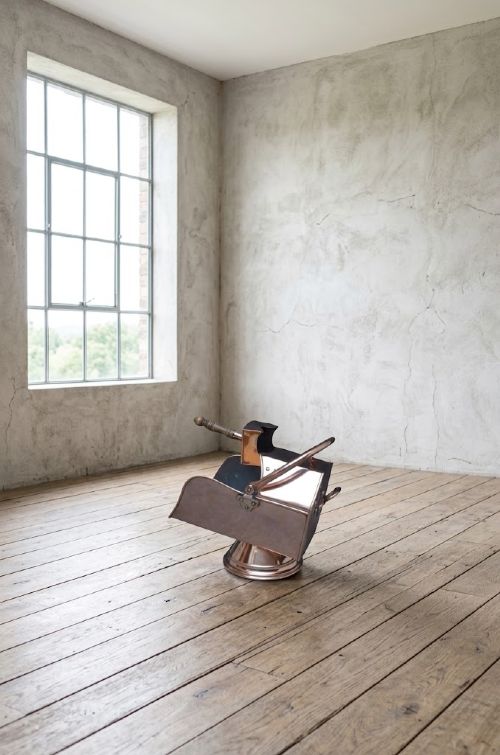
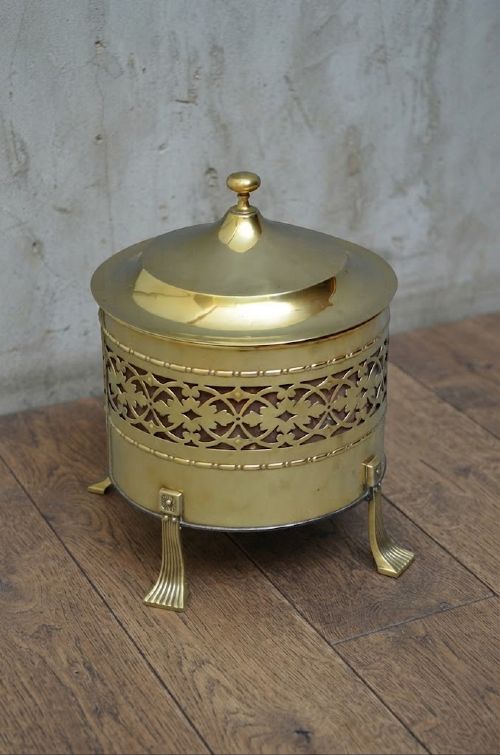
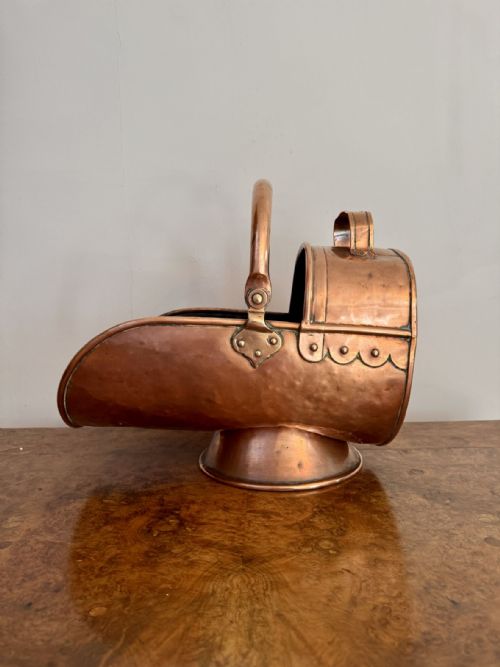
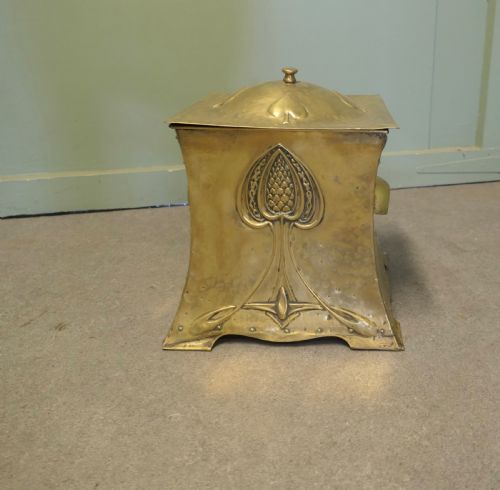
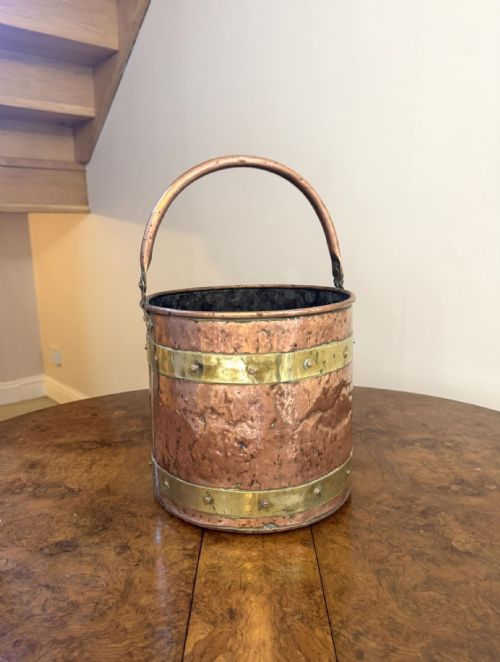
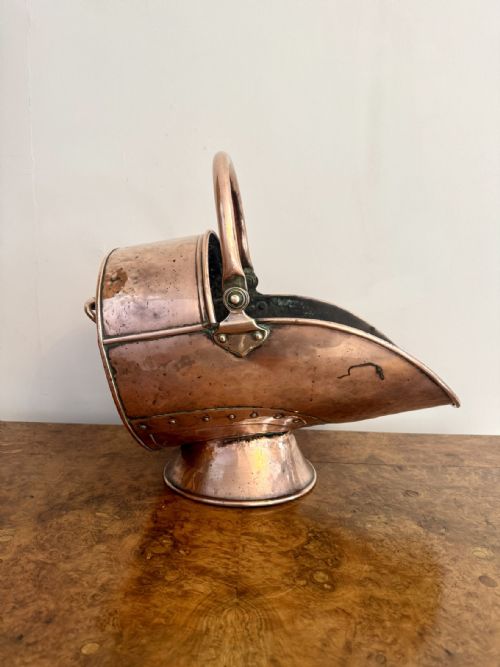
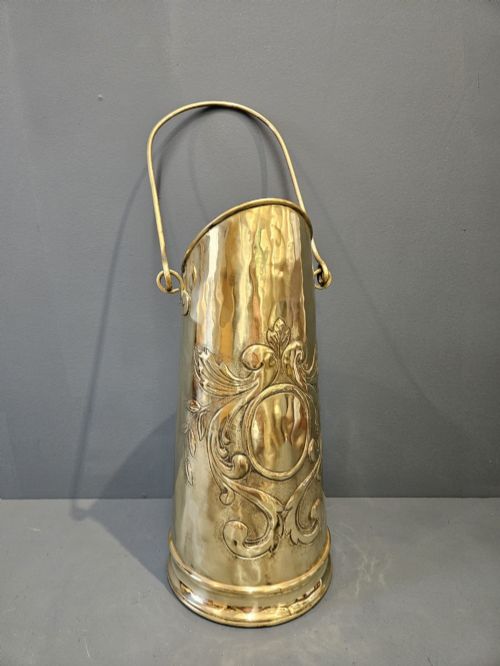
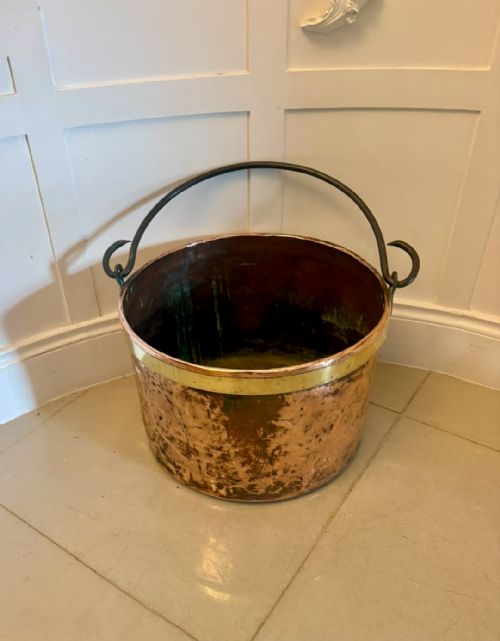
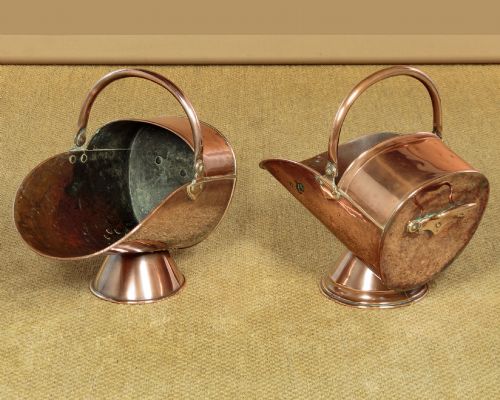
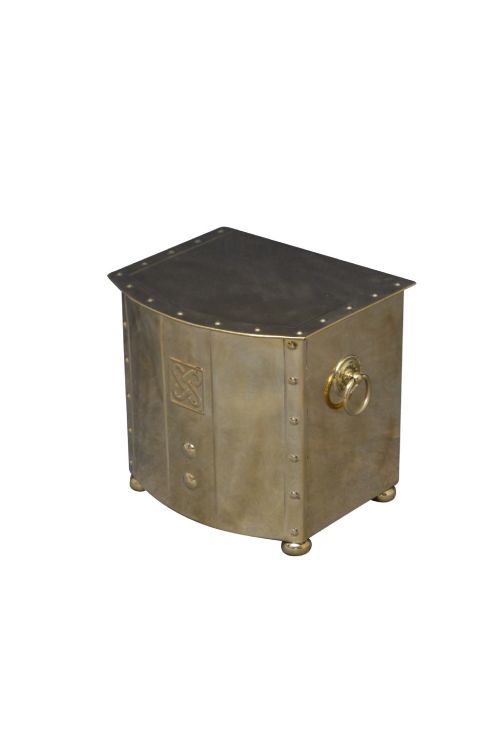
The pieces appearing on this page span the Victorian and Edwardian eras, alongside George III examples, reflecting domestic needs from the nineteenth century into the early twentieth century. Common forms include helmet coal scuttles, cylindrical log bins, and lidded coal boxes suited to holding coal, logs, and kindling.
Brass and copper dominate the selection, often featuring embossed decoration, riveted construction, or contrasting bands. Buyers encounter various utilitarian shapes designed to sit beside the hearth while storing solid fuel neatly.
Materials and construction
Makers utilised sheet copper and brass, often shaping the metal over forms to create curved helmet scuttles and cylindrical bins. Rivets, brass bands, and iron frames provided structural strength for heavy fuel storage.
Decorative techniques include hand-embossing, fretwork designs, and engraved tavern scenes, particularly seen in pieces associated with the Arts and Crafts and Art Nouveau movements. Wood and wrought iron also appear in coopered buckets and fuel keepers.
Extendable brass toasting forks ensure nobody has to sit too close to the flames while preparing evening snacks.
Assessment of quality
Quality rests in the weight of the metal and the integrity of the construction, such as solid riveted joints and heavy gauge copper or brass rather than thin plate. Substantial metal thickness ensures durability for daily use beside a hearth.
Finishing detail separates standard utilitarian items from finer examples, evident in crisp embossing, well-fitted lids, and original handles or companion shovels. The presence of original iron frames and matching metal accents elevates the piece.
The Metal Fireside Accessories Glossary
- Coal Scuttle
- A bucket or box designed for holding coal, often featuring a funnel shape or a hinged lid for easy pouring. Many include a matching shovel stored in a side sleeve.
- Log Bin
- A large container intended for storing firewood beside the fireplace. These pieces frequently utilise coopered wood or heavy riveted copper.
- Trivet
- A metal stand raised on small legs, placed near the hearth to keep kettles or flatirons warm. Edwardian examples often feature perforated brass tops.
- Chestnut Roaster
- A long-handled utensil with a lidded metal pan used for roasting chestnuts over open embers. They combine functional iron or brass with decorative handles.
- Arts and Crafts
- A design movement favouring handcraftsmanship and simple forms over mass production. Pieces from this style often display hammered copper surfaces and nature motifs.
Metal Fireside Accessories: Frequently Asked Questions
What is a coal helmet?
A coal helmet is a specific type of coal scuttle shaped with a flared rim resembling a traditional helmet, designed to pour coal cleanly into a grate.
These pieces usually feature a fixed handle at the top and a smaller grip at the back to tilt the container.
How do I clean brass and copper?
Cleaning depends on whether a bright polish or an aged patina is preferred for the metal surfaces. Gentle dusting and mild soapy water preserve the original appearance without removing historic character.
Harsh chemical abrasives should be avoided to protect hand-embossed details and period finishes.
What is a log bin used for?
Log bins serve as large decorative storage vessels for firewood and kindling near the hearth. They keep logs tidy and accessible while adding texture to the fireside.
Many examples feature sturdy metal frames and waterproof liners to contain bark and debris.
How do I identify a Victorian piece?
Victorian fireside items frequently display heavier gauge brass, riveted copper construction, and distinct decorative styles like Gothic Revival or Art Nouveau. Maker marks are uncommon, but material thickness and construction methods indicate the era.
Stylistic cues such as embossed floral patterns or tavern scenes help narrow down the manufacturing period.