

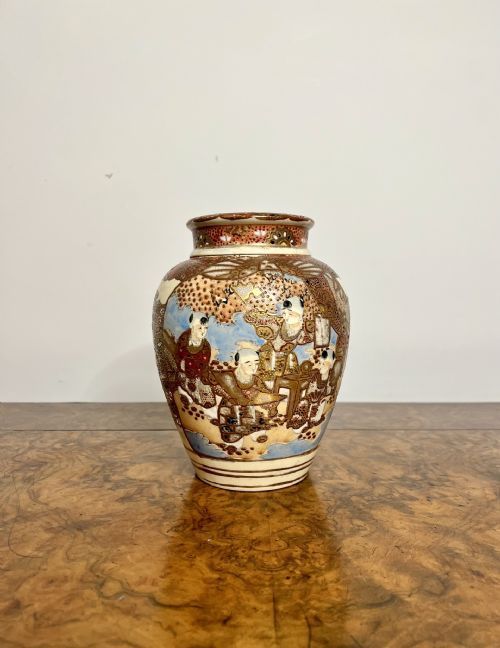
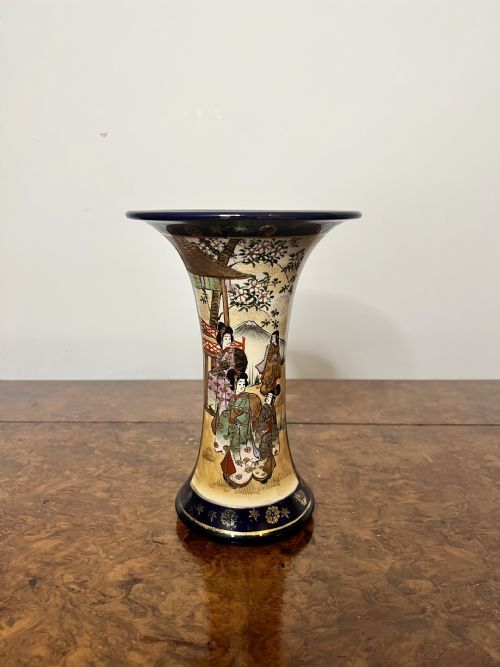


Meiji Satsuma Vessel
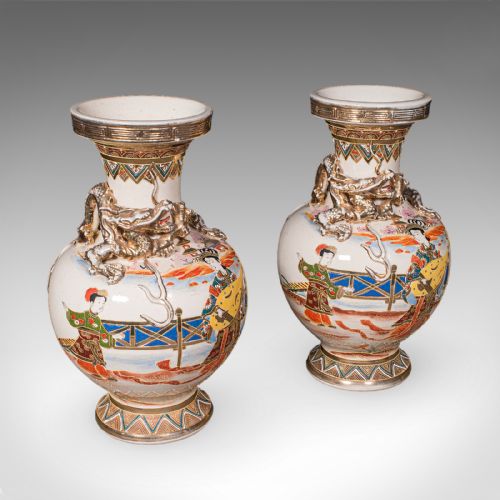
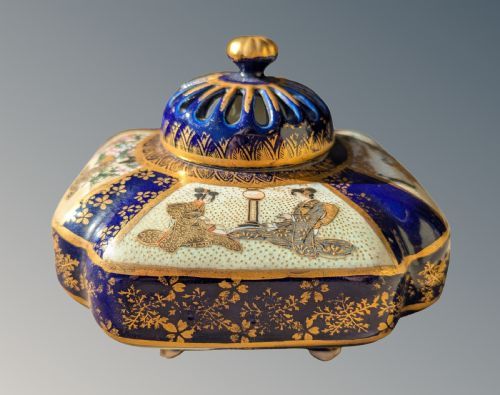
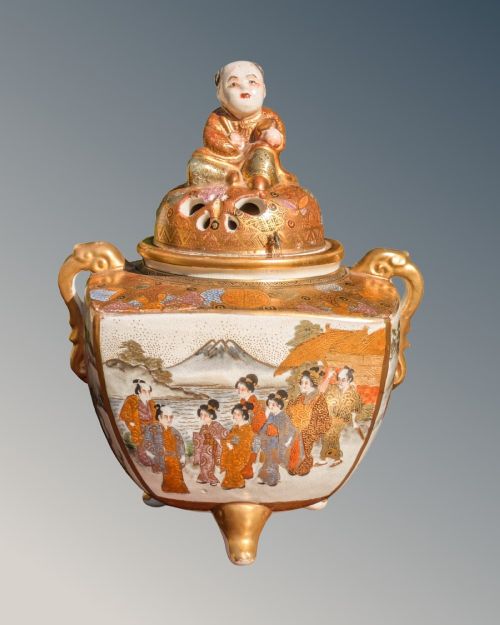
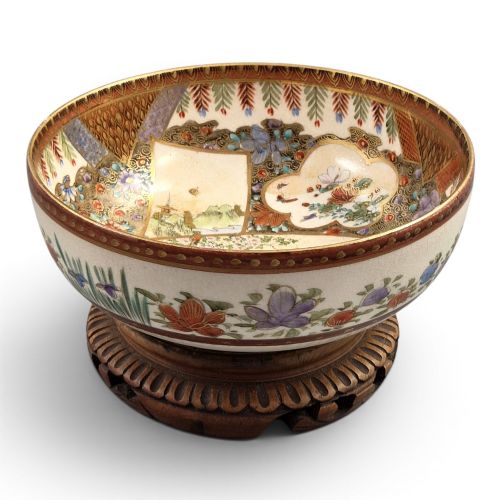
A meiji satsuma vessel is a hand-painted earthenware creation defined by intricate enamel decoration and gilded details originating from Japan.
Meiji Satsuma Vessel
When you search for a meiji satsuma vessel, you encounter a range of ceramic forms produced primarily during the nineteenth and early twentieth centuries. These objects include vases, incense burners, tea caddies, bowls, and jars originating from Japanese kilns.
The pieces appearing on this page span the Meiji period, with several items linking to late Victorian dates and the Meiji-Taisho transition. Buyers find distinct formats such as baluster vases, hexagonal vessels, garlic head vases, and covered incense containers known as koros.
Many examples originate from specific centres like Kyoto and Tokyo, carrying the marks of notable studios and makers. The forms serve both decorative and functional roles, displaying detailed figural scenes, landscapes, and traditional motifs.
How they were made
Makers shaped these items from earthenware and porcelain bodies, applying fine glazes as a base for subsequent decoration. Artisans then utilised coloured enamels and extensive gold leaf or gilding to build up complex pictorial surfaces.
Techniques such as moriage built up raised slip details to create textured relief panels alongside painted figural processions and samurai battles. Bronze mounts and wooden components occasionally complete the construction of specific incense burners and lidded jars.
Several miniature vessels manage to pack thousands of painted arhats and battling samurai into spaces barely larger than an acorn.
What varies in quality
The standard of a meiji satsuma vessel rests upon the precision of the enamel work and the density of the hand-painted composition. Pieces featuring elaborate figural groups, such as the thousand arhats, or meticulous gilt detailing represent the more accomplished end of production.
Subtlety in the application of gold leaf and the crispness of studio signatures, including those from recognised Kyoto potteries, distinguish the finer studio output from standard decorative wares.
Kizan·Kinkozan·Kozan·Hotoda·Chosei·Kotobuki-do·Tokyo Taizan·Shozan·Ippo
The Meiji Satsuma Vessel Glossary
- Satsuma
- A type of Japanese earthenware traditionally featuring a crackled cream glaze decorated with enamel and gold. It originated in Satsuma Province before production expanded to major urban centres like Kyoto.
- Koro
- A traditional Japanese incense burner fitted with a pierced lid. These pieces often stand on small feet and frequently incorporate shishi lion finials.
- Natsume
- A small tea caddy used in Japanese tea ceremonies. The form typically possesses a flat lid and a rounded body.
- Moriage
- A ceramic technique involving the application of liquid clay in raised dots or lines to create textured relief decoration. This method adds significant tactile depth to floral and geometric panels.
- Shimazu Mon
- The heraldic crest of the Shimazu clan, featuring a cross within a circle. It frequently appears on high-status Satsuma wares.
Meiji Satsuma Vessel: Frequently Asked Questions
What is a meiji satsuma vessel?
A meiji satsuma vessel is a Japanese ceramic piece, usually earthenware, produced during the Meiji period and decorated with detailed enamel and gilding.
These items encompass forms like vases, tea caddies, bowls, and incense burners created for both domestic use and export.
Where were these pieces made?
These ceramics were produced in Japan, with notable production centres established in Kyoto and Tokyo by prominent studios and makers.
Many pieces bear artist signatures or clan crests, such as the Shimazu mon, indicating their workshop origins during the late nineteenth and early twentieth centuries.
How should I display a satsuma vase?
Satsuma vases work best in stable locations away from direct sunlight to preserve the delicate enamel and gold leaf decorations.
Because many examples feature fine hand-painted scenes and raised moriage details, placing them on sturdy surfaces allows for close inspection of the artistry.