



Meiji Satsuma Pot
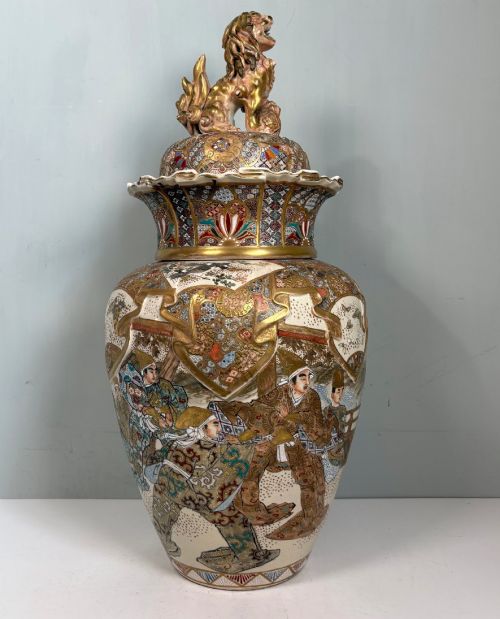
These meiji satsuma pot pieces are earthenware ceramics from Japan decorated with enamel and gold leaf, offering collectors intricate hand-painted detail from the nineteenth century.
Meiji Satsuma Pot
A meiji satsuma pot encompasses a wide range of earthenware forms, from large vases and lidded jars to small incense burners and tea wares. These items originate from the nineteenth century, spanning periods across the 1870s, 1880s, 1890s, and 1900.
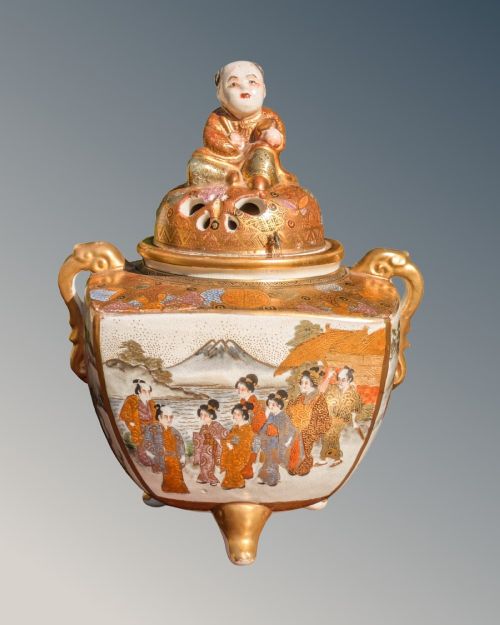
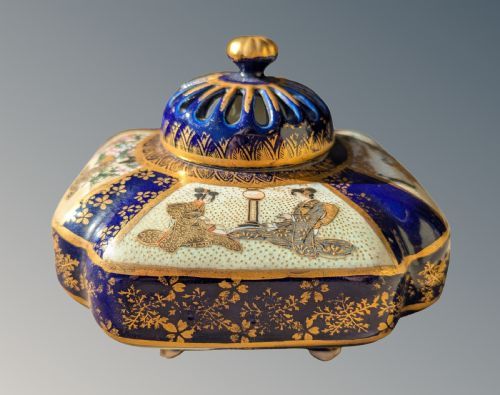
The most frequent examples encountered on this page include vessels such as koro incense burners, decorative vases, and lidded jars. Kyoto studios and specific makers feature prominently among these ceramics.
Buyers also encounter plates, bowls, miniatures, and figures depicting traditional scenes like processions, gods, and festival gatherings. Each object reflects the distinct craftsmanship of the Meiji period.
Materials and construction
Makers formed these items using earthenware pottery as a base body. Artisans then applied polychrome enamel alongside gold leaf, gilding, and gilt accents to create rich surface patterns.
Surface decoration often incorporates raised gold detailing and fine character marks or signatures. Wood components occasionally appear alongside the ceramic bodies, particularly in stands for teapots and bowls.
Meiji Satsuma Pot Retail Price Guide 2026
Typical asking prices for meiji satsuma pot among the pieces listed under this phrase on Sellingantiques today, from the lower quarter to the upper quarter. They describe what is for sale here now, not the wider market.
Tiny teapots and miniature incense burners prove that nineteenth-century artisans loved making big art in very small sizes.
Assessing quality in Satsuma ceramics
Quality rests upon the precision of the enamel work and the finesse of the gold leaf application. Finer pieces demonstrate control in miniature painting, portraying figures, horses, or floral millefleur motifs with exactness.
Signed works from notable Kyoto studios and recognised makers demonstrate higher execution levels than unmarked production pieces. The crispness of the earthenware form and the preservation of the gilding further separate standard items from superior examples.
Kinkozan·Shizan·Shozan·Kikkoen·Ryokuzan·Chikuzan·Zenkozan·Kanzan·Hozan·Ryozan Okamoto
The Meiji Satsuma Pot Glossary
- Koro
- An incense burner fitted with a pierced cover. These vessels often stand on small feet and appear frequently in larger and miniature sizes.
- Earthenware
- A porous pottery body fired at lower temperatures than porcelain. This material forms the foundation for all Satsuma ceramic decoration.
- Polychrome
- Multicoloured enamel painting applied over the ceramic glaze. This technique defines the vibrant figural and floral scenes on Meiji period pieces.
- Millefleur
- A dense pattern composed of numerous small flowers covering the entire surface. This decorative style requires meticulous hand-painting skill.
- Tazza
- A footed dish or shallow bowl raised on a central pedestal. These display pieces showcase detailed surface decoration across the upper plate.
Meiji Satsuma Pot: Frequently Asked Questions
What is a Satsuma pot?
A Satsuma pot is a piece of Japanese earthenware decorated with polychrome enamel and gold leaf. These items were produced during the nineteenth century and often feature figural or floral designs.
Potters and studios in Kyoto created everything from tiny teapots to large temple jars. The style remains distinct for its intricate hand-painted detail and characteristic crackle glaze.
How are koro burners used?
A koro is an incense burner designed to hold aromatic materials during traditional Japanese ceremonies. The pierced lids allowed fragrant smoke to escape into the room.
Collectors today display these lidded vessels as decorative objects rather than burning incense within them. Their intricate tripod feet and handles make them central display pieces.
How do I date Meiji period ceramics?
Dating relies on stylistic clues, workshop signatures, and recorded periods within the nineteenth century. Makers often signed their work with specific character marks corresponding to Kyoto studios.
Items span the decades from the 1870s through 1900, reflecting shifts in decorative density. Comparing signature styles against documented makers helps narrow the decade of production.
How should I care for antique Satsuma?
Antique earthenware requires gentle handling to protect fragile enamel and delicate gold leaf decorations. Dusting with a dry, soft cloth prevents any accumulation of dirt without risking the surface.
Avoid using water or chemical cleaners on these pots because the porous body and overglaze enamels are sensitive. Keeping them out of direct sunlight preserves the vibrancy of the original colours.