

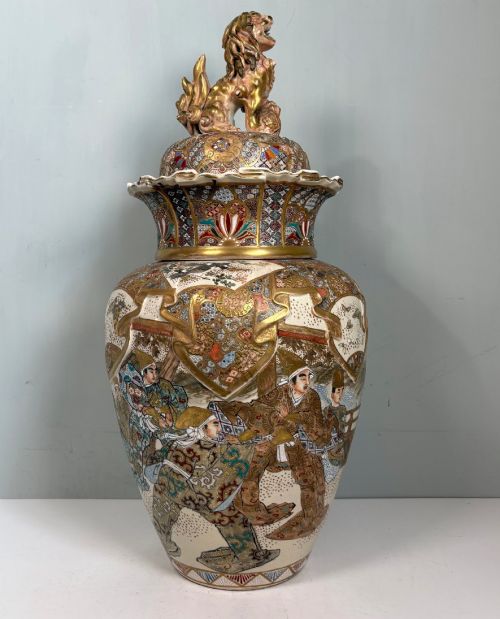


Gold Satsuma Jar
These gold satsuma jars are finely painted earthenware vessels from the Meiji period, prized for their rich gilding and intricate figural scenes.
Gold Satsuma Jar
When you search for a gold satsuma jar, you are looking at Japanese decorative ceramics produced largely during the nineteenth century. These pieces encompass lidded vases, tea jars, sugar bowls, and incense burners originating from studios in regions such as Kyoto and Tokyo.
The versions you are most likely to meet on this page date from the Meiji period, specifically around the 1880s to 1900. They present distinct forms ranging from large lidded vessels to miniature vases and tea caddies.
Makers recorded in these pieces include Tokyo Taizan, along with artists signing as Shuzan, Shizan, and Shozan. Their work demonstrates the meticulous hand-painted detail characteristic of Japanese craftsmanship from this era.
How they were made
Makers formed these pieces using earthenware, building vessels that were subsequently finished with detailed hand-painted designs. The surface decoration often incorporates elaborate enamel work alongside extensive gilding and gold leaf.
The application of gold combined with finely controlled enamel creates the characteristic textured palette seen on Meiji period ceramics. Artisans utilised wooden elements or fitted ceramic lids to complete tea jars and lidded vases.
Gold Satsuma Jar Retail Price Guide 2026
Typical asking prices for gold satsuma jar among the pieces listed under this phrase on Sellingantiques today, from the lower quarter to the upper quarter. They describe what is for sale here now, not the wider market.
A tiny miniature vase manages to pack an entire gallery of hand-painted figures into a space smaller than a teacup.
What varies in quality
The refinement of the hand-painted figures, such as depictions of Rakan, separates standard production from superior artistic output. Mastery in the application of gold leaf and enamel dictates the visual depth of the surface decoration.
Studio origin and artist signatures influence the standing of a piece, with recognised Kyoto studios and signed works showing greater precision. The overall scale and structural integrity of large lidded vases also set the finer examples apart.
Tokyo Taizan·Shuzan·Shizan·Shozan
The Gold Satsuma Jar Glossary
- Satsuma
- A type of Japanese earthenware originating from Satsuma Province, traditionally characterised by an ivory crackle-glaze and elaborate polychrome and gilt decoration. These wares became widely exported and celebrated during the Meiji period.
- Meiji Period
- The era in Japanese history spanning from 1868 to 1912, marked by the opening of trade with the West. Ceramics from this time often display a high degree of decorative ornamentation.
- Koro
- A traditional Japanese incense burner, typically featuring a body raised on legs and a pierced lid to release fragrance. These items were produced in ceramic as well as metalwork.
- Rakan
- The Sanskrit term for enlightened disciples of Buddha, frequently depicted in traditional Japanese art. They appear in groups on decorative ceramics, painted with individual facial expressions.
- Gilt
- Covered thinly with gold leaf or gold paint to impart a metallic lustre. This technique highlights specific areas of the ceramic design.
Gold Satsuma Jar: Frequently Asked Questions
How do I identify a Meiji period piece?
Meiji period ceramics are identified by their distinctive combination of dense enamel painting and heavy gilding over earthenware bodies. The aesthetic reflects the artistic styles popular between 1868 and 1912.
Many pieces bear artist signatures or studio marks from centres like Kyoto and Tokyo, providing a direct link to their period of manufacture.
Are these jars made of porcelain?
Satsuma wares are constructed from earthenware rather than true porcelain, giving them a characteristic slightly absorbent porous body. This earthenware base is typically covered in a fine crackle glaze before being painted.
The use of earthenware allowed artisans to achieve the warm, ivory-toned background that distinguishes satsuma pottery from other Japanese ceramic traditions.
How should I clean a painted ceramic jar?
Maintenance requires gentle dusting with a soft, dry cloth to protect the delicate enamel and gold leaf decoration. Moisture can seep into the porous earthenware body and the fine crackle glaze, so liquid cleaners must be avoided.
Keeping the piece away from direct sunlight and excessive humidity helps preserve the integrity of the hand-painted surfaces.