




Meiji Satsuma Pair
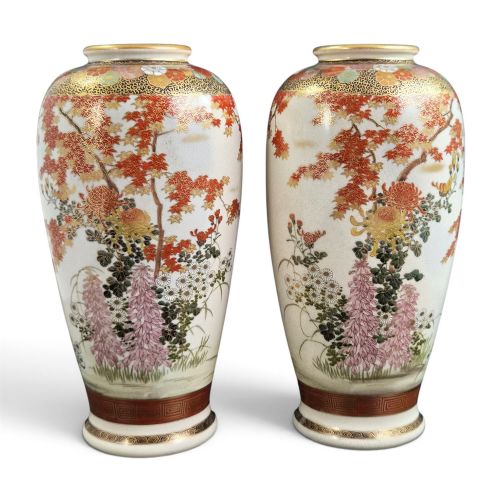
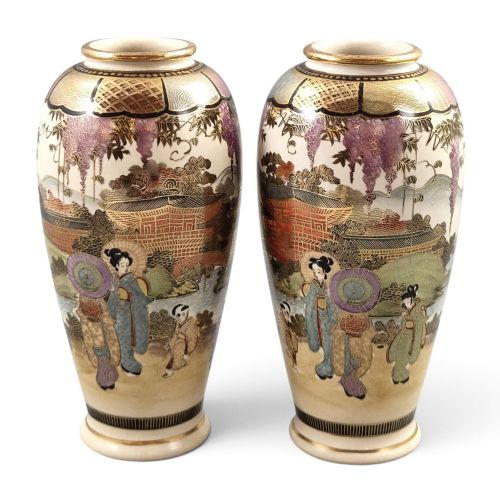
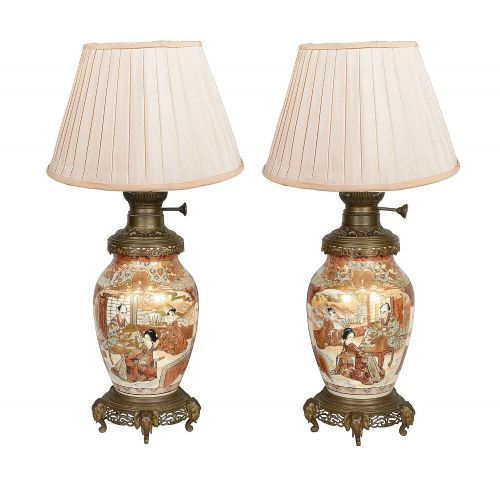
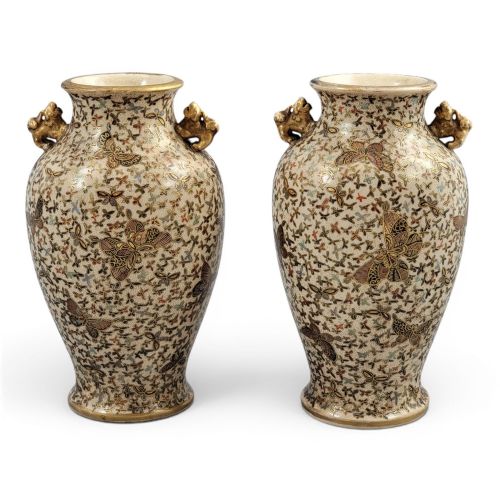
A meiji satsuma pair brings together symmetrical hand-painted earthenware vases and vessels created for international export during the late nineteenth and early twentieth centuries.
Meiji Satsuma Pair
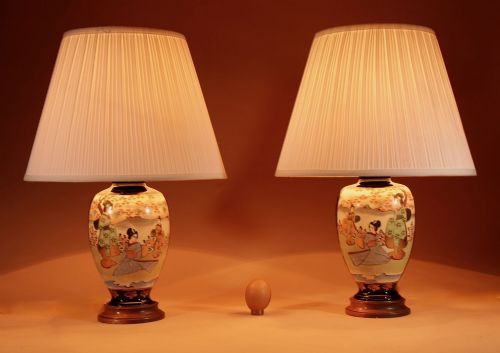
When searching for a meiji satsuma pair, buyers encounter matching sets of ceramic vessels, predominantly baluster vases, lidded jars, and table lamps originating from Japan.
The objects stem predominantly from the Meiji period through to the Taisho era, reflecting the intense period of artistic production geared towards Western tastes.
Most examples feature elaborate figurative scenes, historical figures like arhats, or botanical motifs such as wisteria and butterflies, mapped across matching surfaces.
How they were made
Potters shaped the earthenware bodies by hand or on the wheel before applying a characteristic crackle-glazed ceramic finish that absorbs fine staining.
Artisans built up the decoration using polychrome enamel paints, often accented with heavy gold leaf and gilt work to highlight intricate details.
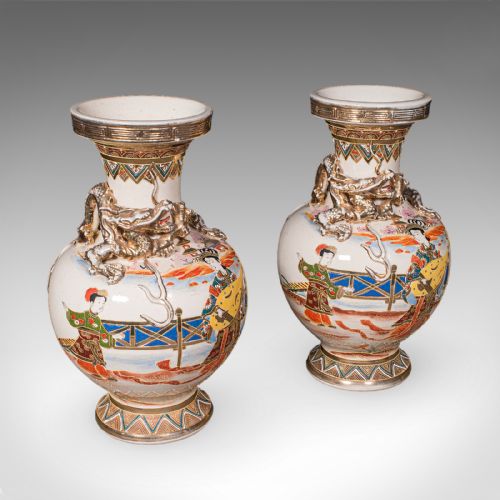
Many workshops utilised raised moriage enamel techniques to give specific floral elements or garments a distinct three-dimensional texture.
Common forms include baluster vases, lidded jars, and shallow dishes decorated with traditional Japanese motifs and figures.
What varies in quality
The standard of painting defines the hierarchy, ranging from hastily decorated export wares to master-painted panels signed by celebrated Kyoto studios and individual artists.
The density and purity of the gold leaf application, alongside the precision of intricate background brocade patterns, separate ordinary pieces from exhibition-grade works.
Kinkozan·Shozan·Hododa·Makuzu Kozan II·Shuzan·Hakusan·Tagawa·Meizan·Yasuda Company
The Meiji Satsuma Pair Glossary
- Satsuma ware
- A type of Japanese earthenware featuring a pale ivory crackle glaze that receives overglaze enamel and gilt decoration. It originated in Satsuma Province before production expanded significantly to Kyoto and Tokyo studios.
- Moriage
- A decorative ceramic technique where slip is piped onto the surface like cake icing to create raised dots or lines before firing and painting. This method adds tangible depth to robes, flowers, and borders.
- Baluster
- A vase shape characterised by a rounded body that tapers toward the base and flares at the neck. This form provides a balanced canvas for panoramic storytelling scenes.
- Mon
- A traditional Japanese heraldic crest or badge used to identify families, clans, or organizations. The Shimazu clan crest frequently appears on high-end pieces.
- Rakan
- A depiction of enlightened Buddhist sages or disciples often shown with expressive faces, flowing robes, and supernatural companions like dragons. They form a popular narrative subject for Meiji period artists.
Meiji Satsuma Pair: Frequently Asked Questions
Why were these pieces made as pairs?
Matching pairs were produced primarily for the Western export market, where symmetry dominated Victorian and Edwardian interior design schemes.
Craftsmen painted companion vessels with related or mirrored scenes to flank mantelpieces, cabinets, and entrance halls.
How can I identify the maker?
Many higher-quality pieces bear painted or impressed studio signatures and artist seals on the base, often hidden beneath the glaze.
Translating these signatures reveals specific Kyoto workshops or individual painters who operated during the late nineteenth century.
Where should I display them at home?
Because of their delicate enamel and gilt surfaces, these vessels require placement away from direct sunlight and areas of heavy household traffic.
Stable wooden furniture provides a secure surface where the detailed painted panels can be examined closely at eye level.
What do the crackles in the glaze mean?
The fine network of fine lines across the surface is an intentional characteristic of the crackle glaze rather than a sign of damage.
Enamels and gold leaf were applied over this specialised crazed foundation during secondary firings to achieve the classic texture.