





Meiji Period Satsuma Ware
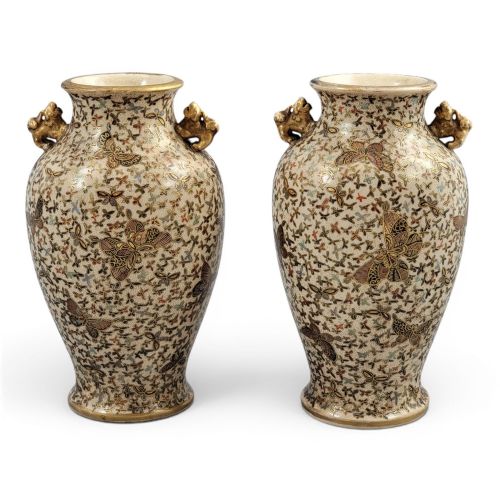
Meiji period satsuma ware comprises finely painted earthenware ceramics from Japan that bring intricate figures, floral motifs, and gilt decoration to traditional interiors.
Meiji Period Satsuma Ware
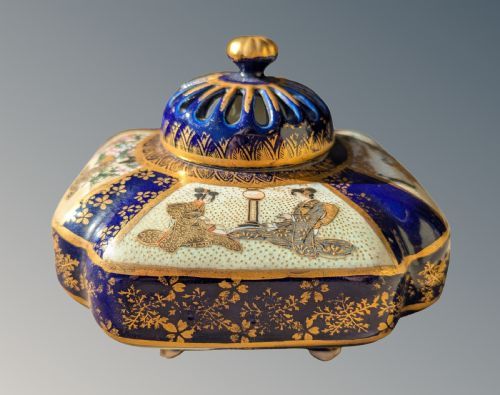
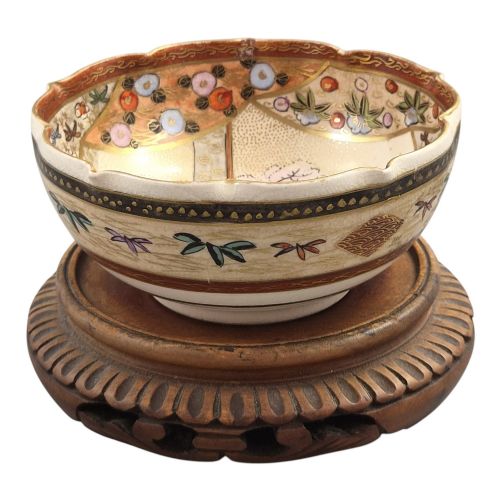
Meiji period satsuma ware encompasses vessels and decorative objects produced in Japan during the late nineteenth and early twentieth centuries. Collectors searching for these pieces encounter forms ranging from miniature vases and shallow bowls to monumental koro incense burners, ginger jars, and okimono figures.
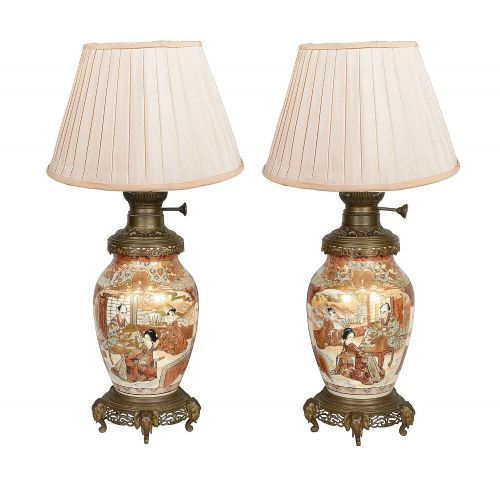
The objects appearing in current selections span the nineteenth century into the Edwardian era, featuring works created in Kyoto and other regional centres. Table lamps and saucers also appear alongside traditional vases and plates, reflecting how these decorative items adapted to later domestic settings.
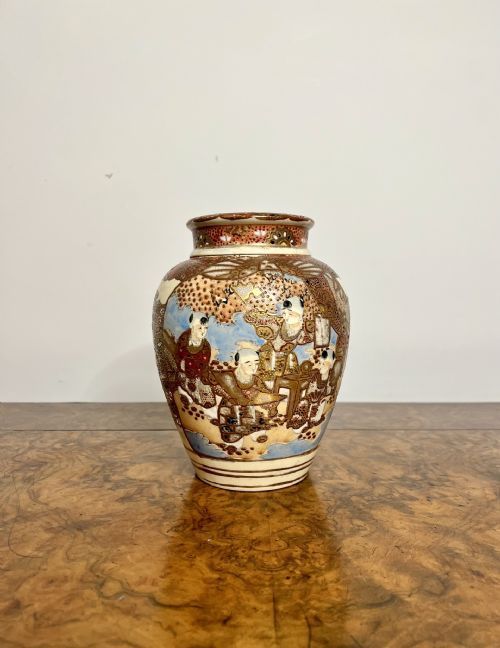
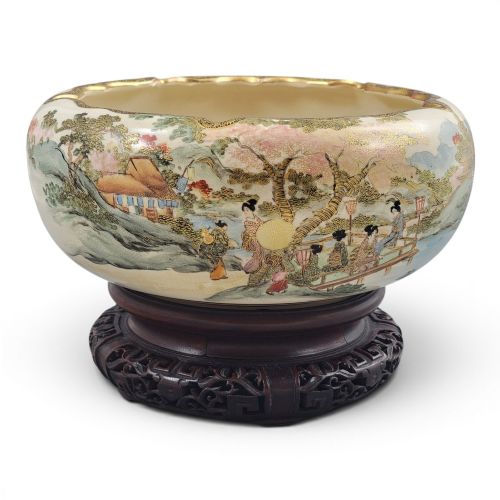
Many examples showcase dense figural scenes depicting arhats, samurai, and family processions, alongside botanical themes such as wisteria gardens, thousand flowers, and birds. These pieces bear the marks of notable workshops and individual masters who shaped the output of the period.
Materials and Techniques
Makers formed these items using a distinctive cream-coloured earthenware body characterised by a fine crackle glaze that provided a textured ground for painting. Artisans applied polychrome enamel pigments and gold leaf by hand to build up complex compositions across the surface of each vessel.
Raised moriage decoration and heavy gilt work frequently define the ornamentation, creating tactile relief details alongside delicate brushwork. Certain pieces integrate additional materials like wood, brass, and silk within associated mountings or display elements.
Meiji Period Satsuma Ware Retail Price Guide 2026
Typical asking prices for meiji period satsuma ware among the pieces listed under this phrase on Sellingantiques today, from the lower quarter to the upper quarter. They describe what is for sale here now, not the wider market.
Among the deities and warriors, a solitary stone-ground Daikoku stands ready to bless the household with unexpected prosperity.
Distinctions in Quality
Quality across this ware depends on the precision of the miniature painting and the discipline of the gilding. Works by renowned masters and documented workshops display tighter brush control, particularly in complex multi-figure scenes and detailed architectural or landscape backgrounds.
The complexity of the raised enamel work and the clarity of the underlying crackle glaze also separate standard production pieces from exhibition-grade examples. Pieces bearing legible signatures and specific kiln marks from notable centres like Kyoto generally demonstrate superior execution.
Kinkozan·Hotoda·Shizan·Chosei·Nanzan·Seiko-en Chokei·Yamashu·Shuzan·Yasuda·Nikko·Kizan·Hakusan·Tagawa·Hododa·Kotobuki-do·Tokyo Taizan·Meizan
The Meiji Period Satsuma Ware Glossary
- Earthenware
- Porous ceramic pottery fired at lower temperatures than stoneware or porcelain. It serves as the standard body material for satsuma ware.
- Koro
- A traditional Japanese incense burner typically featuring a pierced lid and three or more feet. These vessels often take globular or hexagonal forms.
- Okimono
- A standalone Japanese carved or modelled decorative figurine intended for display on a shelf or tokonoma alcove. Common subjects include deities, figures, and animals.
- Moriage
- A decorative ceramic technique using piped clay slip to build up raised designs before glazing and gilding. This creates a textured, tactile surface.
- Mon
- A traditional Japanese heraldic crest or badge used to identify families or clans. The Shimazu clan crest appears frequently on these ceramics.
Meiji Period Satsuma Ware: Frequently Asked Questions
What is satsuma ware?
Satsuma ware is a type of Japanese earthenware featuring a distinctive crackle glaze decorated with polychrome enamels and gold leaf. Originating in Satsuma Province, production later flourished in Kyoto during the Meiji period.
Artisans painted these ceramics with elaborate scenes depicting figures, flowers, and landscapes, often signed by the maker or workshop.
How do I identify Meiji period pieces?
Meiji period pieces date from the reign of Emperor Meiji between 1868 and 1912. They are identified through stylistic characteristics, specific maker signatures, and historical kiln marks.
Many items from this era combine traditional Japanese motifs with intricate gilt decoration and fine brushwork tailored for export markets.
How were incense burners used?
Incense burners, known as koro, were utilised to burn aromatic incense within traditional Japanese interiors. Their pierced lids allowed fragrance to diffuse while containing the embers.
Beyond ceremonial or functional use, elaborate koro served as decorative art objects displaying the technical skill of the potter.
How should I care for these ceramics?
These earthenware pieces require gentle handling due to their delicate enamel and gold leaf decorations. Dust them softly with a dry cloth and avoid exposing them to moisture or harsh cleaning agents.
Display them away from direct sunlight and temperature extremes to preserve the integrity of the glaze and gilding.