
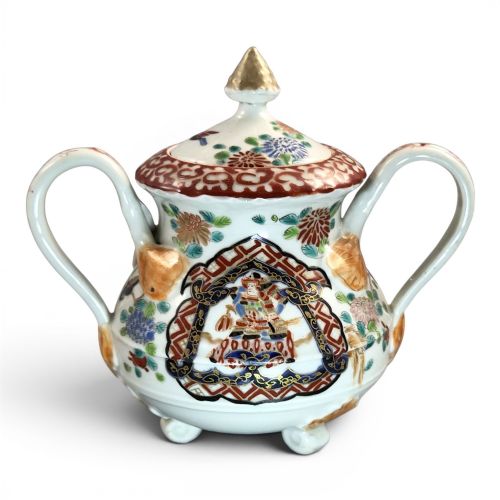
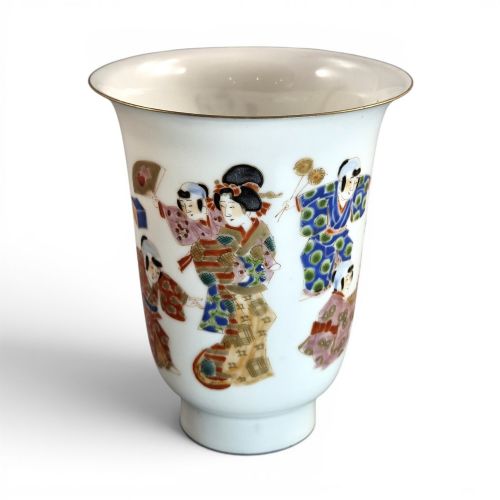


Meiji Period Porcelain Figure
When you search for a meiji period porcelain figure, you enter a world of finely painted deities, mythical beasts and cultural icons modelled in ceramic and earthenware.
Meiji Period Porcelain Figure
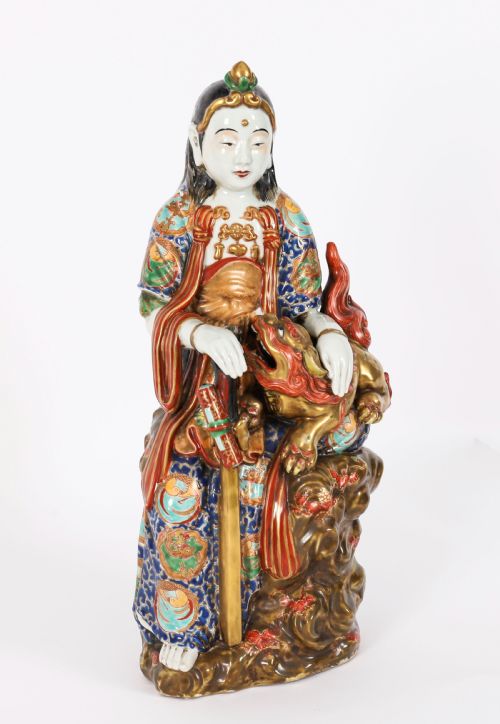
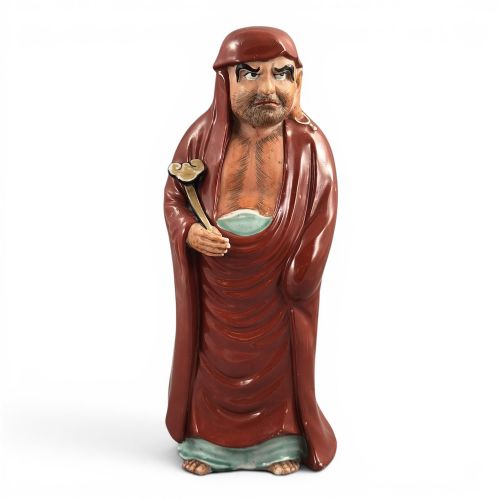
A meiji period porcelain figure typically takes the form of revered deities, mythological figures such as the Buddhist lion or Shishi, and traditional figures like the Bijin or secular subjects. Sculptural okimono pieces depict historical figures, sages and animals including elephants and playful puppy groups, rendered with distinct attention to posture and expression.
The objects appearing in this category span the late nineteenth and early twentieth centuries, aligning with the Meiji, Taisho and Victorian periods. Buyers frequently encounter Kutani and Satsuma wares, alongside Imari palette creations, eggshell porcelain vessels and Hirado porcelain figure groups.
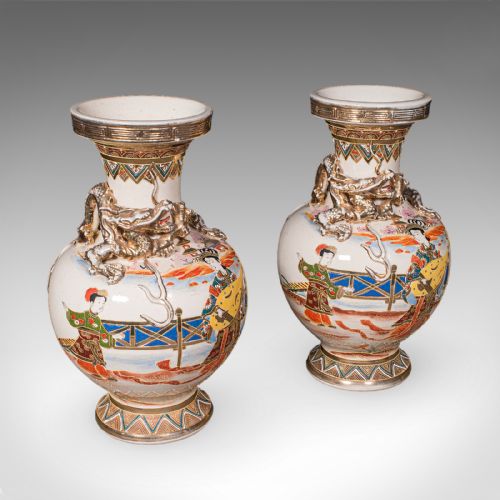
These ceramic and earthenware works function as decorative table pieces, cabinet sculptures and okimono displays. Many incorporate traditional Japanese motifs, ranging from court scenes with moriage relief work to figures accompanied by mythical attributes.
How they were made
Makers utilised porcelain and earthenware bodies, shaping them into detailed figurines, vessels and sculptural okimono before applying glazes. Polychrome enamel and cobalt blue pigments provide the primary palette for surface decoration, often complemented by intricate gold leaf and gilt detailing.
A delightful set of Hirado porcelain puppies demonstrates that even stern deities shared display space with playful canine sculptures.
What varies in quality
Quality rests upon the precision of the hand-painted details, particularly in the rendering of facial expressions, robes and attendant figures. Pieces showing tighter brushwork, controlled gilt applications and disciplined use of moriage relief sit distinctly apart from simpler production.
The sophistication of the modelling defines the upper tier, where complex subjects like multi-figure compositions, balancing postures on shishi beasts, and signed okimono demonstrate superior sculptural ambition.
Kōko·Kizan·Kinkozan Kyoto·Tokyo Taizan·Fukagawa·Meizan
The Meiji Period Porcelain Figure Glossary
- Okimono
- A Japanese ornamental figurine or sculpture designed for display in an alcove or on a shelf. These objects represent deities, animals and historical persons.
- Kutani
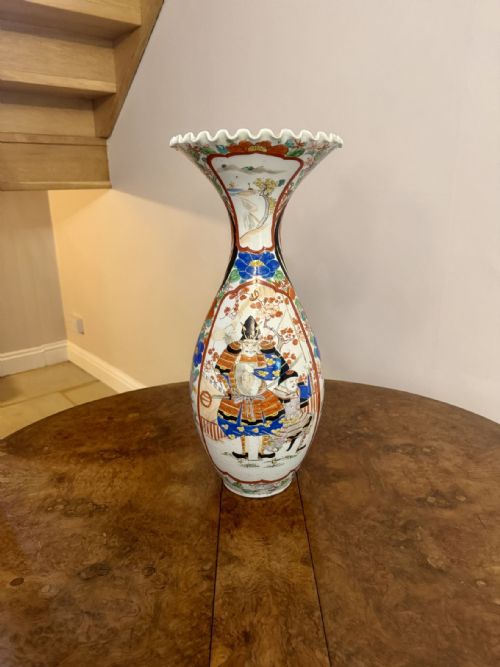
- A style of Japanese coloured porcelain characterised by bold pictorial designs, often incorporating rich iron red, gold and polychrome enamel overglaze work.
- Satsuma
- A type of Japanese earthenware featuring a crackled ivory glaze decorated with delicate enamel patterns and extensive gilding. It originated in Satsuma Province and later expanded to Kyoto and Tokyo workshops.
- Moriage
- A ceramic technique where slip is piped onto the surface to create raised decorative patterns, commonly used to accentuate robes and floral motifs.
- Imari
- A traditional style of Japanese export porcelain featuring a distinct palette of underglaze blue, iron red, and added gold highlights.
Meiji Period Porcelain Figure: Frequently Asked Questions
How do Kutani and Satsuma differ?
Kutani wares generally utilise porcelain bodies with vibrant overglaze enamel palettes dominated by reds and golds. Satsuma pieces typically feature earthenware bodies covered in a characteristic crackled cream glaze painted with detailed polychrome figures.
Both styles flourished during the Meiji period, producing intricate figural sculptures and decorated vessels.
Where were these figures displayed?
Historical interiors utilised these sculptures as tabletop ornaments, cabinet centrepieces and alcove displays. Their detailed hand-painted surfaces invited close inspection by guests in traditional and Westernised settings alike.
Collectors today place them on desks, open shelving and dedicated display cabinets.
How can I identify the maker?
Many pieces carry painted or impressed signatures, artist seals or factory marks on the base. Names such as Kizan, Meizan and Kinkozan point to specific master workshops and distinguished kilns of the late nineteenth century.
Matching these marks with historical records helps clarify the origin of individual figures.