


Kutani Ceramic Statue
These kutani ceramic statue examples bring characterful Japanese artistry to your room, shaped by skilled hands during the Meiji and Taisho periods.
Kutani Ceramic Statue
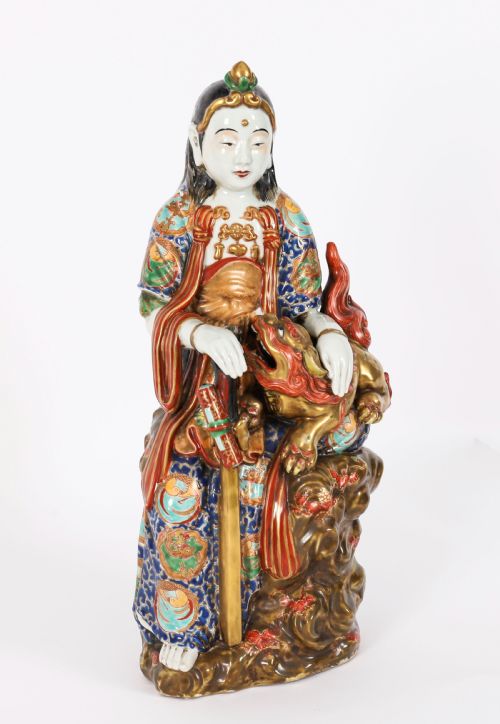
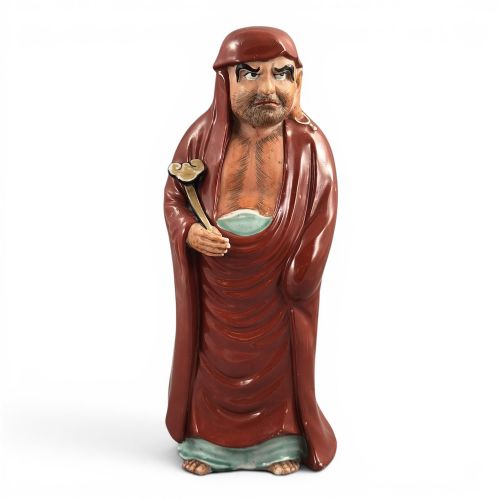
A kutani ceramic statue brings traditional Japanese deities, figures, and mythical animals into your home through finely modelled porcelain forms. These pieces often depict figures such as Kannon, Daruma, and Jurojin alongside decorative models of Buddhist lions.
The selections span the nineteenth century and the early twentieth century, capturing both Meiji period artistry and Taisho period developments. Most examples on this page reflect the distinct ceramic traditions originating from the Kutani kilns.
Materials and construction
Techniques range from smooth painted glazes to raised moriage decoration that adds texture to the surface. Artisans balanced sculptural form with detailed surface painting to delineate robes, hair, and facial expressions.
The porcelain figures utilise polychrome enamel, glaze, and gold leaf across Meiji and Taisho period styles.
Assessing quality
The refinement of the painted details and the complexity of the subject matter distinguish standard production from superior artistry. Pieces featuring raised moriage work or multiple figures demand greater technical skill from the potter.
The Kutani Ceramic Statue Glossary
- Kutani
- A style of Japanese porcelain traditionally associated with vibrant coloured enamels and gilt decoration. These wares originate from the Ishikawa prefecture.
- Meiji Period
- The era in Japanese history spanning from 1868 to 1912, characterised by opening trade and distinctive artistic output. Pieces from this time often show detailed painting and traditional iconography.
- Okimono
- A Japanese term for an ornamental object or decorative figurine designed for display on a shelf or tokonoma. These figures typically represent deities, sages, or animals.
- Moriage
- A ceramic technique where slip is piped onto the surface to create raised decorative patterns before glazing and firing. This method adds a tactile, textured quality to the piece.
- Guanyin
- The East Asian bodhisattva of mercy, frequently depicted in ceramic sculpture. Figures often show the deity seated or standing in a serene posture.
Kutani Ceramic Statue: Frequently Asked Questions
What is a kutani ceramic statue?
These are porcelain figures and sculptures produced in Japan, often depicting traditional deities, religious figures, or cultural icons.
They showcase historical styles from the nineteenth and early twentieth centuries, utilising painted enamels and gilt details.
Where should I display these figures?
These sculptures suit stable shelves, cabinets, or surfaces where adequate light can illuminate the painted enamels and gilt highlights.
Keep them away from direct sunlight and areas prone to heavy vibrations to protect the porcelain body.
Who are the subjects depicted?
Common subjects include Buddhist deities like Kannon and figures of longevity such as Jurojin and Daruma.
Other depictions feature geisha figures, monks, and mythical animals like the shishi lion.