
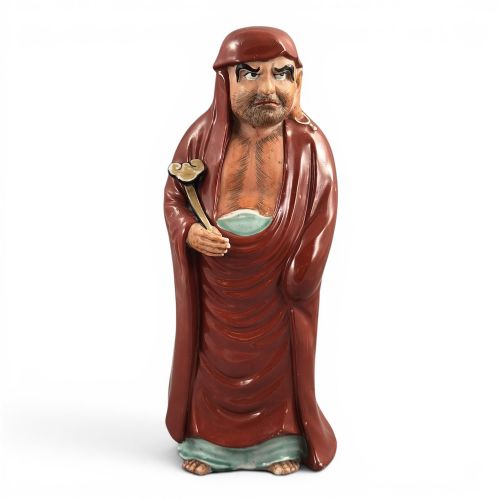


Hand Painted Kutani Figure
These hand painted kutani figure examples are Japanese porcelain sculptures and vessels finished in enamel and gold leaf, offering collectors striking hand-painted detail from the nineteenth century and the Edwardian era.
Hand Painted Kutani Figure
A hand painted kutani figure encompasses porcelain figurines and cylindrical vases originating from Japan, often depicting traditional deities, mythological figures, and cultural subjects. Buyers searching for a hand painted kutani figure encounter representations of figures such as Daruma, Kannon, Jurojin, and Bijin, alongside decorative pairs of vases.
The pieces appearing on this page span the nineteenth century, including the Meiji period, and extend into the Edwardian era and the Taisho period. These items bridge traditional Japanese ceramic artistry with the international export tastes of the late nineteenth and early twentieth centuries.
How they were made
These pieces utilise porcelain as a base ceramic body, formed into sculptural figurines or thrown into cylindrical vases. The structural form is then painted by hand using enamel pigments that provide the characteristic rich palette.
Gold leaf, gilt, and gilding are applied to accentuate details, robes, and borders across the surface of the porcelain. This combination of enamel and gold leaf creates the decorative depth seen on Meiji period and Edwardian works.
The listings here span the nineteenth century, the Meiji period, and the Edwardian era, using porcelain, enamel, and gold leaf.
What varies in quality
The application and preservation of the gilding and enamel work also determine the visual impact of a piece. Rich, intact gold leaf and vibrant enamel pigments reflect a higher degree of initial craftsmanship and better survival over time.
The Hand Painted Kutani Figure Glossary
- Kutani
- A style of Japanese porcelain traditionally characterised by colourful overglaze enamels and gold details. It developed through distinct historical periods including the Meiji and Taisho eras.
- Meiji Period
- A period in Japanese history spanning from 1868 to 1912, associated with the opening of trade and the widespread export of decorative arts to the West. Many pieces on this page originate from this era.
- Okimono
- A Japanese ornamental figurine intended for display in a traditional interior setting or alcove. These sculptures often depict deities, historical figures, or notable characters.
- Gilding
- The application of gold leaf or gilt onto the surface of porcelain to highlight specific design elements. This technique provides contrast against the painted enamel areas.
Hand Painted Kutani Figure: Frequently Asked Questions
What do these figures typically depict?
These ceramic works commonly represent traditional Japanese deities, mythological figures, and cultural archetypes. Subjects include specific venerated figures such as Daruma, Kannon, and Jurojin.
Other representations feature figures like the Bijin or geisha characters. Each subject carries specific symbolic meanings rooted in Japanese folklore and religious tradition.
How do I date a kutani figure?
Dating relies on stylistic markers, historical periods such as the Meiji or Taisho eras, and manufacturing characteristics. Pieces from the nineteenth century often display specific enamel palettes and hand-painted signatures associated with export wares.
Comparing the style of the robes, facial expressions, and gilding helps narrow down the production era. Edwardian and later pieces reflect slightly different aesthetic adaptations for Western markets.
Where were these displayed?
Figures and vases of this type were primarily produced for export to Western markets during the late nineteenth and early twentieth centuries. They served as decorative ornaments in Victorian and Edwardian homes.
In Japanese domestic settings, figures functioned as okimono for display within traditional reception rooms. Vases were utilised for floral arrangements or as decorative mantelpiece items.
Are these items made of porcelain?
The material substrate for these works is porcelain, which provides a smooth, white ceramic base for the enamels. This clay body allows for both delicate sculptural details and functional vessel forms.
The porcelain is subsequently fired, painted by hand with enamel pigments, and enriched with gold leaf. This layered construction defines the tactile and visual quality of the objects.