


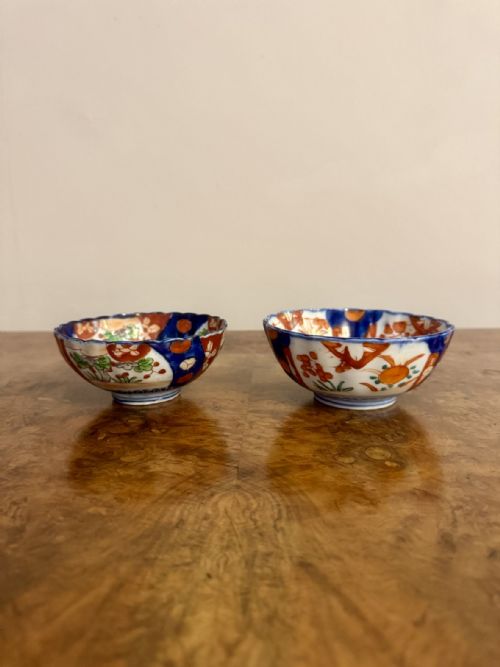
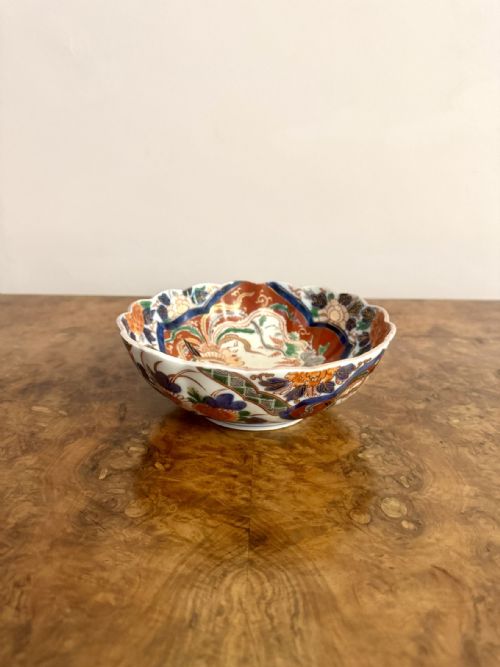
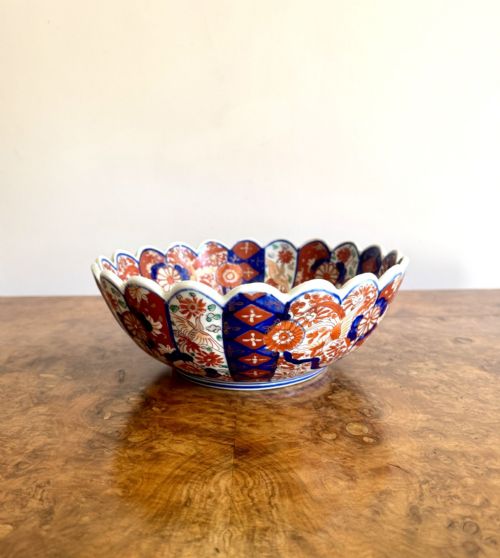
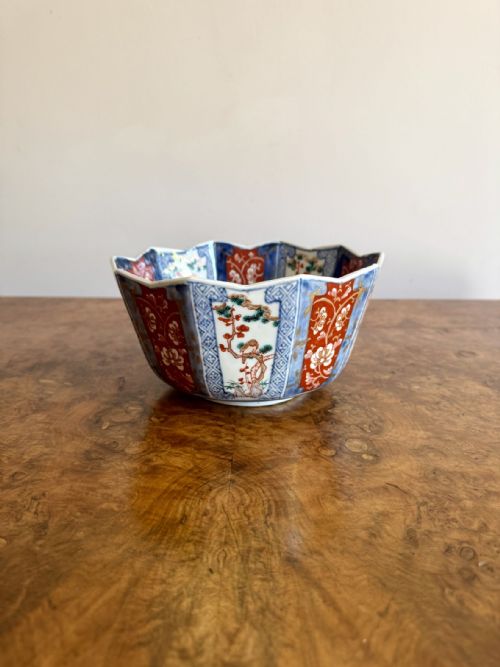
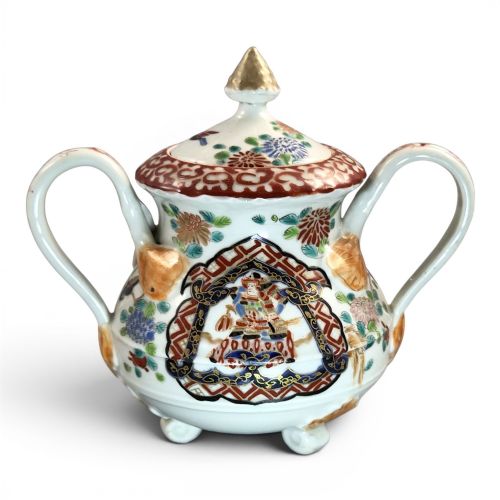

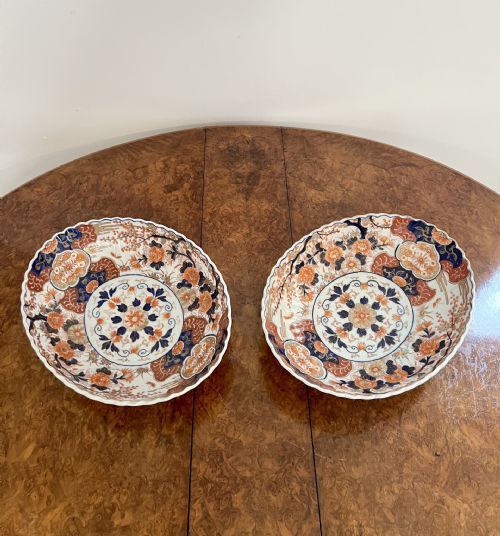


Meiji Period Imari Bowl
A meiji period imari bowl brings rich cobalt blue and vibrant enamel decoration directly from nineteenth-century Japanese kilns into your home.

Meiji Period Imari Bowl
The objects listed combine Japanese Imari styles with periods spanning from the eighteenth century to the early twentieth century, though nineteenth-century examples dominate. Alongside standard bowls, the selection includes decorative plates, lidded jars, sugar bowls, and tea cups.
Makers and regional hubs such as Arita shape this category, producing distinctive porcelain wares designed for display or domestic use. These pieces demonstrate the rich export history of Japanese ceramics during the Meiji era.
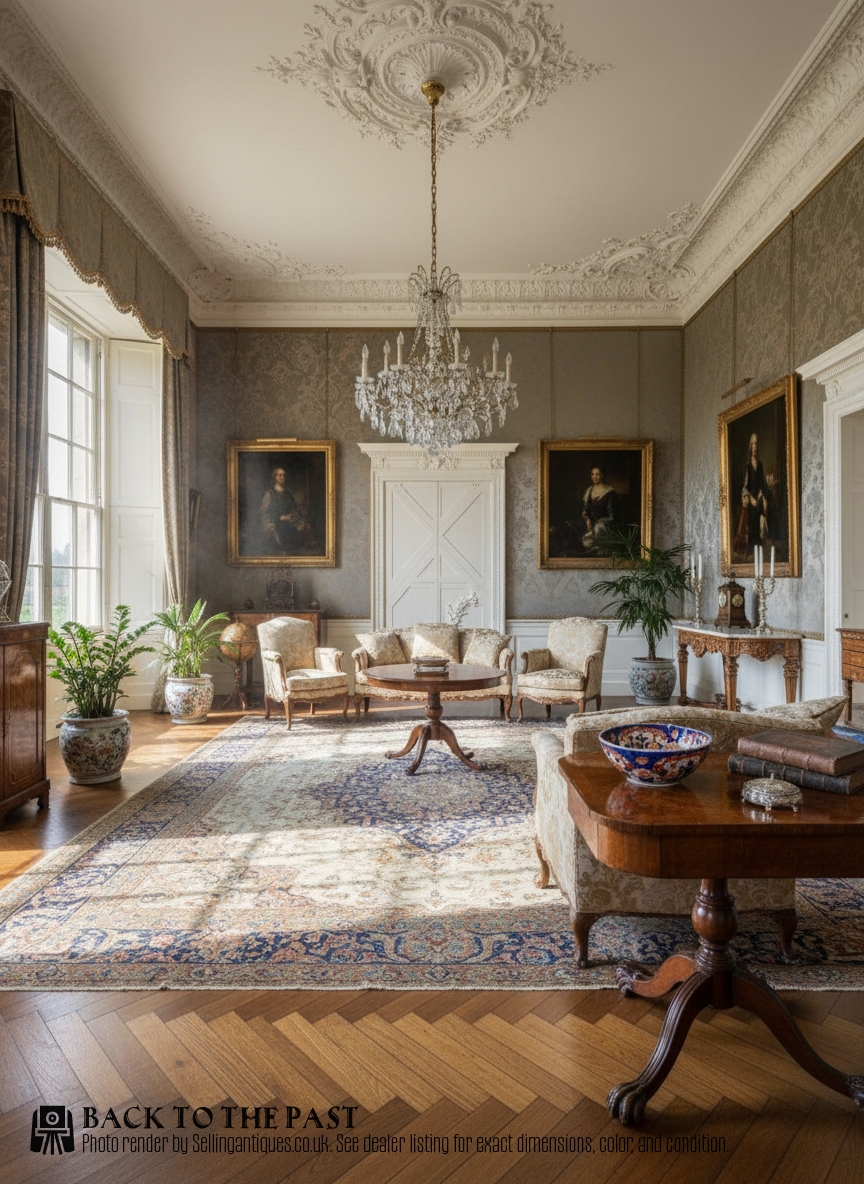
How they were made
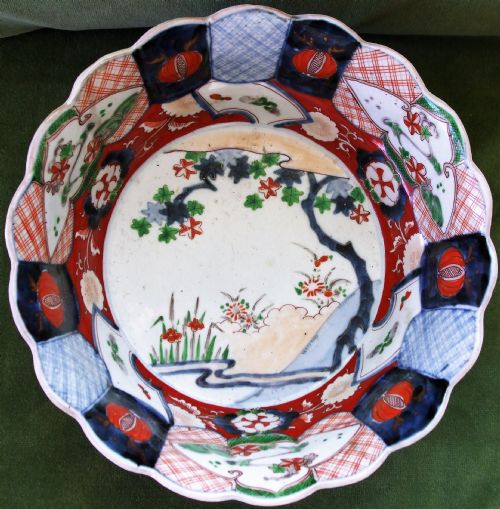
These pieces are constructed from porcelain and ceramic materials, shaped into bowls, dishes, and lidded jars. Potters utilised traditional throwing and moulding techniques to create both standard round vessels and complex shapes such as hexagonal profiles and scalloped edges.
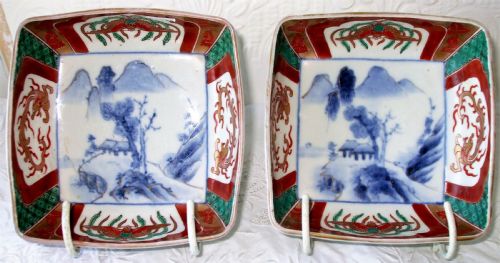
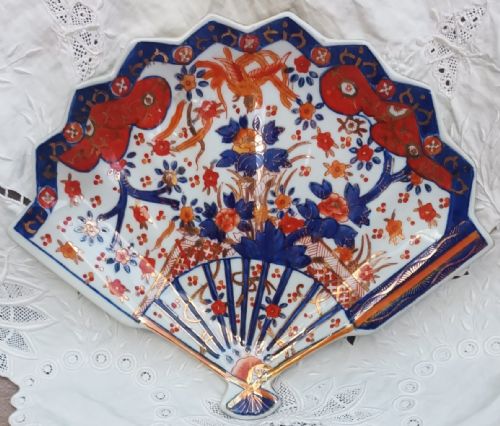
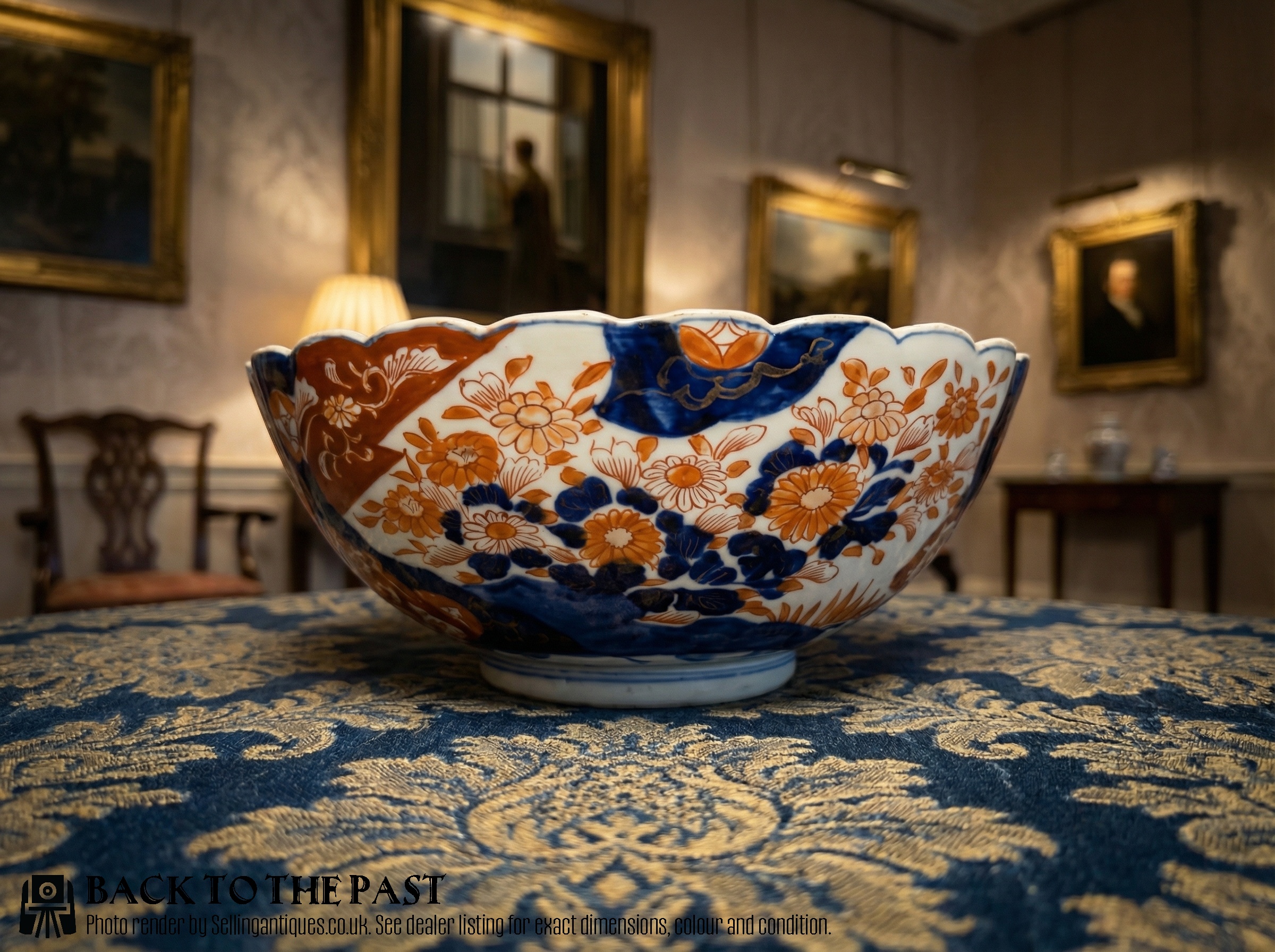
Decoration relies upon cobalt blue underglaze combined with overglaze enamels, often enhanced with gold leaf, gilding, or gilt accents. Hand painting brings intricate detail to the surface, creating the characteristic palette associated with Japanese Imari.
Meiji Period Imari Bowl Retail Price Guide 2026
Typical asking prices for meiji period imari bowl among the pieces listed under this phrase on Sellingantiques today, from the lower quarter to the upper quarter. They describe what is for sale here now, not the wider market.
Several plates and bowls carry the intriguing designation of Black Ship Imari, recalling historic maritime trade encounters.
What varies in quality
The refinement of the hand painting distinguishes standard vessels from exceptional examples, with finer brushwork showing greater control over floral and figural motifs. The application of gold leaf and overglaze enamel also differs, where denser and more precise gilding elevates a piece.
Form complexity influences the standard of the item, as seen in unusual hexagonal shapes and carefully cut scalloped edges that demand greater skill from the potter. Well-preserved glaze surfaces and distinct kiln marks from recognised makers further elevate the standing of an individual bowl.
Ginshōtei Gyokushi·Fukagawa Mark·Koransha
The Meiji Period Imari Bowl Glossary
- Imari
- A style of Japanese porcelain decorated in underglaze cobalt blue, iron red, and gold, originating from the town of Arita.
- Meiji Period
- The era in Japanese history spanning from 1868 to 1912, characterised by extensive cultural exchange and porcelain export.
- Cobalt Blue
- A deep blue pigment used beneath the glaze to create the foundational patterns on Japanese ceramics.
- Scalloped Edge
- A decorative curved or wavy rim profile shaped into the edge of a bowl or plate.
- Arita
- The Japanese town and primary centre for porcelain production where traditional Imari wares were manufactured.
Meiji Period Imari Bowl: Frequently Asked Questions
What is a meiji period imari bowl?
A meiji period imari bowl is a porcelain vessel decorated with traditional Japanese motifs, typically featuring cobalt blue and enamel colours.
These decorative pieces were produced in Japan during the late nineteenth and early twentieth centuries for both domestic use and export.
How were these bowls used?
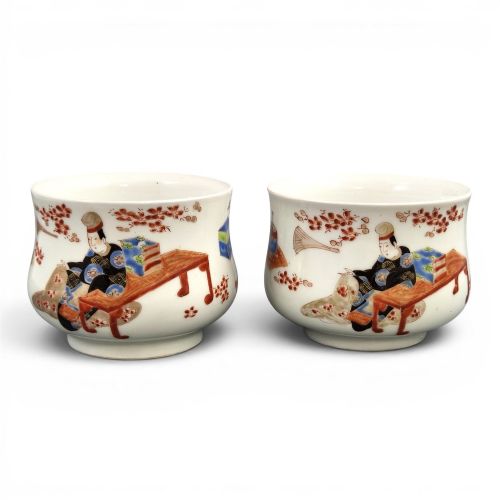
These vessels served various functions ranging from practical table service, such as sugar bowls and tea cups, to decorative display.
Many larger examples functioned as centrepieces or decorative dishes placed on tables and sideboards within nineteenth-century interiors.
How do I identify a meiji period piece?
Identification relies on examining the stylistic traits, porcelain body, and hand-painted enamel decoration characteristic of late nineteenth-century Japanese export wares.
Specific markings, such as factory stamps or signatures, often provide further context regarding the origin and production period.
Are all imari bowls round?
While standard round bowls are common, many examples feature alternative shapes including hexagonal profiles and distinct scalloped edges.
Variations also extend to shallow dishes, lidded jars, and plates produced within the same stylistic tradition.