



Meiji Metalwork Pair
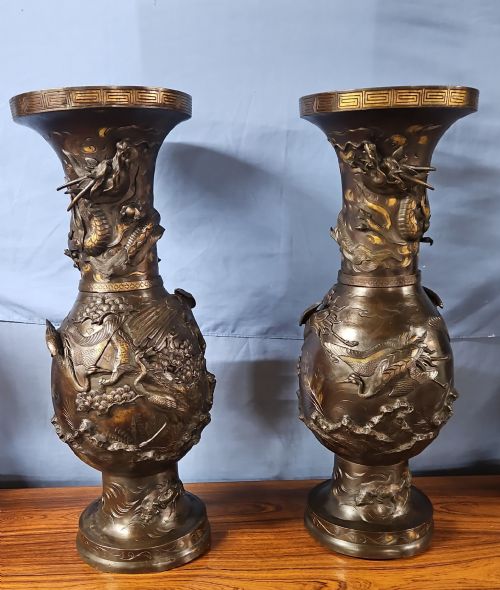
These meiji metalwork pair options comprise matching vessels and figures cast or enamelled during the Japanese imperial era.
Meiji Metalwork Pair
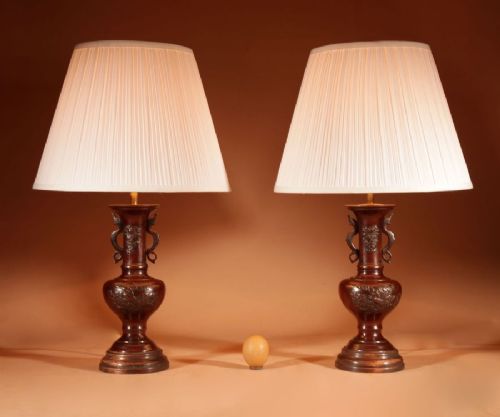
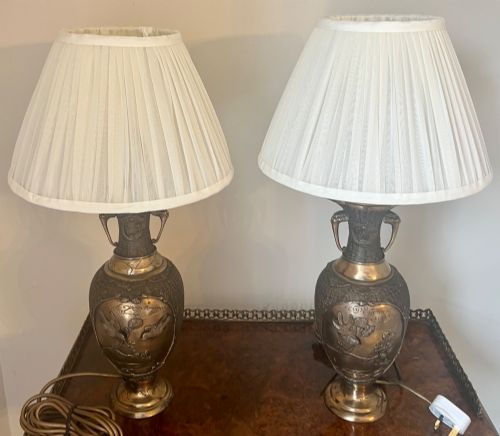
A meiji metalwork pair consists of matching decorative objects originating from late nineteenth and early twentieth century Japan. Buyers seeking a meiji metalwork pair encounter dual items designed for balance, ranging from large vases to garden statuary and table lamps.
The selections span the nineteenth century into the Edwardian decades, often crossing paths with Victorian production dates in the records. Most entries focus on bronze or cloisonne enamel vessels featuring birds, blossoms, and dragons.
How They Were Made
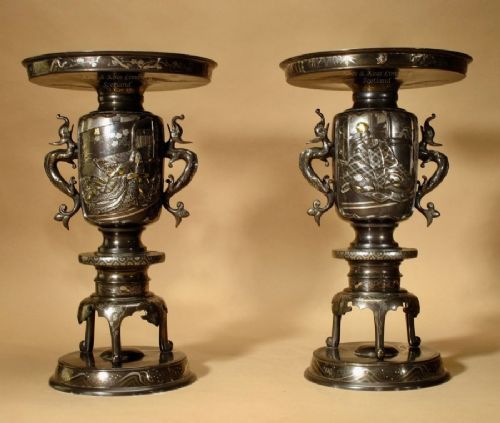
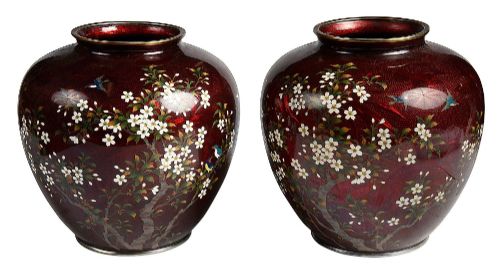
Metalwork pairs utilise bronze, copper, and brass formed through casting techniques, often enhanced with gold inlay or patination. Enamel surfaces receive intricate wirework cloisonne details fused onto metal bases.
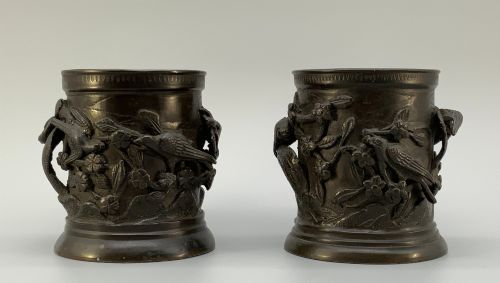
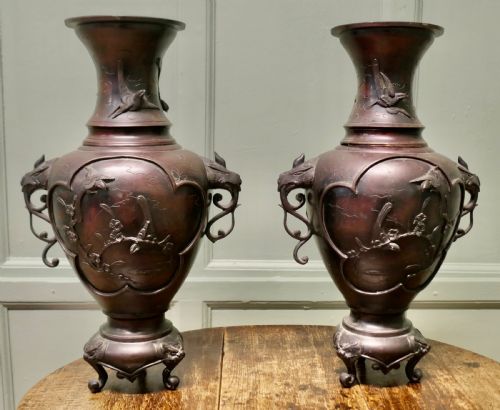
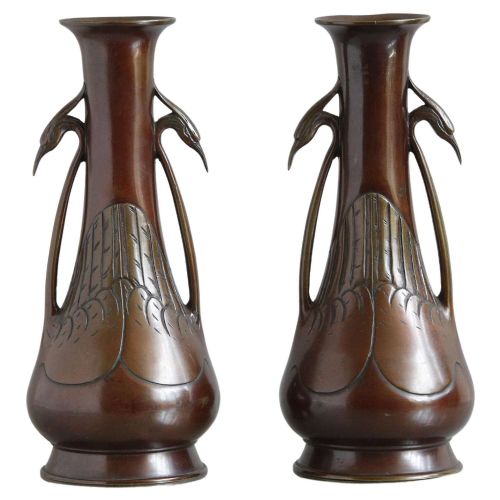
Makers integrated raised relief decoration and applied handles shaped like egrets or elephants directly onto the body of the vessels. Mixed metal components combine distinct alloys to achieve contrasting surface tones and textures.
Materials documented across the inventory include bronze, copper, brass, enamel, fabric, stone, and gold inlay.
What Varies in Quality
The standard of a meiji metalwork pair rests upon the precision of the casting and the crispness of the raised detail. Superior examples display sharply defined birds, floral motifs, and secure enamel work without blurring.
Scale and weight influence the character of each piece, distinguishing modest table items from massive floor urns and life-size garden okimono. The integration of mixed metal elements and gold inlay separates standard production from finer creations.
The Meiji Metalwork Pair Glossary
- Meiji
- The period in Japanese history spanning from 1868 to 1912, characterised by rapid modernisation and exceptional decorative arts output. Pieces from this era often bear distinct traditional motifs.
- Cloisonne
- A technique where enamel paste is applied within compartments created by soldered metal wires on a base. Fired surfaces produce smooth, colourful panels depicting natural scenes.
- Patinated Bronze
- Metal treated with chemicals or heat to alter the surface colour and tone. This process adds depth and age to the appearance of the object.
- Okimono
- Japanese display figures placed in rooms or gardens for decorative purposes. They frequently portray animals or figures rendered in realistic detail.
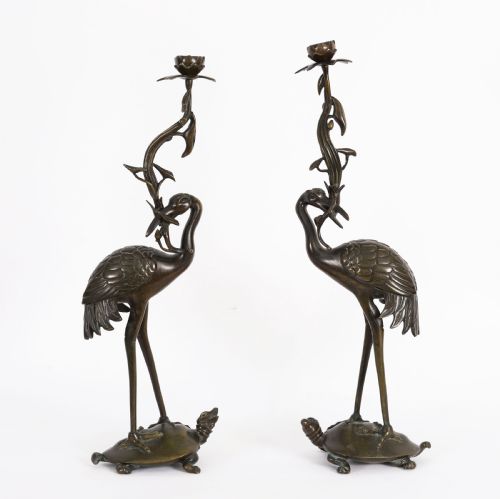
- Pricket Candlestick
- A candleholder featuring a sharp spike at the centre to secure the candle in place. These items serve both functional and ornamental roles.
Meiji Metalwork Pair: Frequently Asked Questions
What materials make up these objects?
These items predominantly utilise bronze, copper, brass, and enamel. Artisans also incorporated gold inlay, fabric, and stone elements into specific designs.
Surface treatments include patinated finishes and mixed metal applications to create visual contrast.
How do these pairs function in a room?
Matched pieces are traditionally displayed symmetrically on mantelpieces, tables, or cabinets to provide visual balance. Larger garden statuary and heavy urns suit floor placement or structural focal points.
Certain items like vases and candlesticks retain practical utility, while others function purely as decorative sculpture.
How are periods identified?
Dating relies on stylistic markers from the nineteenth century through the early twentieth century. Records link items to specific decades such as the 1880s and 1900s alongside the broader Meiji and Victorian eras.
Manufacturing techniques and material combinations further clarify the chronological origin of each set.
What subjects appear on the surface?
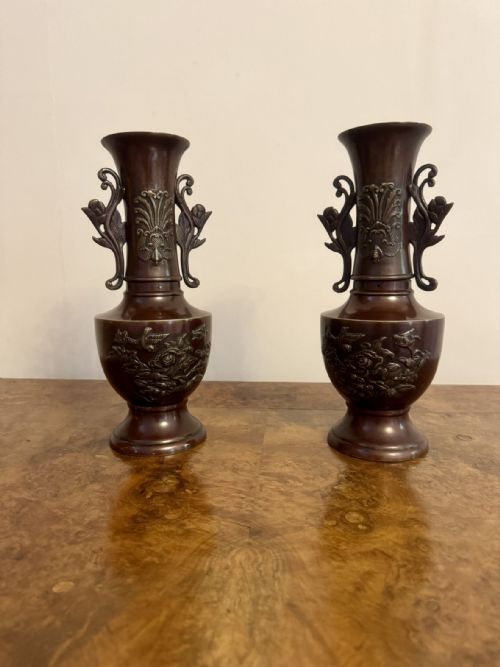
Decoration frequently depicts birds, blossom, dragons, and floral patterns in raised detail. Handles shaped as egrets and elephants frequently adorn the sides of the vessels.
Landscape themes and geometric cloisonne patterns also feature prominently across plates, chargers, and jars.