






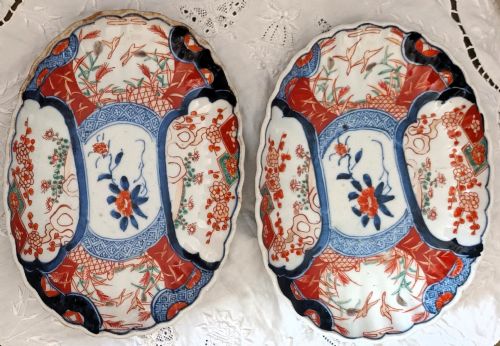
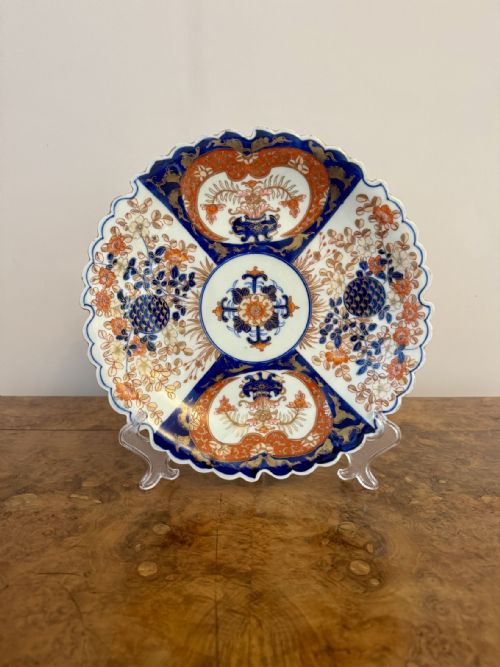
Meiji Imari Wall Plates
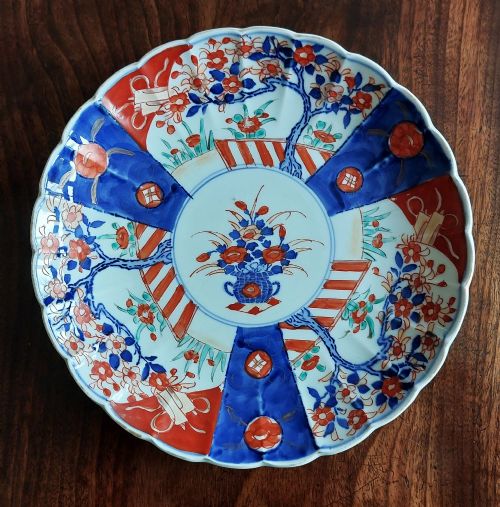
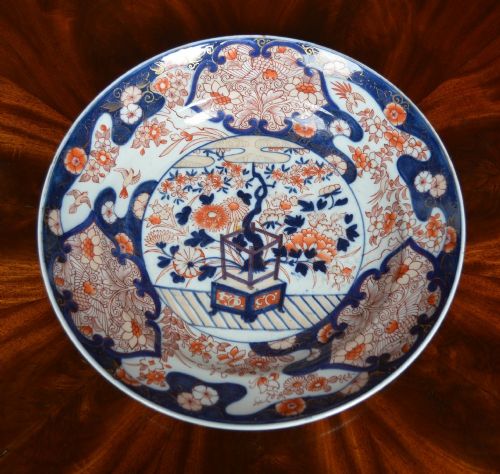
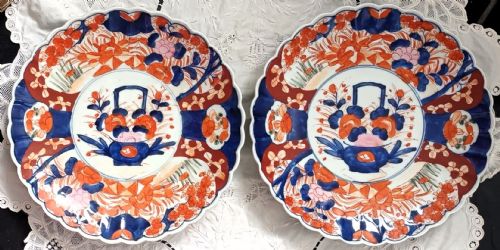
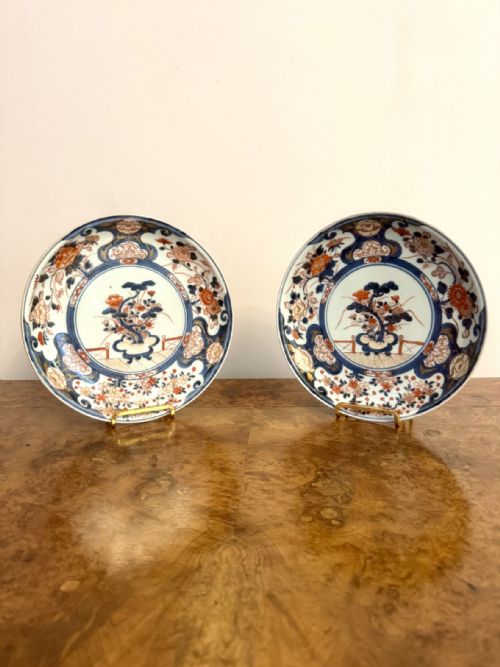
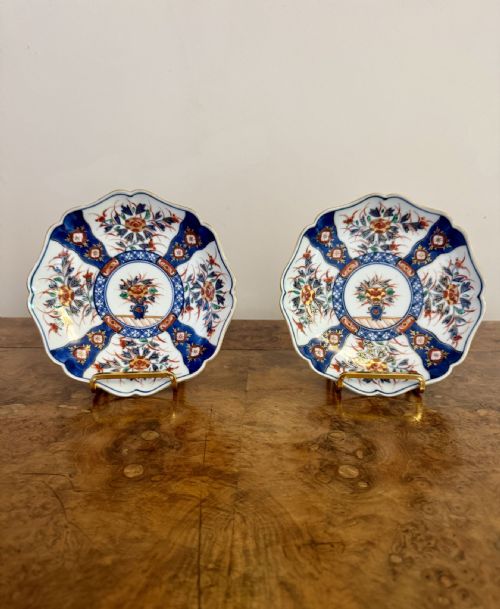
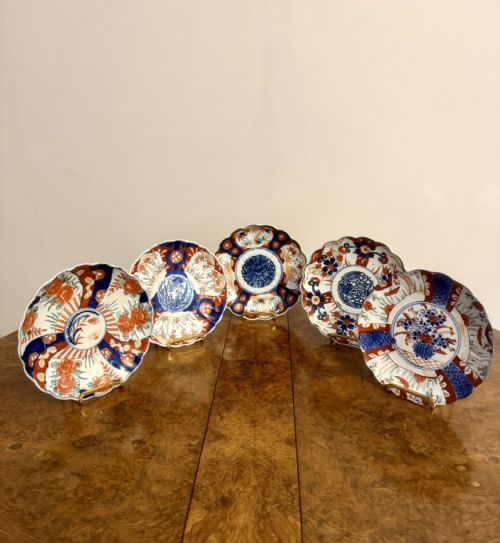
These meiji imari wall plates bring vibrant panels of cobalt underglaze and enamel decoration to any interior.
Meiji Imari Wall Plates
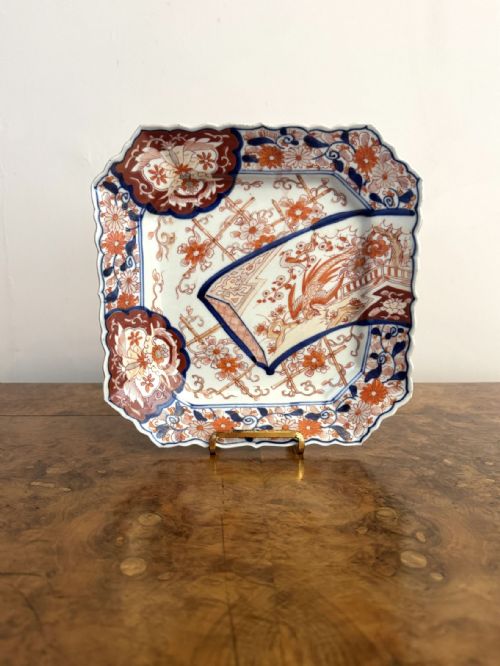
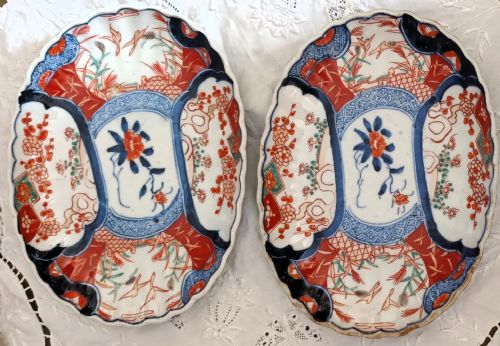
Meiji imari wall plates encompass decorative chargers, dishes, and platters produced during the late nineteenth and early twentieth centuries. These pieces reflect the output of Japanese kilns during the Meiji period, often arriving in forms like large round chargers or scalloped edge plates.
The objects meeting buyers here span the decades between eighteen eighty and nineteen twenty, drawing on traditions associated with Arita production. They function primarily as display items rather than utilitarian tableware.
Surviving examples range from single dishes to matched pairs and larger sets, frequently featuring traditional motifs such as exotic birds or figurative scenes.
How they were made
Potters built these items using ceramic porcelain bodies, shaped into circular, square, or scalloped formats before firing. Cobalt underglaze provided the deep blue foundation painted directly onto the clay.
Enamel colours and gold leaf or gilt details were applied over the glaze in subsequent stages to create the characteristic palette. Skilled painters executed the hand-painted designs that cover the surface of each charger.
Listings span the late nineteenth and early twentieth centuries, featuring porcelain chargers decorated with cobalt underglaze, enamel, and gold leaf.
What varies in quality
The clarity and registration of the cobalt underglaze separate standard production from superior examples. Precision in the brushwork determines how sharply the painted details emerge against the white porcelain ground.
The richness of the enamel palette and the application of gold leaf influence the visual depth of the plate. Unusual square shapes or complex moulded edges demand greater skill from the potter than standard round formats.
The Meiji Imari Wall Plates Glossary
- Imari
- A style of Japanese export porcelain originating from the port of Arita, traditionally characterised by a palette of blue, red, and gold. This aesthetic developed during the Edo period and continued into the Meiji era.
- Meiji
- The period of Japanese history spanning from eighteen sixty-eight to nineteen twelve, marked by extensive international trade in decorative arts. Pieces from this era often combine traditional techniques with new export demands.
- Charger
- A large decorative plate intended for display on a wall or sideboard rather than for serving food. These items typically measure significantly more in diameter than standard dining plates.
- Scalloped Edge
- A decorative rim shaped into a series of continuous curves or rounded projections. This moulding technique appears frequently on nineteenth-century Japanese plates.
- Cobalt Underglaze
- A blue pigment applied to the raw ceramic body before the application of a transparent glaze and subsequent high-temperature firing. This method ensures the colour remains permanent and protected beneath the surface.
Meiji Imari Wall Plates: Frequently Asked Questions
How do I hang a heavy imari charger on the wall?
Displaying large decorative plates requires a secure wire hanger designed to grip the rim evenly without putting pressure on the porcelain body. Wall fixings must match the substantial weight of nineteenth-century ceramics.
Ensuring the support bracket anchors directly into solid wall structure prevents accidental slips in busy rooms.
Can I use these antique plates for serving food?
These nineteenth-century pieces function primarily as decorative display items rather than practical tableware for daily dining use. Historic glazes and surface enamels may show wear or react poorly to acidic foods.
Gentle dusting with a dry cloth keeps the surface clean without risking damage to the hand-painted gold leaf.
How do I tell Meiji period plates apart from earlier pieces?
Meiji period items often display a greater variety of experimental shapes, such as square plates and complex scalloped borders. The painting style reflects the high output of export kilns operating between eighteen eighty and nineteen twenty.
Examining the foot ring and the tone of the cobalt underglaze helps connect the piece to late nineteenth-century Arita production.
What subjects typically appear on these decorative plates?
Common motifs include exotic birds, floral arrangements, and narrative scenes featuring figures such as the Seven Lucky Gods. These designs were hand-painted using contrasting panels of cobalt blue and bright enamel colours.
Each composition fills the surface of the porcelain to create a dense, highly patterned visual effect.