







Imari Ceramic Serving Plates
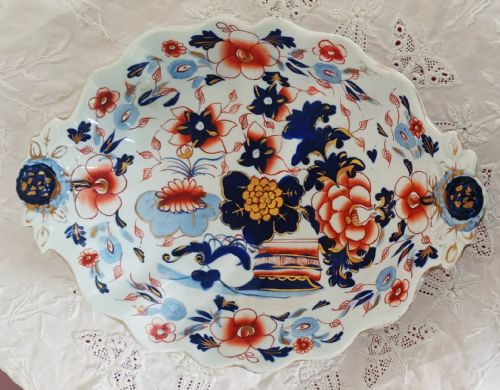
These imari ceramic serving plates bring hand-painted ironstone, porcelain, and earthenware from Japanese workshops and English houses to the table.
Imari Ceramic Serving Plates
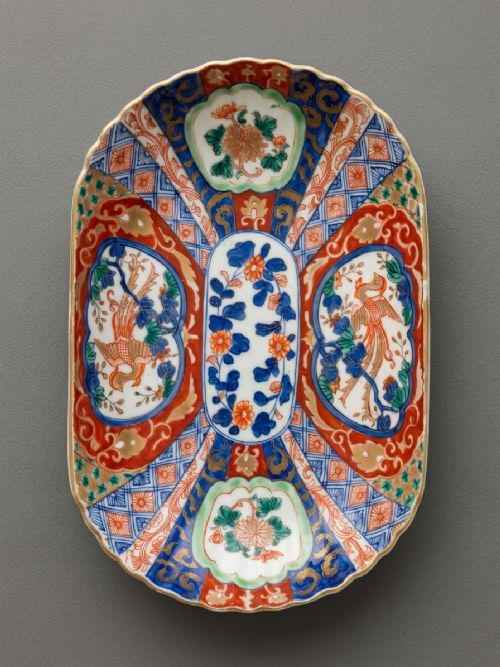
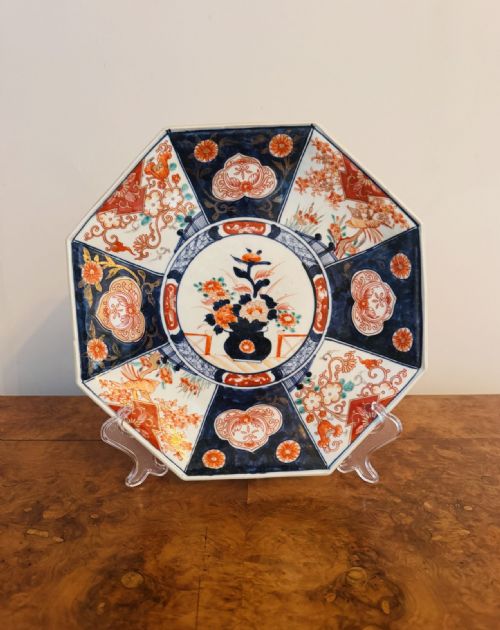
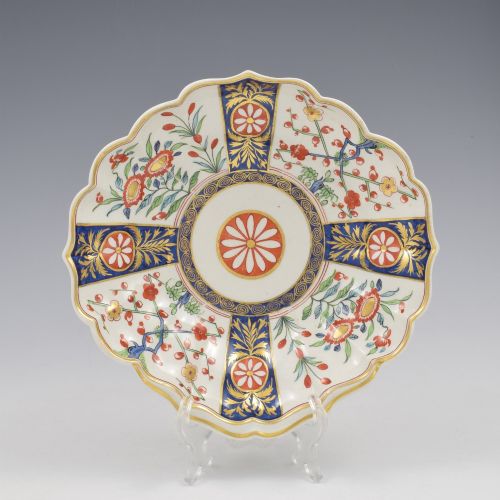
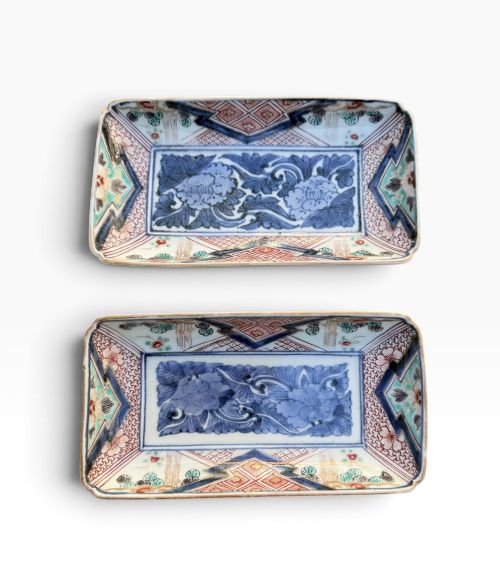
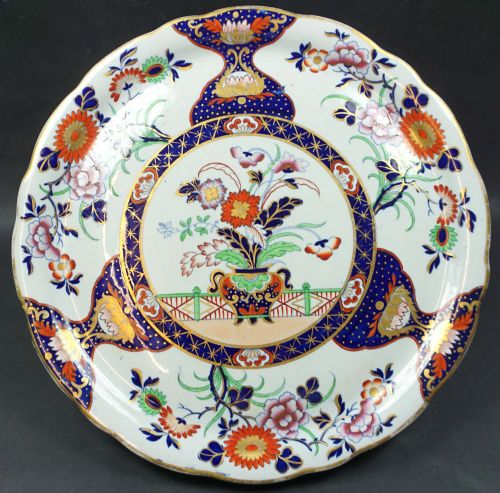
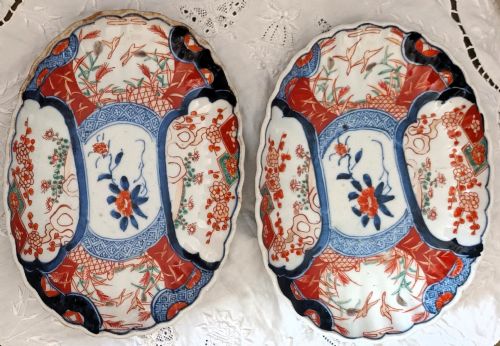
When searching for imari ceramic serving plates, you encounter a distinct blend of Japanese Meiji period exports and English interpretations from the Georgian and Victorian eras. The selection on this page spans large chargers, oval dishes, square plates, and fan shapes originating from Japanese Arita kilns alongside Staffordshire ironstone versions.
The Japanese examples display traditional floral and bird designs executed in the classic palette, while English makers such as Mason's and Wedgwood adopted the aesthetic onto ironstone china and earthenware. These forms served practical dining functions in country houses and continue to operate as functional centrepieces or wall displays.
Most pieces date across the nineteenth and early twentieth centuries, capturing a period when European dining habits embraced eastern-inspired palettes. You will find individual plates, pairs, and larger serving platters designed for heavier household use.
Materials and Construction
The physical build relies on durable bodies of porcelain, ironstone, and earthenware that could withstand regular dining use. Manufacturers applied rich glazes and enamel colours, often incorporating hand gilding and gold leaf to highlight intricate borders and central motifs.
Potteries utilised transfer printing combined with hand-coloured enamel work to achieve the characteristic dense patterns seen on both Japanese porcelain and English ironstone bodies. Firing techniques across Arita kilns and Staffordshire factories produced hard-wearing surfaces capable of retaining colour over centuries.
Imari Ceramic Serving Plates Retail Price Guide 2026
Typical asking prices for imari ceramic serving plates among the pieces listed under this phrase on Sellingantiques today, from the lower quarter to the upper quarter. They describe what is for sale here now, not the wider market.
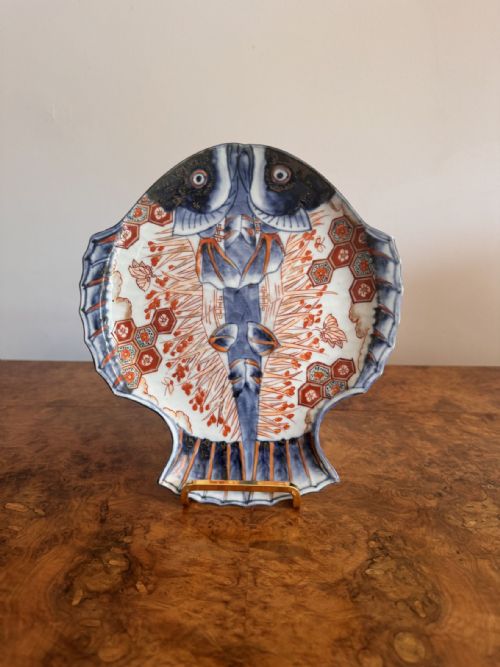
One extraordinary plate takes the literal form of a swimming fish, proving Victorian dinner tables had a sense of humour.
Assessing Quality and Execution
The distinction between standard domestic wares and superior examples rests upon the crispness of the hand painting and the complexity of the enamel work. Finer pieces demonstrate greater control in the brushwork, particularly within intricate floral, bird, and fan panels.
Weight and balance also define the category, as larger chargers and ironstone platters require substantial potting skill to prevent warping during kiln firing. The preservation of the original gold leaf and surface enamel without heavy rubbing separates well-kept display items from heavily used kitchenware.
Hicks & Meigh·Wedgwood·Mintons·Masons Patent Ironstone·Coalport
The Imari Ceramic Serving Plates Glossary
- Imari
- A style of Japanese porcelain originating from Arita, characterised by a palette of underglaze blue, iron red, and gold. English potteries frequently copied these distinctive palettes.
- Ironstone
- A type of heavy earthenware patented in England to provide a durable, stone-like alternative to porcelain. It formed the body of many large nineteenth-century serving platters.
- Charger
- A large decorative plate or platter used primarily for service or display rather than individual dining. They often feature the most elaborate hand-painted patterns.
- Comport
- An elevated dish or bowl used for serving fruit, sweets, or desserts at the table. These sit on a pedestal or footed base.
- Mejl
- The era in Japanese history spanning from 1868 to 1912, corresponding with a massive increase in export ceramics sent to Western markets.
Imari Ceramic Serving Plates: Frequently Asked Questions
Can I use these plates for serving food?
Most of these ceramic and ironstone pieces were originally designed for functional dining and heavy household use.
However, due to their age and delicate enamel or gold leaf decoration, many modern owners choose to use them for dry presentation or wall display.
How do I tell Japanese imari from English imari?
Japanese examples are typically made from true porcelain and often date from the Meiji period with Arita origins. They rely on translucent bodies and distinct eastern motifs.
English versions are usually heavier, utilising ironstone or earthenware bodies produced by Staffordshire potteries adapting the palette.
What is a fan shaped plate used for?
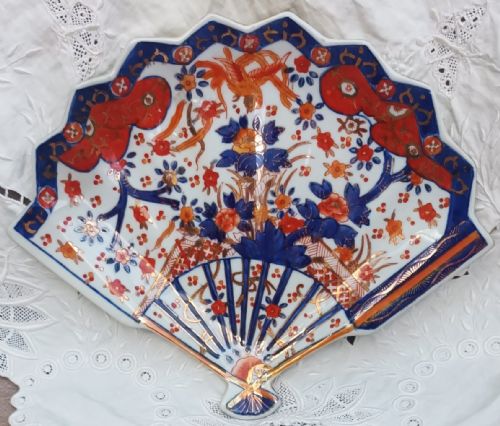
Fan shaped dishes and plates were created as decorative serving elements that could be arranged together in segments.
Their unusual geometry allowed them to fit into specialised supper sets and complex table arrangements during the nineteenth century.
How should I clean antique ironstone and porcelain?
Wash these pieces gently by hand using mild soap and warm water to protect the surface enamels and any applied gilding.
Avoid soaking them for extended periods or placing them in modern dishwashers, which can damage the historic glaze.