



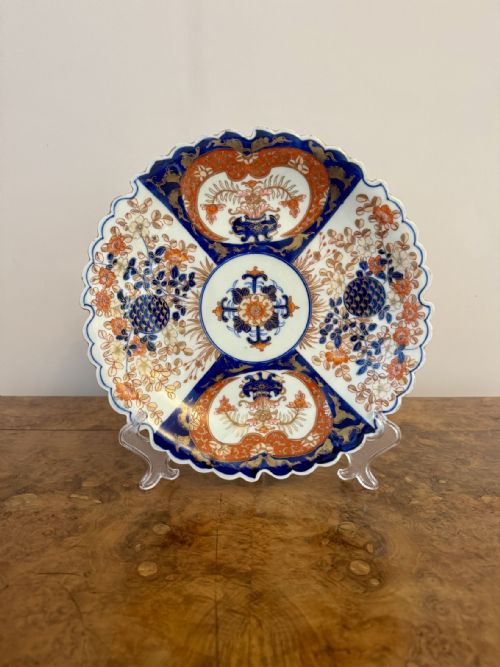


Vintage Imari Floral Dishes
These vintage imari floral dishes bring together rich iron-red and cobalt designs on porcelain, offering a striking display of historic craftsmanship for the table or wall.
Vintage Imari Floral Dishes
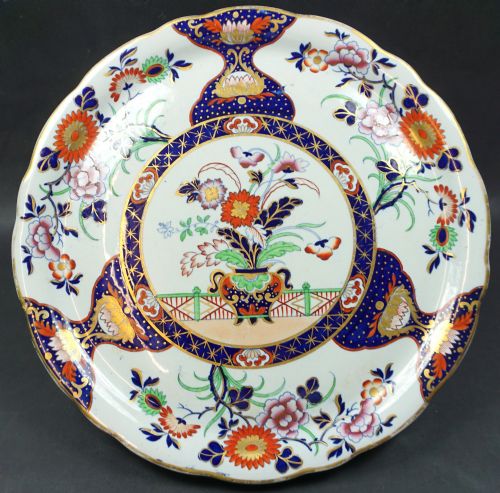
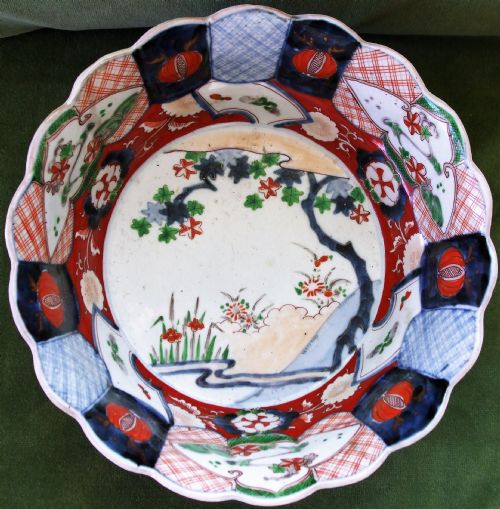
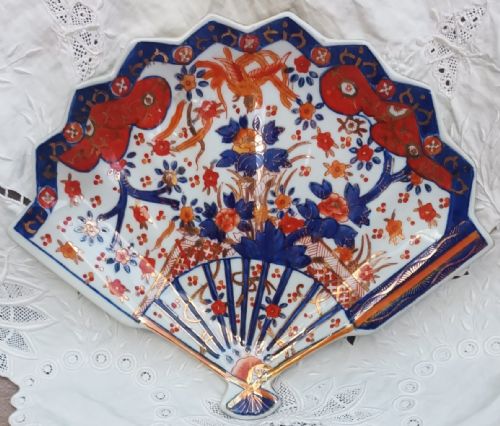
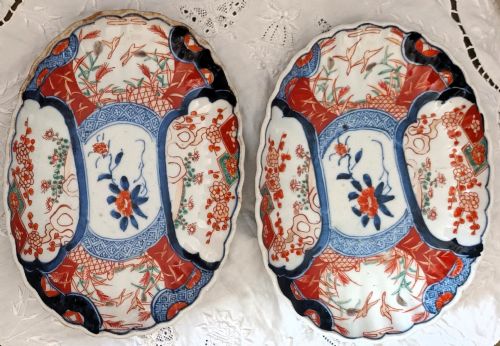
Vintage imari floral dishes encompass a striking variety of decorative plates, chargers, and bowls originating primarily from Japanese Meiji and Edo periods alongside 19th-century English interpretations. When buyers search for vintage imari floral dishes, they encounter items shaped as round plates, scalloped bowls, square dishes, and large wall chargers.
The pieces on this page lean heavily towards Japanese porcelain output from around 1900, alongside Victorian and Georgian ceramic works. Forms range from deep bowls and fluted vessels to broad chargers intended for prominent display.
English iterations in ironstone also appear, demonstrating how potters adopted the aesthetic for domestic table service.
How they were made
Potters built these pieces using dense porcelain, ceramic, and ironstone bodies, shaped by hand or moulded into plates, bowls, and tureens. Artisans then applied underglaze cobalt blue and rich enamel paints over the biscuit fired clay.
Many examples incorporate gold leaf or gilding to highlight floral motifs and geometric borders. A final high-temperature glaze seals the colours, creating the glossy finish characteristic of traditional imari ware.
Listings span multiple eras from Georgian and Victorian production to Japanese Edo and Meiji periods.
What varies in quality
Quality in these ceramics rests on the precision of the hand-painted brushwork and the vibrancy of the enamel palette. Superior pieces display crisp cobalt lines combined with rich iron-red tones and carefully applied gold leaf that remains sharp and adherent.
The crispness of moulded edges, particularly on scalloped, fluted, or square plates, distinguishes finer workshop output from simpler mass production. The clarity of the porcelain body and the smoothness of the glaze undercoat further separate standard utility wares from exhibition-grade chargers.
Hicks & Meigh·Masons
The Vintage Imari Floral Dishes Glossary
- Imari
- A style of Japanese export porcelain originating from the port of Arita, characterised by a distinctive palette of cobalt blue, iron-red, and gold. The style influenced potters across Europe and Asia alike.
- Charger
- A large decorative plate intended primarily for display on a sideboard or wall rather than for serving food at the table. These pieces often feature the most elaborate painted compositions.
- Ironstone
- A type of heavy, durable earthenware patented in the 19th century as a robust alternative to porcelain. It readily accepted colourful enamel transfers and hand-painted motifs.
- Scallop Edge
- A decorative rim shaped into a series of continuous curves resembling the edge of a scallop shell. This treatment appears frequently on bowls and plates to soften circular profiles.
Vintage Imari Floral Dishes: Frequently Asked Questions
How do I display vintage imari chargers safely?
Large chargers are best supported by sturdy wall hangers designed for heavy ceramics or displayed securely on dedicated plate stands within cabinets.
Ensure the mounting hardware grips the rim firmly without placing undue pressure on the glazed body.
Can I use these dishes for daily dining?
While historic ironstone and robust porcelain were built for functional use, antique enamels and gilt highlights are vulnerable to abrasive cutlery and frequent washing.
Most collectors prefer to reserve these pieces for decorative display rather than regular meal service.
What defines the imari colour palette?
Traditional imari relies on a strong foundation of underglaze cobalt blue paired with contrasting iron-red enamel over the glaze.
Additional highlights in gold leaf or bright green and yellow enamels are frequently added to complete the intricate floral designs.