


Meiji Floral Lidded Jar
These meiji floral lidded jar pieces bring intricate Japanese craftsmanship and vibrant floral designs into the home, offering collectors a striking focal point.
Meiji Floral Lidded Jar
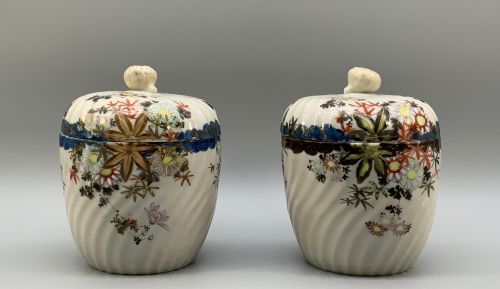
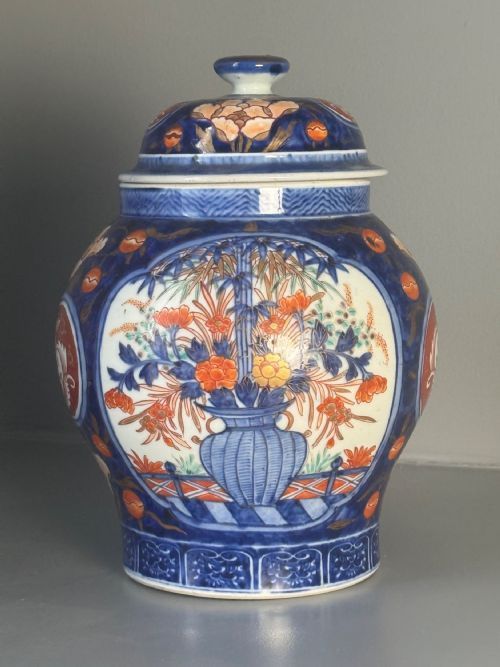
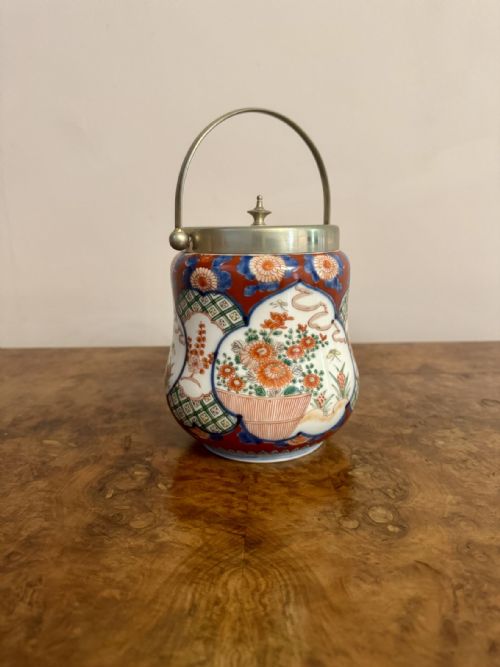
When searching for a meiji floral lidded jar, buyers encounter decorative vessels originating primarily from Japan during the 19th century and the Edwardian era. The selection centres on ginger jars, lidded vases, and biscuit barrels that display detailed floral motifs across their surfaces.
The objects available span various styles, most notably Japanese Imari and the Meiji period aesthetic, alongside Chinese Export pieces. These lidded jars and pots serve as tangible examples of late 19th-century and early 20th-century decorative art.
Most items on this page take the form of covered ginger jars or gourd pots complete with matching lids. Buyers meet pairs and trios alongside individual large vases, all united by their floral decoration and origins in the 19th century or around 1900.
Materials and construction
The construction of these pieces relies heavily on porcelain and cloisonne enamel, often incorporating copper, brass, and gold leaf elements. Artisans shaped these materials into robust ginger jars and lidded vases designed to hold items or stand purely for decoration.
Porcelain bodies receive detailed glaze and floral painting, typical of Japanese Imari production originating from Arita. Cloisonne examples utilise metal wires on copper or brass bases to partition the enamel fields before firing.
Listings feature items from the 19th Century, 1880, 1900, and Edwardian periods, utilising materials such as porcelain, enamel, copper, and gold leaf.
Factors that define quality
Quality in these pieces rests upon the precision of the enamel work and the clarity of the porcelain painting. Finely executed floral patterns and well-fitted lids demonstrate superior craftsmanship compared to simpler or coarser productions.
The integrity of the materials, such as the neatness of the cloisonne wirework or the vibrancy of the glaze, distinguishes the finer examples from standard decorative wares. Scale and the presence of matching pairs also influence the standing of an individual jar.
The Meiji Floral Lidded Jar Glossary
- Imari
- A style of Japanese porcelain featuring a distinct palette of underglaze blue, iron red, and gold. This style originated in the town of Arita and became popular for export during the Meiji period.
- Cloisonne
- A technique where metal wires are soldered to a metal base to create compartments filled with enamel paste and fired. This method produced intricate patterns on jars and vases.
- Ginger Jar
- A decorative container with a rounded body and a lid, originally used in China for storing spices. These forms were later adopted by Japanese makers for export markets.
- Meiji Period
- The era in Japanese history spanning from 1868 to 1912, marked by the opening of trade with the West and the production of decorative arts for international buyers.
- Biscuit Barrel
- A covered jar or container utilised for storing biscuits at the dining table. These vessels appeared in various ceramic and metal combinations during the late 19th and early 20th centuries.
Meiji Floral Lidded Jar: Frequently Asked Questions
How were these jars used?
Originally, many of these lidded containers served practical purposes like storing ginger, biscuits, or dry goods in the home. Over time, their decorative qualities took precedence.
Today, collectors use them as standalone display pieces on mantelpieces, sideboards, or tables to add colour and historical interest to a room.
How do I identify a Meiji period piece?
Identifying a Meiji period piece involves examining the materials, such as porcelain with Imari decoration or copper with cloisonne enamel. The manufacturing techniques and stylistic motifs align with late 19th-century Japanese export art.
Many listings also date from around 1880 to 1900, reflecting the production timeline of the era.
Are these jars sold with matching lids?
Many of the ginger jars and lidded vases retain their original matching covers, which is a key consideration for collectors. Pairs and trios often survive together with their respective lids.
Buyers should examine the specific listing details to confirm whether the lid is original to the jar or vessel body.