


Meiji Enamel Metalwork
These pieces of meiji enamel metalwork demonstrate the pinnacle of Japanese decorative skill through intricate wirework and vibrant glass panels.
Meiji Enamel Metalwork
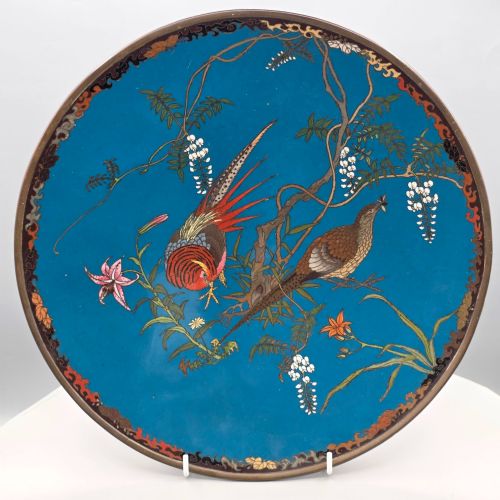
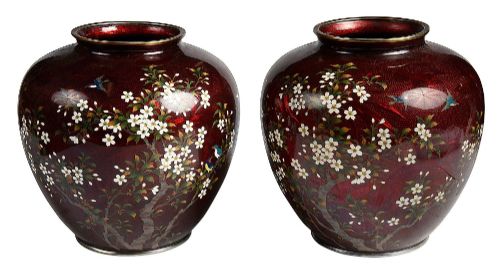
Meiji enamel metalwork encompasses a diverse array of vessels and display pieces created during the Meiji period and late nineteenth century. The selection on this page centres predominantly upon large decorative chargers, plates, and vases, alongside bowls, trays, and lidded gourd pots.
Buyers will encounter substantial temple water dispensers, tsuba, and paired vases originating from Japanese workshops. These objects showcase naturalistic imagery, including birds, koi, dragons, and floral motifs rendered in metal and coloured glass.
The objects span decades from the eighteen-sixties into the early twentieth century, reflecting a period of intense artistic refinement. Domestic display vessels dominate the inventory, offering both scale and detailed pictorial surfaces.
Materials and Technique
Artisans constructed these pieces using copper, bronze, and brass as the foundational metal body, often shaping them into substantial vases or wide chargers. Thin metal wire, including silver wire, was soldered onto the surface to create distinct cells known as cloisons.
Coloured enamel paste was packed meticulously into these wire compartments before firing in a kiln to fuse the glass to the metal base. Advanced techniques such as ginbari and basse-taille introduced textured foil under translucent red enamel layers to achieve depth and luminosity.
Several chargers feature owls gazing serenely out from the metalwork alongside towering depictions of Mount Fuji.
Assessing Quality
Quality rests upon the precision of the wirework and the complexity of the pictorial design, where tighter cell grids and seamless enamel fills distinguish superior examples. Pieces bearing signatures from renowned makers or featuring advanced techniques like ginbari demonstrate a higher tier of workmanship.
Scale and ambition also dictate standing, with monumental vases and large chargers carrying intricate dragon or phoenix motifs representing the most demanding feats of production. The harmony of the palette and the crispness of the metallic outlining separate standard decorative output from masterworks.
Ando Jubei·Kinkozan
The Meiji Enamel Metalwork Glossary
- Cloisonne Enamel
- A technique where thin metal wires are soldered to a metal base to form cells that hold coloured glass paste before firing. This method allows for intricate pictorial designs across vases and chargers.
- Ginbari
- A Japanese enamelling method featuring a textured or foiled background beneath translucent enamel. It creates a shimmering, patterned depth beneath the coloured surface.
- Basse-Taille
- An enamel technique where the metal background is carved or engraved before applying translucent enamel. Light passes through the coloured glass to reveal the underlying relief design.
- Champleve Enamel
- A method where troughs or cells are hollowed directly into the thick metal body and filled with enamel. This contrasts with cloisonne, which relies on applied surface wires.
- Tsuba
- A traditional guard at the end of the grip of a Japanese sword. These metal components were frequently decorated with elaborate enamelling.
Meiji Enamel Metalwork: Frequently Asked Questions
What is meiji enamel metalwork?
These items are decorative metal objects created in Japan during the Meiji period, featuring detailed glass enamelling fused to copper or bronze bases.
Artisans applied thin wires to outline intricate subjects like birds, dragons, and landscapes, filling the resulting compartments with coloured enamel before firing.
How were these pieces used originally?
Many of these items served as ornamental display objects within homes, intended to showcase the wealth and refined taste of the owner through chargers, plates, and vases.
Larger forms, including temple water dispensers and monumental vases, fulfilled both ceremonial functions and grand interior decoration roles.
How do I display them at home?
Large chargers and decorative plates suit wall mounting or placement on sturdy stands where their detailed surface work remains fully visible.
Vases and bowls require stable surfaces away from direct sunlight to preserve the rich tones of the coloured enamel and metal.
How can I tell periods apart?
Objects from the earlier nineteenth century often employ heavier bronze or copper foundations with traditional champleve or simpler cloisonne patterns.
Later Meiji creations frequently incorporate advanced techniques like silver wire cloisonne and ginbari foil grounds, reflecting rapidly evolving workshop capabilities.