


Meiji Earthenware Bowl
A meiji earthenware bowl brings the intricate artistry of late nineteenth-century Japan straight to a modern interior.
Meiji Earthenware Bowl
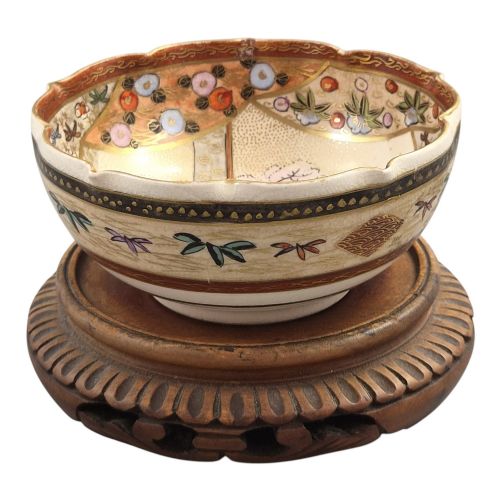
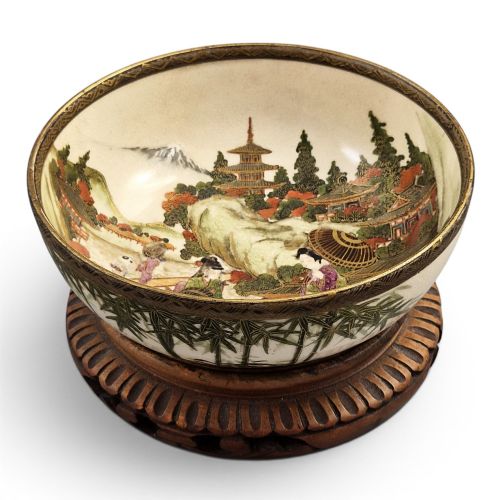
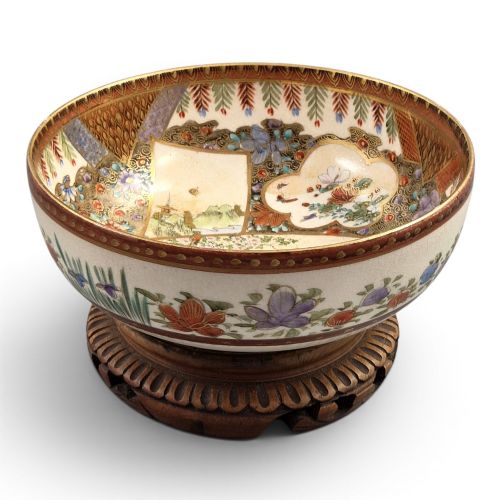
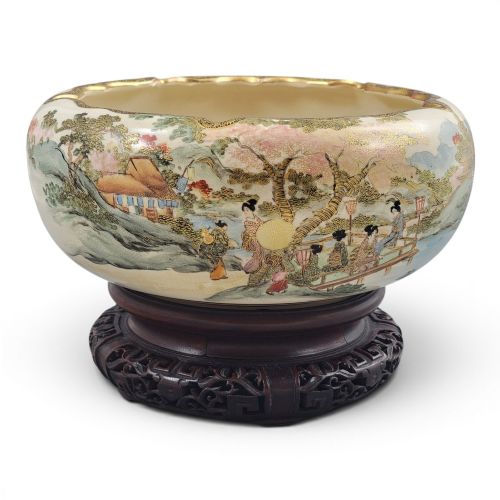
A meiji earthenware bowl is primarily represented here by Satsuma ware pieces originating from Japanese creative centres such as Kyoto and Yokohama. These decorative vessels date predominantly from the nineteenth century, including the Meiji period and surrounding decades like the Edwardian and Victorian eras. Collectors encounter forms ranging from small hanami bowls and sugar bowls to monumental exhibition-scale examples.
The decorative schemes on these bowls frequently feature detailed hand-painted scenes of flowers, birds, samurai battles, and traditional figures like women and children under camellia trees. Many examples display dense floral patterns, including thousand-flower or millefleur designs, alongside signatures from renowned masters and studios.
Originating from specific regional kilns and urban workshops, these bowls capture a distinct historical moment in Japanese ceramic production intended for both domestic appreciation and export. The pieces combine traditional earthenware bodies with elaborate surface painting and gilding characteristic of the era.
Materials and methods
The foundational body of these pieces consists of porous earthenware, which is then finished with fine enamel paints and detailed gold leaf or gold gilt highlights. Skilled artisans applied intricate designs using coloured enamels, often incorporating metal wire in specialised cloisonné or Totai Shippo techniques to delineate complex surface patterns.
Many bowls feature the distinct Shimazu crest or mon, stamped or hand-painted onto the base alongside individual artist and studio signatures. Kilns in Kyoto and Yokohama utilised specialised glazing and firing methods to achieve the characteristic finely cracked ice glaze typical of classic Satsuma ware.
Listings feature items from the nineteenth century, including the Meiji period, alongside Edwardian and Victorian examples.
Assessing quality and craftsmanship
The division between standard production and masterwork pieces rests upon the precision and complexity of the enamel painting and gilding. Bowls bearing signatures of celebrated makers, such as Kinkozan, Gyokkō, or Shizan, demonstrate superior brushwork and compositional depth compared to unsigned commercial wares.
Scale and ambition also dictate standing, as monumental vessels or those employing difficult techniques like Totai Shippo cloisonné over earthenware demand exceptional technical control. The clarity of the pictorial narrative, from subtle floral arrangements to elaborate multi-figure samurai battles, marks the finest examples.
Gyokkō·Kozan·Shizan·Ryuzan·Nikko·Hododa·Kinkozan·Shozan
The Meiji Earthenware Bowl Glossary
- Satsuma ware
- A type of Japanese earthenware featuring a pale, ivory-coloured crackle glaze that serves as a canvas for polychrome and gilt decoration. It originated in Satsuma Province before production spread to major urban centres like Kyoto.
- Meiji period
- The era of Japanese history spanning from 1868 to 1912, characterised by the opening of trade with the West and a flourishing of decorative arts tailored for international export. Pieces from this time often bear artist signatures and complex pictorial themes.
- Millefleur
- A decorative pattern translating to a thousand flowers, where the entire surface of the bowl is densely covered in miniature painted blossoms with little to no background showing. This meticulous style requires immense patience from the painter.
- Mon
- A Japanese heraldic badge or crest used to identify families, clans, or specific institutions. The Shimazu clan crest frequently appears on Satsuma ceramics associated with the ruling domain of that region.
Meiji Earthenware Bowl: Frequently Asked Questions
What is a meiji earthenware bowl?
A meiji earthenware bowl is a decorative ceramic vessel created in Japan during the late nineteenth or early twentieth century, famous for intricate enamel and gilt painting.
These pieces typically showcase traditional Japanese motifs, ranging from dense floral fields to historical samurai scenes painted by skilled studio artists.
How do I identify a signed bowl?
Signatures and studio marks are usually hand-painted or impressed on the underside of the base, often accompanied by the Shimazu family crest.
These inscriptions frequently name the specific master painter or the Kyoto or Yokohama workshop responsible for the decoration.
How should I care for a Satsuma bowl?
These delicate earthenware pieces require gentle handling and should be kept away from direct sunlight and excessive moisture to protect the fragile enamel and gold leaf.
Dusting should be done lightly with a dry, soft cloth, avoiding any liquid cleaners that might compromise the historic surface.