


Meiji Cloisonne Wall Plate
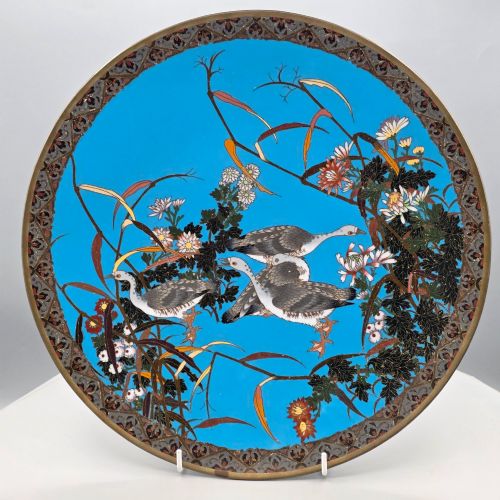
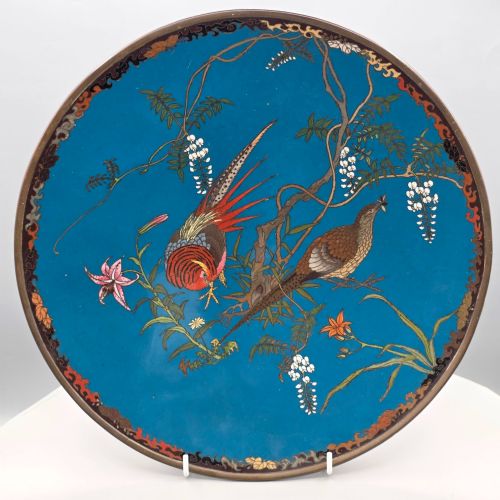
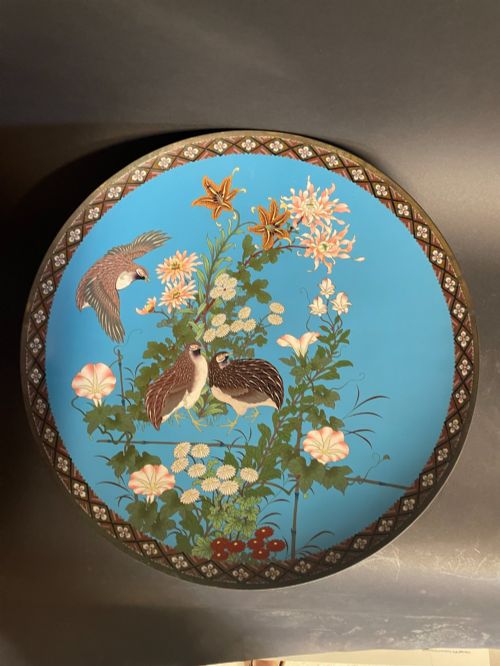
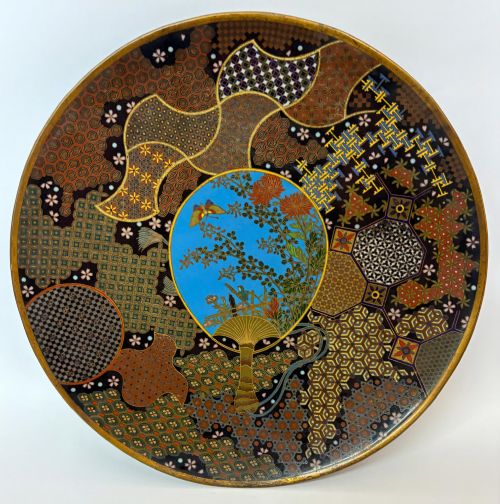
A meiji cloisonne wall plate brings masterwork metalwork and vitreous enamel into a room through striking avian and dragon motifs.
Meiji Cloisonne Wall Plate
The objects span from the 1860s through to 1900, showing deep roots in the late Edo period alongside the defining decades of Meiji manufacturing.
Surviving examples display an extraordinary range of pictorial subjects, from fierce dragons and ho-o birds to serene landscapes, koi, and cranes.
How they were made
Artisans formed the vessels from copper, bronze, or brass bodies, and occasionally utilised porcelain foundations for totai shippo pieces.
Detailed designs were built upon the surface using thin brass or copper wire to create compartments, known as cloisons, which were subsequently filled with coloured enamel and fired.
Some specialised works combined traditional wirework techniques with porcelain or simulated tree bark textures and cinnabar lacquer.
The documented pieces span several decades from the 1860s through 1900, capturing the stylistic shifts of the Meiji period.
What varies in quality
The finesse of the metal wirework defines the upper tier of production, where exceptionally thin lines delineate intricate feathers, scales, and floral patterns with total precision.
Colour blending and the depth of the vitreous enamel mark the distinction between standard decorative output and masterwork creations.
Scale also dictates standing, with enormous chargers requiring immense technical control during the multiple firing stages to prevent warping or cracking.
The Meiji Cloisonne Wall Plate Glossary
- Cloisonne
- Enamel decoration technique where fine metal wires form raised cells on a metal body to hold coloured pastes before firing.
- Charger
- A large decorative plate or tray intended primarily for display rather than dining use.
- Totai Shippo
- A specific Japanese technique where enamel is applied directly onto a porcelain body rather than traditional metal.
- Ho-o
- A mythical bird or phoenix symbolising virtue and grace, frequently depicted with elaborate plumage.
- Mon
- A traditional Japanese heraldic emblem or badge used to signify family lineages or authority.
Meiji Cloisonne Wall Plate: Frequently Asked Questions
How do I hang a heavy charger?
Large plates require robust, adjustable wire display hangers that securely grip the rim without putting pressure on the enamel surface. Ensure the wall fixing anchors directly into solid masonry or a timber stud.
Avoid standard adhesive disk hangers for pieces exceeding modest weights. Period metal chargers possess substantial mass and demand secure, permanent load-bearing support.
What is totai shippo?
Totai shippo refers to enamel work created on a porcelain base rather than the usual copper or brass foundation. Artisans often carved these porcelain bodies to resemble natural textures like tree bark before applying wire and enamel.
This hybrid method produced distinct textural pieces that bridge ceramics and metalwork. Surviving examples showcase exceptional versatility among late-nineteenth-century makers.
How do I date these plates?
Dating relies on stylistic evolution, wire types, and subject matter spanning from the late Edo period through the Meiji era. Earlier nineteenth-century works often feature bolder dragon motifs and heavier brass wires, while later decades embraced finer detailing.
Documentation and signatures occasionally offer more precise chronological markers. Comparing the complexity of the cloison cells helps place pieces within the broader nineteenth-century timeline.
Where were these pieces made?
Production centred in key Japanese manufacturing hubs during the Meiji period, with Nagoya emerging as a prominent centre for fine cloisonne. Workshops in these regions employed specialised artisans dedicated to drawing wire, mixing enamels, and managing kiln firings.
Many plates bear signatures from master workshops or individual artists active in these districts. These geographic centres drove the export market for high-status decorative arts.