
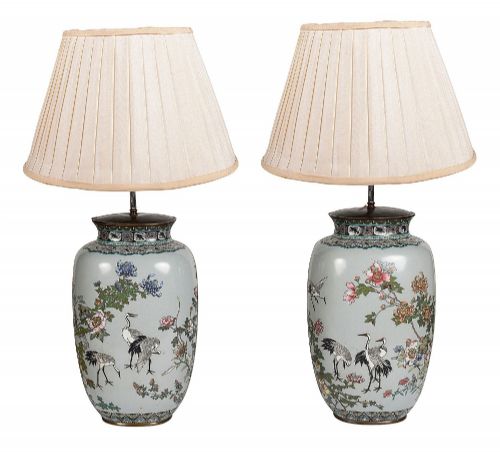


Meiji Cloisonne Enamel Vases
These meiji cloisonne enamel vases are decorative vessels of fine craftsmanship, offering intricate wirework and vibrant coloured ground for the discerning collector.
Meiji Cloisonne Enamel Vases
When you search for meiji cloisonne enamel vases, you are looking at decorative vessels created during the late nineteenth and early twentieth centuries. These objects range from miniature examples to large floor-standing urns and ginger jars. The selection includes paired items alongside individual pieces designed for display.
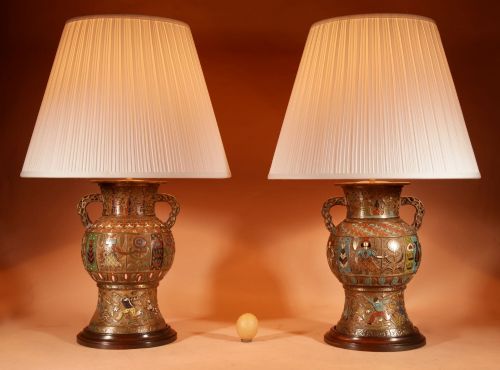
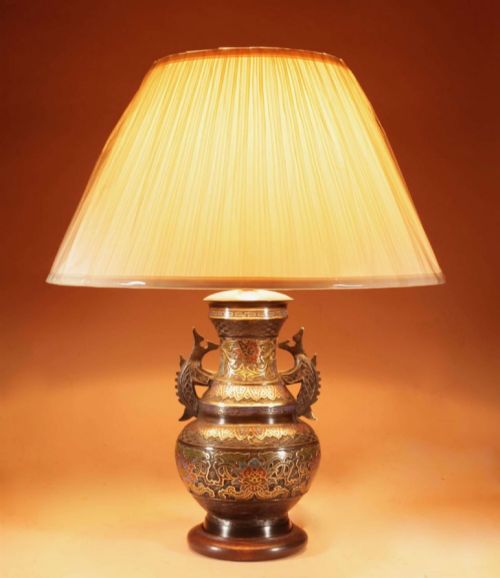
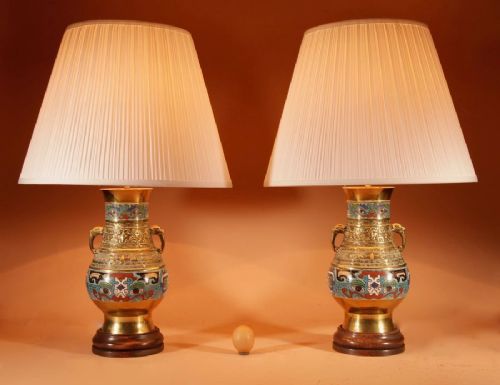
The objects frequently reflect Japanese Meiji period aesthetics, alongside related champleve and bronze table lamps sharing similar origins. Many items originate from the nineteenth century, extending into the Edwardian era and the 1920s and 1930s. The forms encompass standard vases, decorative jars, and vessels adapted into lamps.
How they were made
The construction of these vessels relies on a metal body, typically copper, brass, or bronze, upon which thin metal wires create delineated compartments. These cells receive applications of enamel paste before undergoing high-temperature firing. Artisans then polish the exterior until the metal ribbons and coloured glass fuse into a smooth finish.
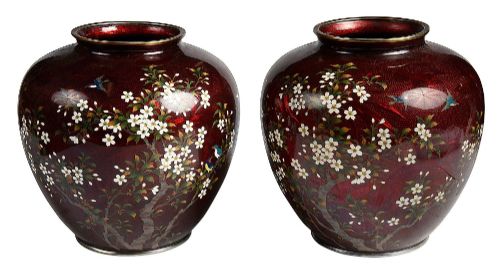
Specialised techniques include ginbari and basse-taille methods, where textured foils beneath translucent red enamel create patterned backgrounds. Silver wire often forms the delicate boundaries of the design, while alternative methods such as champleve carve troughs directly into the bronze substrate for the enamel filling.
Materials recorded across the inventory include enamel, copper, brass, bronze, fabric, wood, and silver.
What varies in quality
The distinction between standard items and exceptional works rests upon the precision of the wirework and the complexity of the botanical or avian motifs. Master workshops produced finely detailed designs with microscopic wire cells, whereas simpler productions display broader spacing and less intricate imagery.
Signatures and marks from prominent makers elevate a piece, alongside the presence of scarce techniques like translucent ginbari enamelling over textured foils. The weight of the underlying bronze or brass body and the overall symmetry of the vessel further distinguish finer examples.
Ando Jubei·Ando
The Meiji Cloisonne Enamel Vases Glossary
- Cloisonne
- Enamelling technique where thin metal wires form raised barriers on a metal base to hold coloured pastes before firing. This method allows for intricate pictorial designs across the surface.
- Ginbari
- Japanese enamelling method using a patterned or textured metal foil placed beneath translucent coloured enamel. It creates a shimmering, reflective depth behind the primary decoration.
- Champleve
- Technique where troughs or cells are hollowed directly into a bronze or metal foundation rather than soldering wires on top. The excavated cavities are then filled with enamel.
- Basse-taille
- Enamelling process where the metal ground is carved or engraved in low relief beneath a translucent enamel layer. This lets light pass through to the worked metal below.
- Totai Shippo
- Variant of cloisonne using a transparent or translucent glaze over a porcelain or pottery base instead of metal. It produces a distinctive textured surface resembling natural materials.
Meiji Cloisonne Enamel Vases: Frequently Asked Questions
How do I identify a Meiji period piece?
Meiji period items date from the late nineteenth or early twentieth century, aligning with the reign of Emperor Meiji in Japan.
Look for fine silver wirework, detailed naturalistic motifs of birds and flowers, and occasional maker marks on the base.
Were these vases used as lamps?
Many surviving vessels were converted into table lamps during the Edwardian era or later periods.
Wiring is often integrated through drilled bases or fitted mounts, altering the original function of the decorative vase.
What is the difference between cloisonne and champleve?
Cloisonne involves soldering thin wires onto a copper or brass body to create cells for the enamel.
Champleve carves the design directly into a heavy bronze substrate to form the recessed channels for the paste.
How should I clean my enamel vase?
Dust the surface gently with a soft, dry cloth to prevent accumulation within the wire cells.
Avoid abrasive cleaners or chemical polishes that can damage the delicate metal wires and vitreous enamel.