





Enamel Oriental Table Lamps
These enamel oriental table lamps bring weight and vivid pattern to a room, turning antique vases into practical lighting.
Enamel Oriental Table Lamps
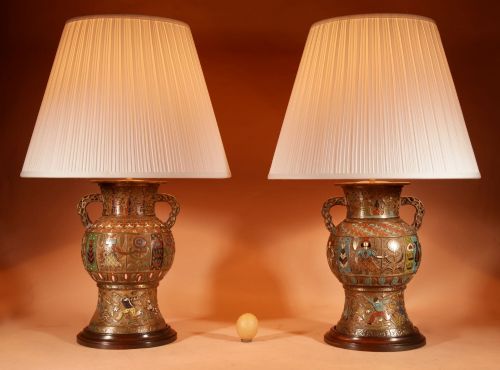
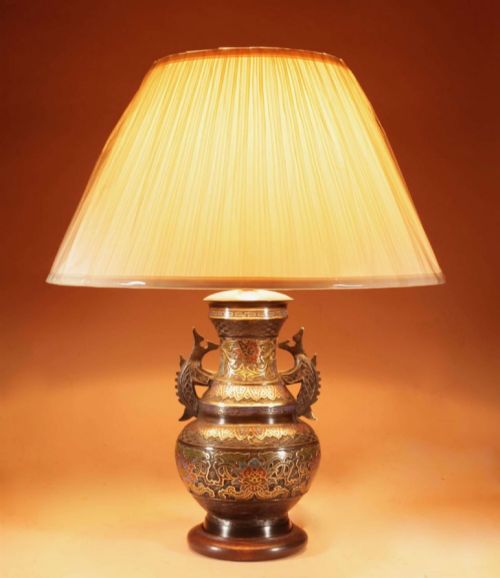
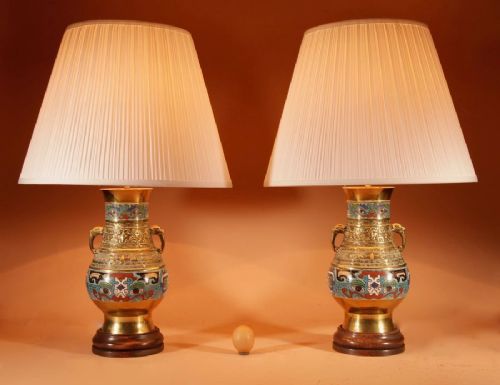
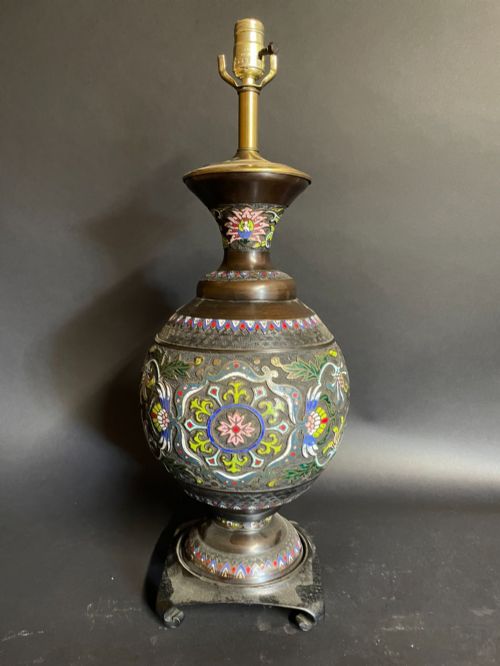
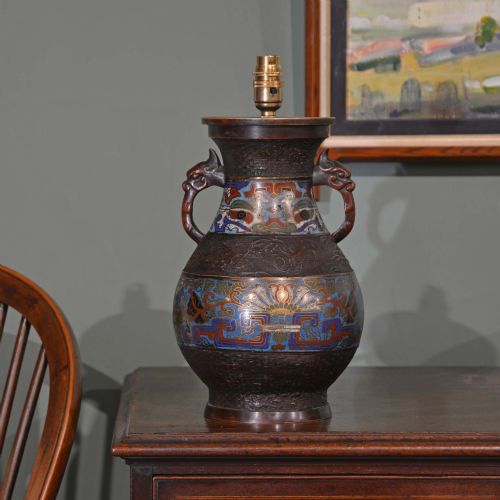
Enamel oriental table lamps combine traditional Eastern vessels with functional lighting, appearing frequently as converted vases from the nineteenth century. The selection on this page centres on Japanese and Chinese forms, often mounted with metal fittings to hold a bulb and shade.
Buyers encounter sturdy pairs and single lamp bases originating from periods such as the Victorian era and the Meiji period. Many examples began life as decorative vessels before receiving later electrical wiring and mounts.
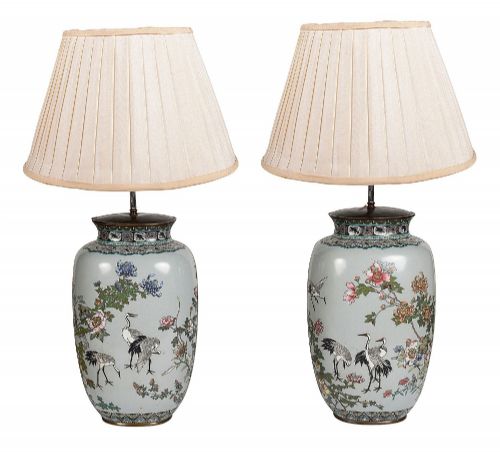
The underlying bodies include cloisonné enamel, champlevé, and porcelain decorated in Famille Rose or Famille Verte palettes. These pieces range from substantial twin-handled urns to slender baluster vases adapted for modern interiors.
How they were made
The construction relies on metal bases of bronze, brass, or gilt bronze, combined with vitreous enamel techniques like cloisonné and champlevé. Craftsmen soldered thin wire compartments onto metal foundations, filling the resulting cells with coloured enamel paste before firing.
Ceramic bodies utilise porcelain decorated with vibrant overglaze enamel colours, particularly in Chinese Export and Rose Medallion styles. Workshops then added mounts in ormolu or brass to secure electrical fittings and fabric shades.
Materials in this selection combine traditional bronze, brass, and porcelain with modern fabric wiring and shades.
What varies in quality
Quality rests in the precision of the metalwork and the complexity of the enamel cells, where finer wires create crisper patterns. The harmony between the original vessel and its metal mounts dictates the overall visual success of the conversion.
Substantial pairs show greater uniformity in design and execution than isolated bases, reflecting the original ambition of the workshop. The depth of the colour palette and the crispness of the gilt bronze or ormolu mounts further separate standard production from exceptional pieces.
The Enamel Oriental Table Lamps Glossary
- Cloisonné
- An enamel technique where metal wire forms raised barriers on a surface to contain distinct pools of coloured paste before firing. This method produces intricate, multi-coloured patterns across bronze and brass bodies.
- Champlevé
- A process where troughs or cavities are carved directly into a thick metal base to receive enamel colours. The remaining metal walls form the outlines of the design.
- Famille Rose
- A palette of opaque overglaze enamels dominated by pink and rose hues, originating in Chinese ceramics during the Qing dynasty. It appears frequently on porcelain lamps from the nineteenth century.
- Meiji Period
- A Japanese historical era spanning from 1868 to 1912, noted for metalwork and enamel production exported to Western markets. Pieces from this time often display meticulous attention to detail.
- Ormolu
- Gilt bronze ornamentation applied to furniture and decorative objects to provide a rich metallic finish. It frequently appears as mounts on the base or collar of converted vase lamps.
Enamel Oriental Table Lamps: Frequently Asked Questions
How do I wire an old lamp base?
Conversion typically involves running a modern cord through the existing central aperture of the vase or through an internal brass pipe. Professional rewiring ensures the historic body remains undamaged while meeting contemporary safety standards.
Many pieces arrive already adapted for electricity, requiring only a compatible bulb and a suitable fabric shade to complete the setup.
Are these lamps Chinese or Japanese?
The inventory includes items from both traditions, often distinguished by their specific decorative techniques and motifs. Chinese examples frequently feature Famille Rose porcelain or intricate cloisonné, while Japanese pieces often showcase Meiji period bronzes and champlevé work.
Examining the underlying style helps identify whether the vessel originates from nineteenth-century Chinese export workshops or Japanese Meiji production.
How do I clean enamel surfaces?
Dusting gently with a dry, soft cloth preserves the delicate metal wires and vitreous enamel colours. Moisture and chemical cleaners can harm aged brass mounts and fragile ceramic glazes.
Regular, careful maintenance keeps the surface bright without risking the historic finish of the bronze or porcelain body.
What shades suit these lamp bases?
Simple fabric shades in neutral tones balance the intricate patterns and vibrant colours of the enamel bodies. Choosing a shade that complements the primary hues in the cloisonné or porcelain prevents the display from becoming overcrowded.
Proportion matters significantly, as large urn bases require wide, sturdy shades to maintain visual equilibrium.