

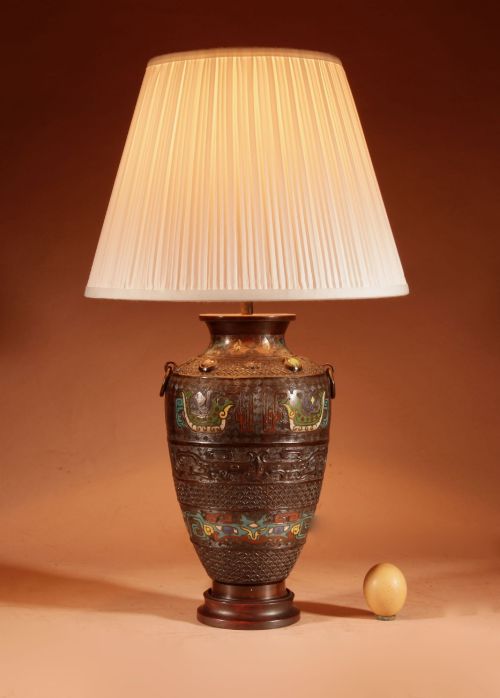
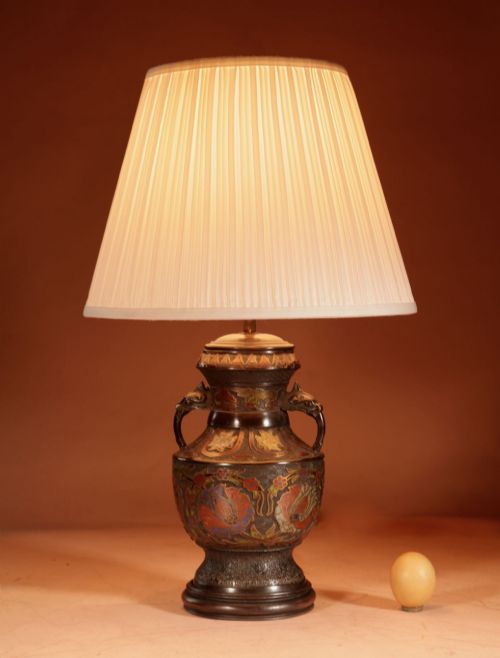
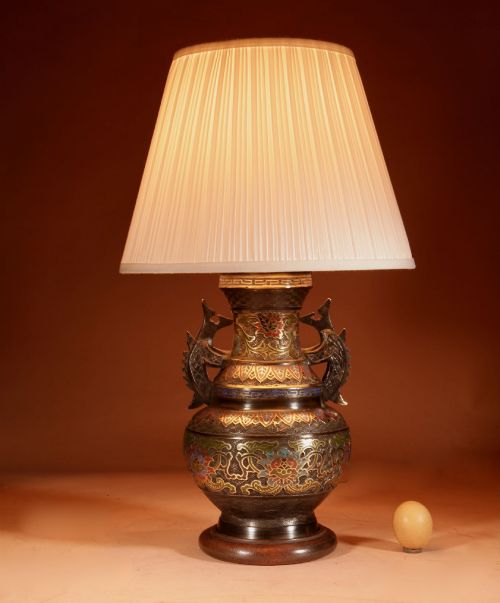
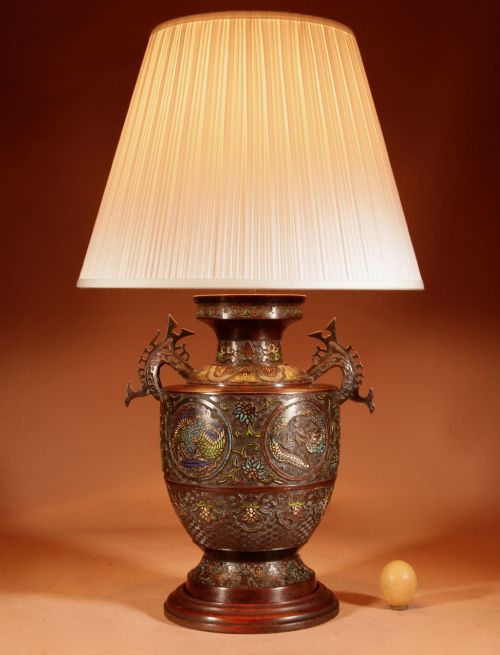






Vintage Enamelled Vase Lamps
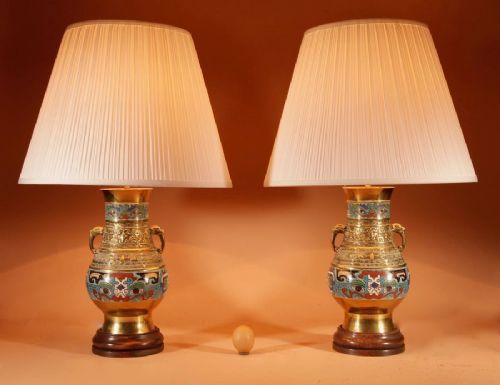
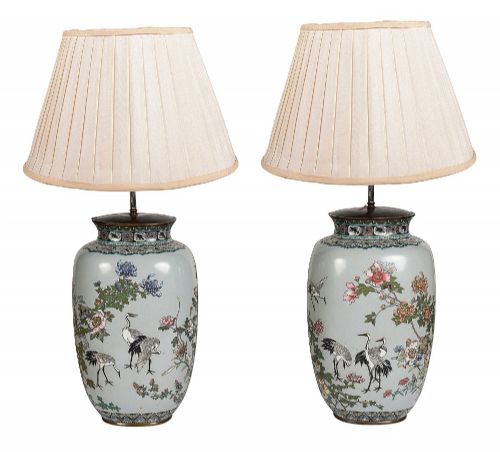
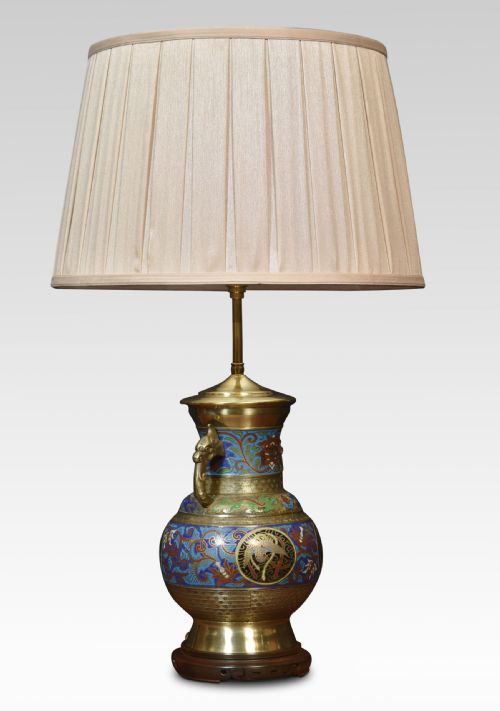
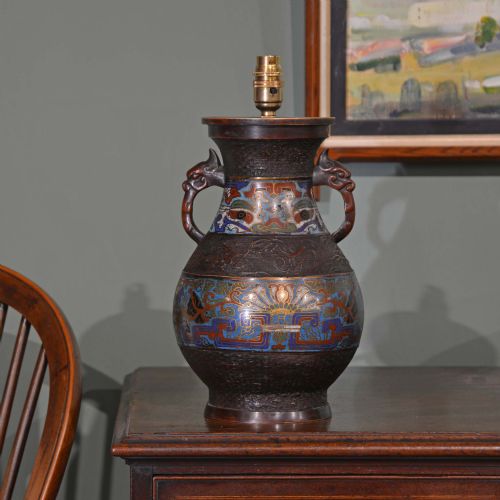
These vintage enamelled vase lamps are converted vessels offering rich colour and pattern for your room.
Vintage Enamelled Vase Lamps
The aesthetic leans strongly into oriental styles, with Chinoiserie, Meiji period, and Qing Dynasty influences appearing regularly across the inventory. Many of these pieces arrive in matched pairs, utilising classic vase forms as the central body of the lamp. They serve as striking focal points in a room, combining traditional craftsmanship with functional modern illumination.
How they were made
The primary bodies of these lamps rely on traditional metalwork and vitreous enamelling techniques. Artisans worked with brass, bronze, copper, and gilt bronze, often mounting the finished vases in ormolu. The surfaces display detailed work in cloisonné enamel, champlevé, and famille rose decoration, requiring skilled hand-application of coloured pastes within metal wire cells or carved troughs before firing.
Where structural components are involved, wood and fabric also play a part in the completed lamp assemblies. The transformation from vase to lamp typically involves drilling or fitting mounts that respect the integrity of the original antique vessel. This combination of heavy metal casting and delicate glass-based surface decoration defines the physical presence of each piece.
Vintage Enamelled Vase Lamps Retail Price Guide 2026
Typical asking prices for vintage enamelled vase lamps among the pieces listed under this phrase on Sellingantiques today, from the lower quarter to the upper quarter. They describe what is for sale here now, not the wider market.
Victorian mantle lustres shed their hanging glass prisms just often enough to keep carpet-sweeping interesting.
What varies in quality
The standard of the enamelwork itself sets the baseline for quality in these pieces. Finer examples display precise wirework, rich and consistent colouration without pitting, and intricate decorative motifs that remain crisp across the curved surface of the vase. Lesser items show uneven enamel pooling, simpler patterns, or dullness in the metallic sheen.
The quality of the metal mounts and the harmony of the conversion also dictate the overall success of the piece. Superior lamps feature finely chased ormolu, robust bronze or brass casting, and fittings that integrate cleanly with the antique body without appearing clumsy. The presence of a well-matched pair further elevates the desirability of the lighting.
The Vintage Enamelled Vase Lamps Glossary
- Cloisonné enamel
- A metalwork technique where fine wires are soldered to a vase body to create compartments filled with enamel paste before firing.
- Champlevé
- A method of enamelling where troughs or cells are carved directly into the thick metal surface to hold the coloured glass paste.
- Ormolu
- Gilt bronze mounts used to decorate or support the base and collar of decorative vessels and lamps.
- Mantle lustres
- Ornamental vases fitted with hanging glass prisms, often originating in the Victorian period and sometimes adapted for lighting.
- Famille rose
- A palette of Chinese ceramic and enamel decoration dominated by opaque pink or rose enamel colours.
Vintage Enamelled Vase Lamps: Frequently Asked Questions
Are these lamps sold as pairs?
Many listings for vintage enamelled vase lamps feature matched pairs, which are particularly sought after for balanced placement on sideboards or mantels.
Single lamp bases also appear, offering a strong decorative accent for smaller spaces or bedside tables.
How do I date a Chinese cloisonne lamp?
Dating relies on examining the style of the metalwork, the hue of the enamel colours, and the character of the bronze or brass base.
Nineteenth-century pieces often display heavier casting and more muted, complex colour palettes compared to later twentieth-century production.
What shades work best on these lamps?
Simple fabric shades in neutral tones allow the intricate patterns and rich colours of the enamelled body to remain the primary focus of the piece.
The scale of the shade must balance the generous girth of the vase without overwhelming the delicate metal ormolu mounts.