


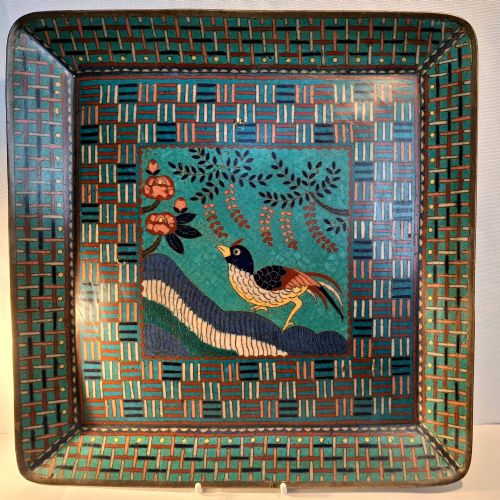
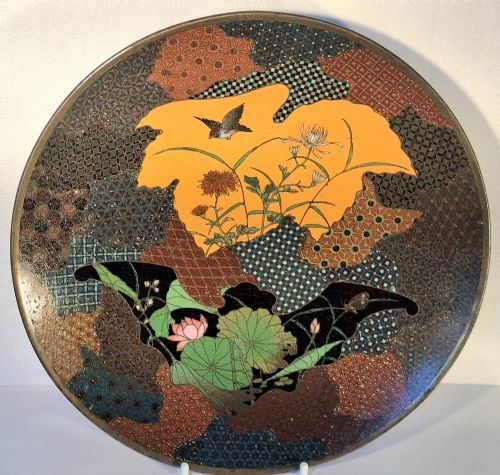
Meiji Cloisonne Bird Dish
A meiji cloisonne bird dish brings intricate Japanese metalwork and avian artistry directly into a room, offering rich colour and historic craftsmanship.
Meiji Cloisonne Bird Dish
A meiji cloisonne bird dish represents the detailed decorative metalwork produced during the Meiji period, typically taking the form of chargers, plates, bowls, and square trays. These items depict natural subjects, most notably birds such as the ho-o bird, phoenix, ibis, and owl.
The objects available span several decades from the nineteenth century, including works attributed to Nagoya alongside general Japanese production. Buyers encounter substantial chargers and smaller plates that serve primarily as decorative wall plates or centrepieces.
Materials and construction methods
Artisans constructed these pieces using a base of copper, brass, bronze, or porcelain, sometimes employing totai shippo techniques with porcelain plates and tree bark effects. Metal wire formed the intricate cellular framework that outlined the avian and floral motifs.
Enamel paste filled the bounded compartments before firing and polishing, while certain masterworks incorporated cinnabar lacquer details. Signed pieces demonstrate the advanced technical execution achieved by period workshops.
Meiji Cloisonne Bird Dish Retail Price Guide 2026
Typical asking prices for meiji cloisonne bird dish among the pieces listed under this phrase on Sellingantiques today, from the lower quarter to the upper quarter. They describe what is for sale here now, not the wider market.
Listings feature items from the 1870s to 1900, constructed from enamel, copper, brass, porcelain, and cinnabar lacquer.
Distinctions in quality and execution
Quality depends upon the precision of the metal wirework and the complexity of the mosaic or feathered patterns within the design. Finer examples display meticulous control over the coloured enamels and feature distinct signatures from skilled makers.
Scale also influences the character of the piece, with larger chargers and paired plates requiring greater technical ambition during the firing process than smaller dishes.
The Meiji Cloisonne Bird Dish Glossary
- Cloisonne Enamel
- A decorative metalwork technique where fine wire creates cells that are filled with enamel paste and fired. This method allows for complex pictorial designs of birds and landscapes.
- Totai Shippo
- A variation of cloisonne where enamel is applied to a porcelain body rather than a traditional metal base. These pieces often feature textured surfaces like tree bark.
- Ho-o Bird
- A mythological Chinese phoenix adopted into Japanese art, frequently depicted on Meiji period chargers with elaborate plumage. It symbolises peace and imperial grace.
- Charger
- A large decorative plate intended for display on walls or tables rather than for dining. They provide a wide canvas for narrative scenes and animal subjects.
Meiji Cloisonne Bird Dish: Frequently Asked Questions
How are meiji cloisonne bird dishes best displayed?
These pieces suit wall mounting or placement on sturdy stands where their detailed wirework catches the light.
Keep them away from direct sunlight to protect the coloured enamel surfaces over time.
What periods do these dishes come from?
The listings span the late nineteenth century, specifically the Meiji period from the 1870s to 1900.
Items from this era reflect distinct shifts in Japanese metalworking techniques and export standards.
Are all dishes signed by the maker?
Signatures appear on select pieces, often indicating a higher level of workshop output or a specific artisan.
Unsigned examples still display the skilled techniques typical of the period.
What materials form the base of these items?
Workshops primarily utilised copper, brass, or bronze, alongside porcelain bodies for totai shippo pieces.
Metal wires were soldered to these bases to form the partitions for the enamel.