



Meiji Bronze Vessel
A meiji bronze vessel brings the weight and detail of nineteenth-century Japanese metalwork directly into a room.
Meiji Bronze Vessel
When you search for a meiji bronze vessel, you encounter objects created during a period of immense technical achievement in Japanese metalwork spanning the late nineteenth and early twentieth centuries. These pieces reflect the opening of Japan to Western markets, which prompted metalworkers to produce works combining traditional temple-casting skills with domestic decorative forms.
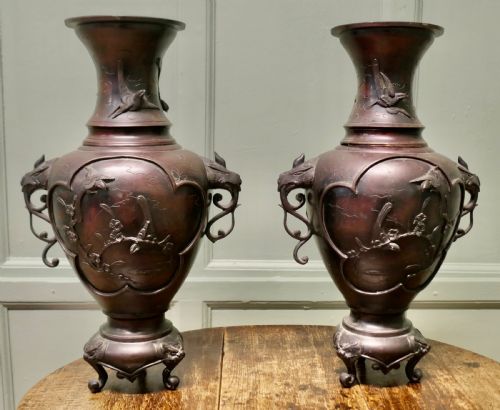
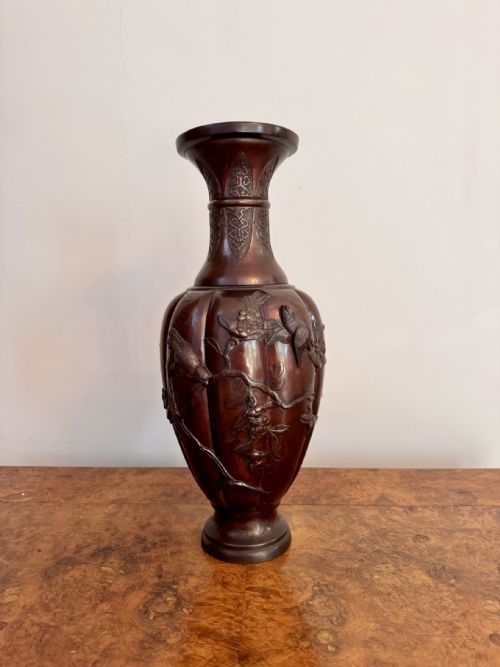
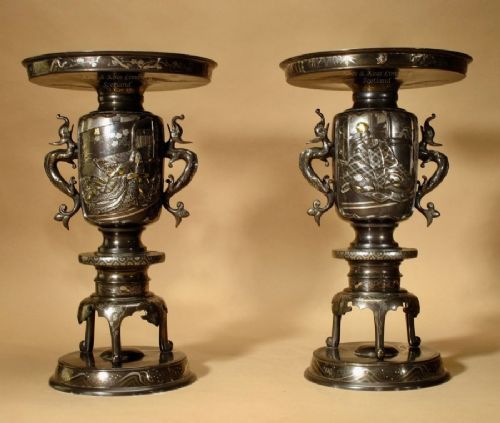
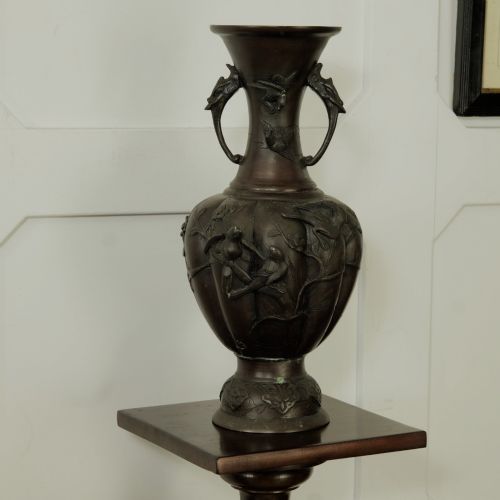
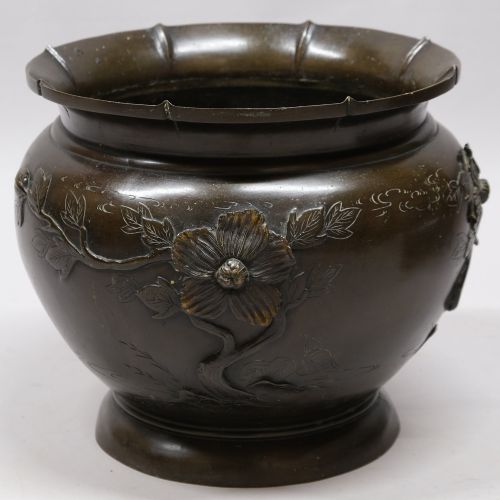
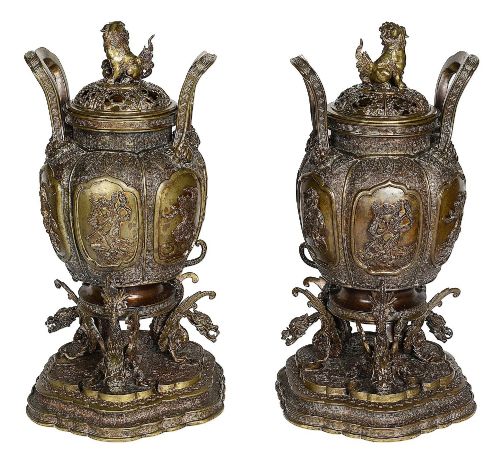
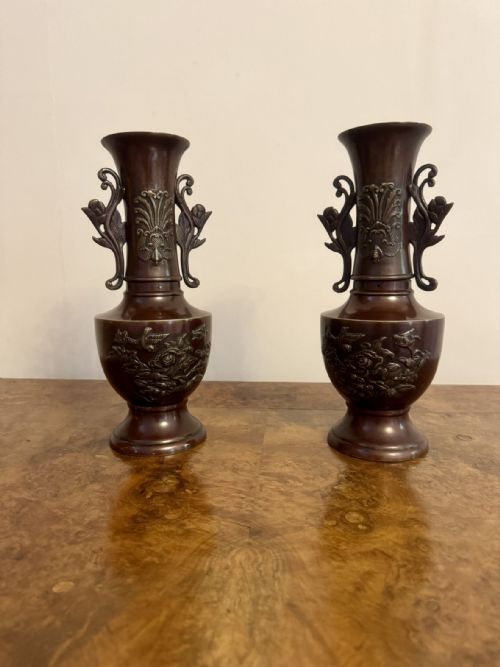
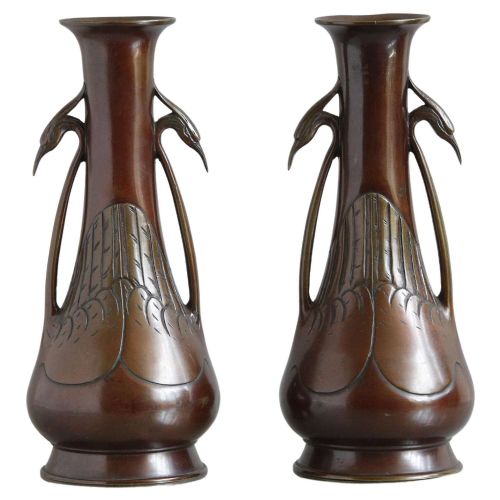
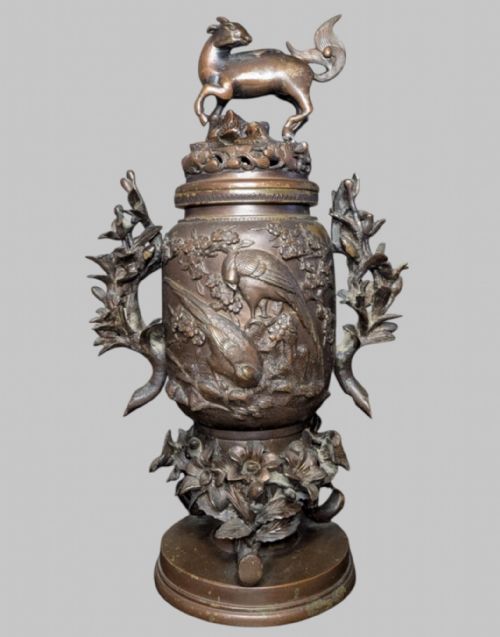
The most common formats on this page are vases, incense burners, and jardinieres, often found as matched pairs or monumental garden urns. Forms range from baluster shapes and lidded vessels to specialised items such as kettle-like tetsubin and hanging boat-shaped censers.
Originating predominantly from the Meiji era, these items frequently carry the stylistic influence of traditional bronze casting alongside later decorative techniques developed for export. They serve as sculptural focal points that demonstrate both utilitarian function and pure ornament.
How they were made
Makers shaped these objects using traditional bronze casting methods, frequently employing patination to achieve deep brown, black, or reddish tones on the metal surface. This process relies on chemical treatments applied to heated bronze to alter its colour permanently.
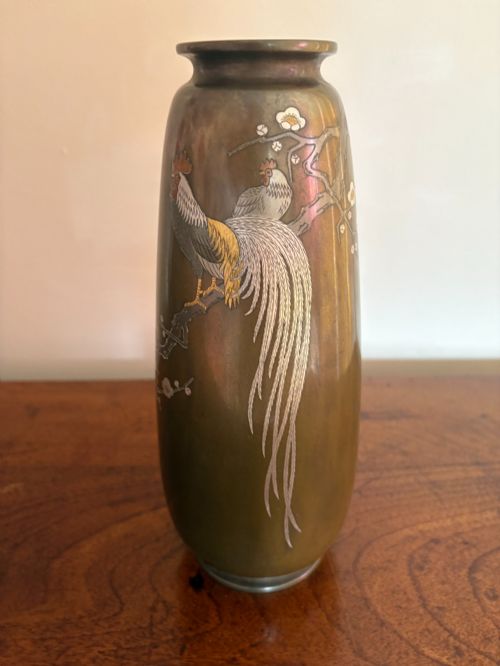
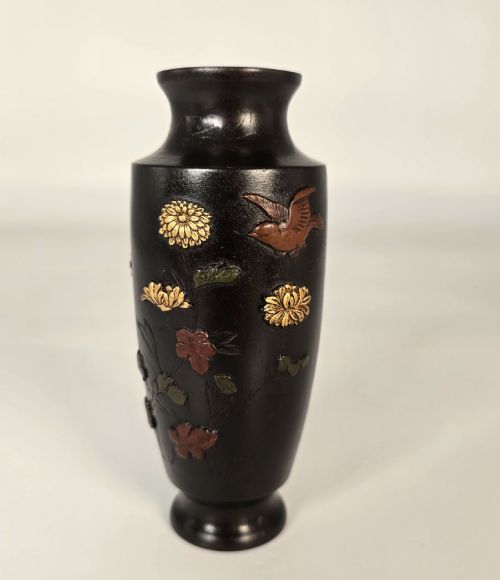
Decoration often involves mixed metal inlays, where contrasting elements of gold, silver, and copper are hammered into recessed channels on the bronze body. Artisans also utilised champlevé and cloisonné enamel work, fusing vitreous pastes within wire cells or excavated compartments across the vessel surface.
Meiji Bronze Vessel Retail Price Guide 2026
Typical asking prices for meiji bronze vessel among the pieces listed under this phrase on Sellingantiques today, from the lower quarter to the upper quarter. They describe what is for sale here now, not the wider market.
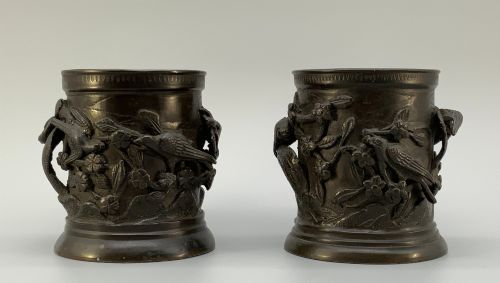
Object forms recorded here range from miniature brush pots and stem vases to monumental garden temple urns measuring over seventy centimetres.
What varies in quality
The distinction between standard commercial output and exceptional artistry lies in the crispness of the chased and carved details, particularly on raised motifs depicting birds, blossom, or dragons. Superior examples display meticulous hand-finishing that separates individual feathers and scales rather than relying on uniform, cast-in relief.
The integrity of the patination and the precision of mixed metal or gold inlay work also determine the standing of a piece. Skilled workshops achieved smooth, flush integration of disparate metals, whereas lesser items show uneven surfaces or crude solder lines where decorative elements join the bronze ground.
KANASAWA·Kibundo·Kizan
The Meiji Bronze Vessel Glossary
- Patinated bronze
- Bronze treated with chemical solutions to produce a specific surface colour or aged appearance. This finish protects the metal while defining the visual tone of the piece.
- Champlevé enamel
- An enamelling technique where troughs are gouged into the bronze body and filled with coloured vitreous paste before firing. The metal walls between the channels remain visible as part of the design.
- Koro
- A traditional Japanese incense burner, often featuring a pierced lid and three or more feet. These vessels were utilised in homes and temples for burning aromatic woods and resins.
- Usubata
- A specialised bronze vase designed for ikebana flower arrangement, featuring a wide flanged mouth atop a columnar body. They frequently stand in entrance halls or garden settings.
- Tetsubin
- A cast iron or bronze kettle used for boiling water for tea, often bearing textured surfaces and robust handles. Kyoto workshops produced some of the most sought-after examples.
Meiji Bronze Vessel: Frequently Asked Questions
How do I identify the Meiji period?
The Meiji period corresponds to the reign of Emperor Meiji from 1868 to 1912, marking an era of rapid modernization and international trade in Japan.
Pieces from this time often combine traditional iconography like dragons and birds with Western-influenced export scales and monumental sizing.
Are these pieces signed by the artist?
Many of these metalworks bear signatures, seals, or foundry marks cast into the base or applied as inlaid plaques.
These inscriptions typically name the individual artisan, the workshop, or specific production centres such as Kyoto or the Takaoka school.
How should I clean my bronze vessel?
Maintenance requires only gentle dusting with a soft, dry cloth to prevent the accumulation of grime in recessed details and carved surfaces.
Harsh commercial metal polishes must be avoided entirely, as they strip away the historical patination that defines the character of the piece.