



Meiji Bronze Bird
When you search for a meiji bronze bird, you encounter sculptural hawks, eagles, and geese alongside vases and jardiniere vessels adorned with feathered wildlife.
Meiji Bronze Bird
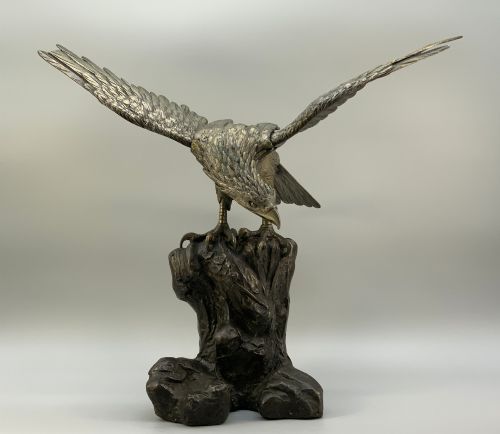
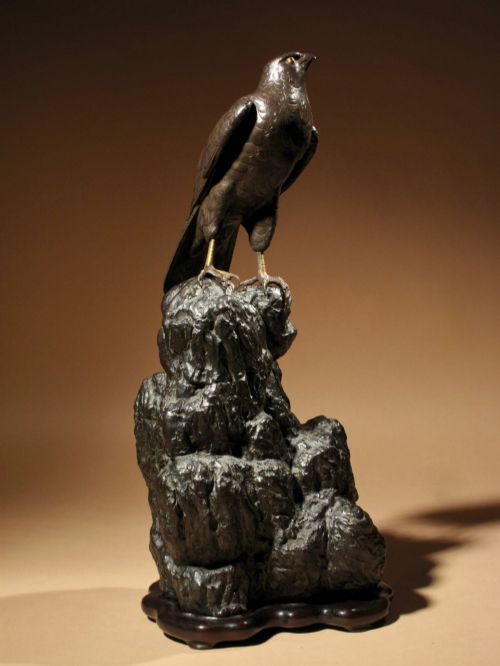
A meiji bronze bird typically takes the form of a freestanding okimono sculpture or surface decoration upon a vase, charger, or incense burner. The sculptural works frequently depict birds of prey such as hawks and eagles perched upon rockwork, alongside life-size waterfowl including geese.
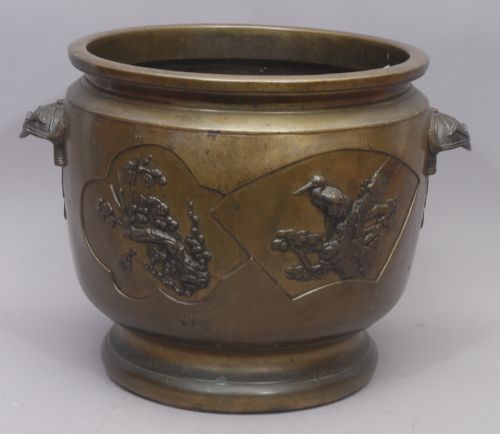
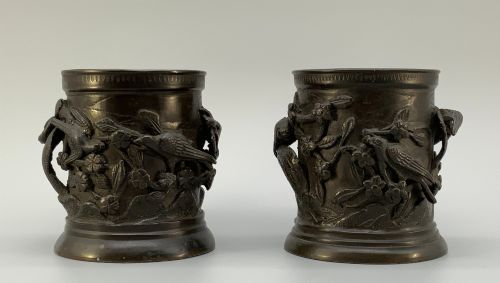
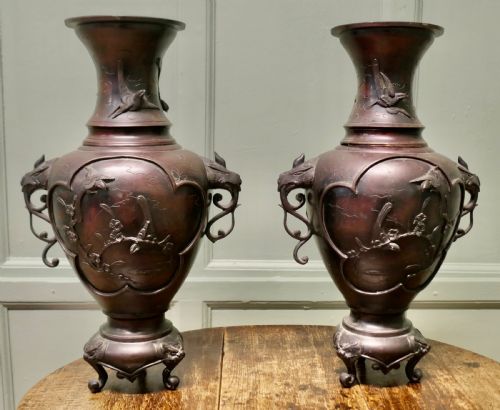
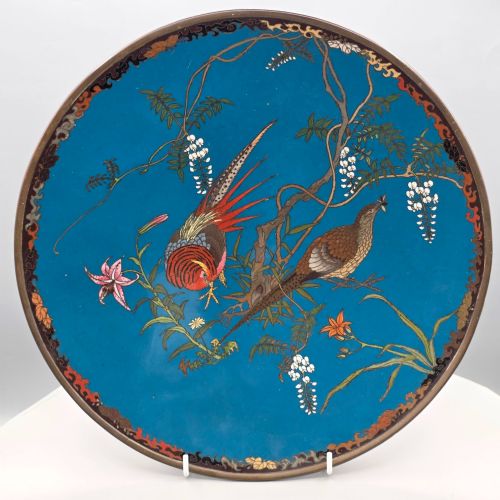
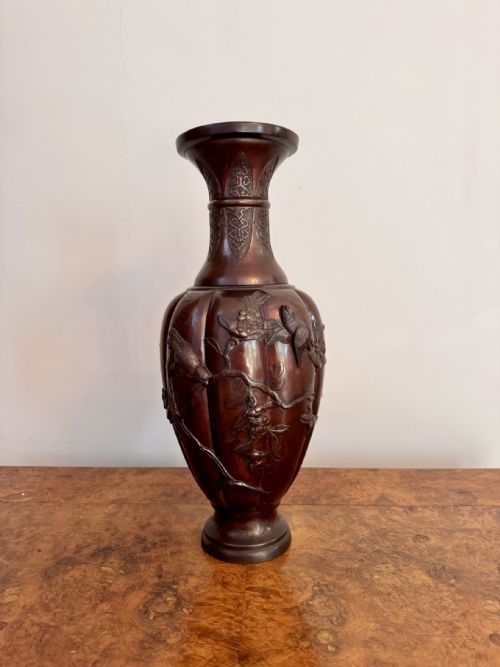
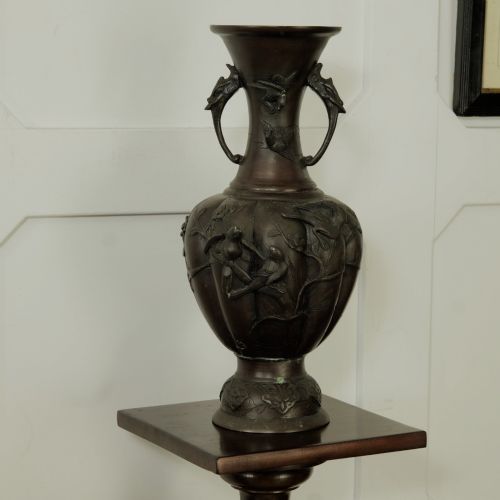
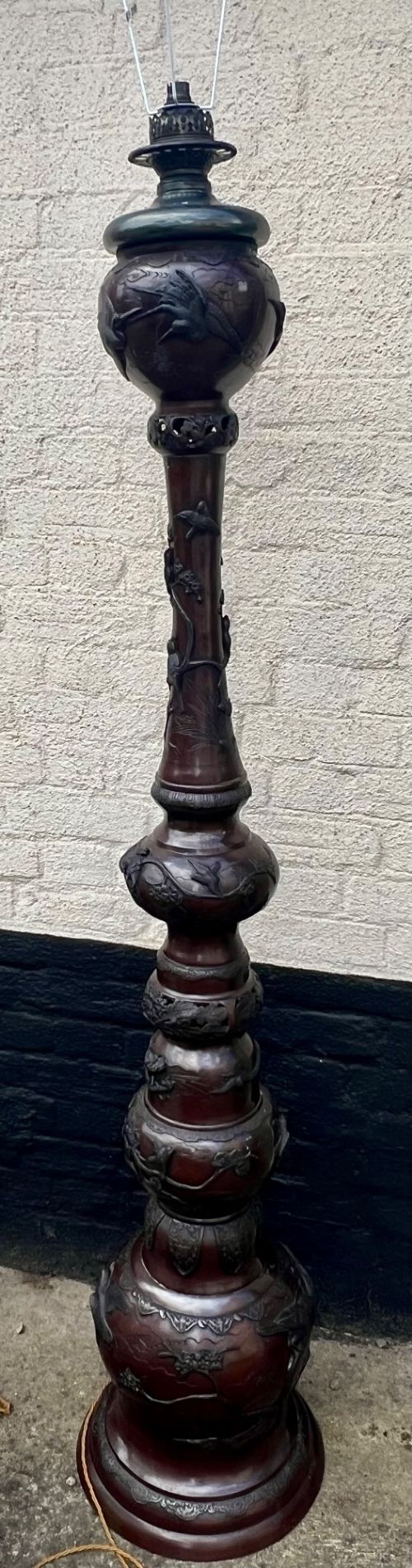
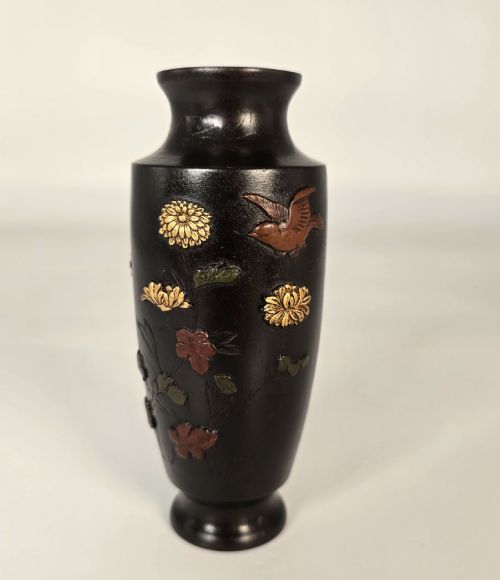
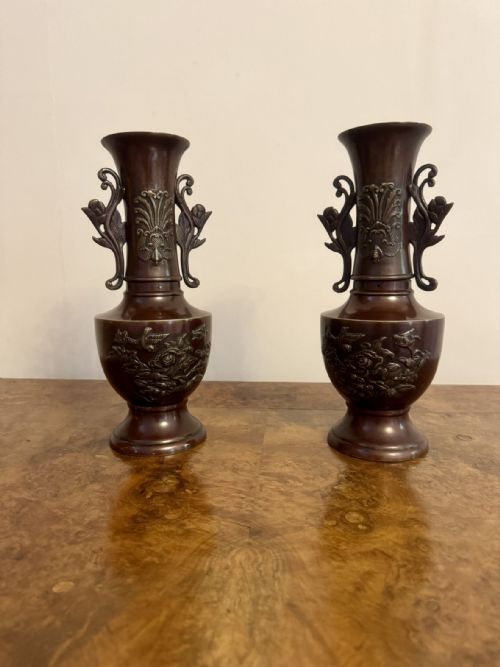
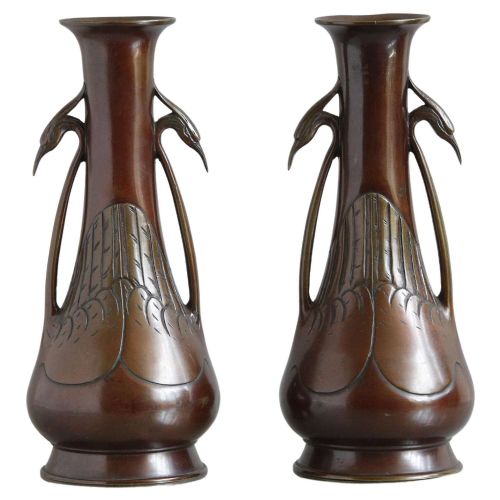
The vases and jardiniere planters in this category incorporate avian motifs through mixed metal relief work, handle formations shaped as egrets, and incised depictions of birds amongst blossom branches. Most examples originate from the 19th century and the early decades of the 20th century.
Vessels span from diminutive stem vases to large scale floor standing urns and planters, often appearing in symmetrical pairs. Alongside traditional vases, the selection encompasses hanging boat koro incense burners, decorative plates, and hibachi containers.
Materials and methods
Makers utilised cast bronze, patinated bronze, and silvered or copper-alloyed bronze as the primary structural bodies for these figures and vessels. The metal surfaces frequently received chemical treatments to produce deep brown, black, or variegated patinas.
Sculptural bird models often integrated natural elements, placing bronze hawks and eagles upon root wood bases or craggy rock formations.
Listings feature 19th-century and early 20th-century Japanese metalwork, spanning cast bronze, patinated surfaces, cloisonne enamel, and mixed metal inlay.
Assessing the workmanship
The degree of realism and anatomical precision in the modelling of the bird separates standard production from superior pieces. Fine feathers, alert postures, and detailed talons demonstrate higher metalworking skill.
The complexity of the surface ornamentation dictates distinction, particularly in mixed metal applications where gold inlay and varied metallic tones create depth. Heavier scale vessels and large freestanding animal bronzes reflect greater ambition in casting foundry practice.
Gyoko
The Meiji Bronze Bird Glossary
- Okimono
- A Japanese freestanding decorative sculpture designed for display on a shelf or tokonoma alcove.
- Koro
- An incense burner featuring a perforated lid, sometimes fashioned in inventive shapes like hanging boats.
- Jardiniere
- A large ornamental pot or planter intended for holding plants, frequently executed in heavy bronze.
- Cloisonne
- Enamelling technique where thin metal wires form partitioned cells filled with vitreous paste and fired.
- Mixed metal
- The decorative combination of different metallic alloys, such as bronze, brass, gold, and silver, within a single surface design.
Meiji Bronze Bird: Frequently Asked Questions
What is a meiji bronze bird?
These pieces comprise cast bronze sculptures of birds and decorative vessels featuring avian motifs produced during the Meiji period in Japan. They capture wildlife subjects with close attention to natural posture and anatomical detail.
The category encompasses both freestanding models of eagles, hawks, and geese alongside vases, jardiniere planters, and incense burners decorated with raised metal birds and floral scenes.
How were these bronzes used originally?
Sculptural bird figures served as interior display ornaments within Japanese homes and later for export markets following the opening of trade. Vases and jardiniere planters held floral arrangements or functioned as decorative receptacles.
Incense burners like the koro were utilised for burning aromatic woods or resins during quiet gatherings, combining utility with artistic metalwork.
How do I live with a bronze bird?
These substantial metal objects suit placement upon sturdy side tables, mantelpieces, or dedicated display stands where their patinated surfaces can catch ambient light. Freestanding sculptures require stable flat surfaces away from heavy household traffic.
Vessels can continue their original function holding dried stems or greenery, while patinated bronze surfaces need only occasional dusting with a soft cloth to maintain their appearance.
How do I identify Meiji period pieces?
Meiji period metalwork is identified through characteristic casting methods, mixed metal detailing, and distinct chemical patination styles developed by Japanese workshops during the late 19th and early 20th centuries. Stylistic cues include naturalistic bird forms and relief work combining bronze with silver and gold inlay.
Certain pieces carry artist signatures or marks, while the overall aesthetic reflects the transition of traditional Japanese metalcraft towards international exhibition standards of the era.