





Antique Bronze Garden Ornament
These antique bronze garden ornaments bring presence and history to open ground, shaped through the 18th, 19th and early 20th centuries.
Antique Bronze Garden Ornament
An antique bronze garden ornament brings form and enduring character to external spaces, drawing on a tradition spanning from Georgian estates to 20th century country gardens. When exploring this selection, buyers encounter functional timepieces and sculptural focal points designed to weather the elements.
The objects available here range from traditional English sundials and armillary spheres to striking Japanese Meiji period okimono and fountain spouts. Pieces from the 18th century sit alongside Edwardian garden additions and 1930s designs, each reflecting the outdoor tastes of its era.
How they were made
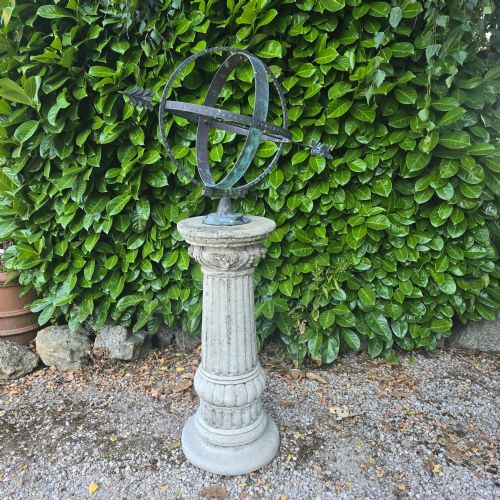
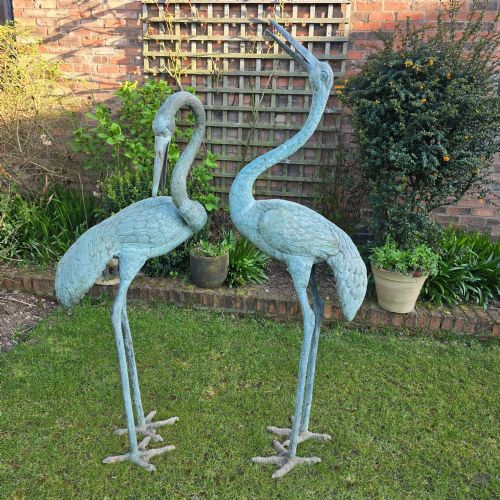
These works rely primarily on cast bronze, utilising traditional foundry methods to achieve substantial forms like garden statuary, cranes, and dragons. Many surfaces develop a natural verdigris patina over decades of exposure to moisture and air.
Certain items incorporate mixed components, such as reconstituted stone bases paired with cast bronze sundials, or cold painted metal details applied to botanical subjects.
Antique Bronze Garden Ornament Retail Price Guide 2026
Typical asking prices for bronze garden ornament among the pieces listed under this phrase on Sellingantiques today, from the lower quarter to the upper quarter. They describe what is for sale here now, not the wider market.
A cold painted little bird perched on a tiny leaf proves that even the smallest metal creatures demand a place outdoors.
What varies in quality
The distinction between ordinary production and finer output lies in the sharpness of the casting and the depth of the finished detail, particularly visible on feathers, scales, and engraved dial plates. Pieces produced by documented makers or established Edinburgh instrument workshops carry greater precision.
Natural patination also plays a role, where a stable, undisturbed verdigris surface enhances the visual harmony of a garden ornament far more than an overly scrubbed or artificially darkened finish.
Miller And Adie
The Antique Bronze Garden Ornament Glossary
- Armillary sphere
- A skeletal celestial globe composed of adjustable metal rings representing the equator, tropics, and other astronomical circles, frequently mounted as a garden sundial. It allows an observer to track the position of the sun throughout the year.
- Okimono
- A Japanese decorative object intended for display, often taking the form of finely cast bronze animals or architectural elements like drum bridges. These pieces show high levels of naturalistic observation.
- Verdigris patina
- A green layer that forms on bronze or brass through the natural oxidation of copper over long periods. This surface change protects the underlying metal and indicates age.
- Sundial
- A horological instrument that indicates the time of day by the shadow of the sun cast on a graduated plate. Early examples often feature engraved maker signatures and regional latitude adjustments.
Antique Bronze Garden Ornament: Frequently Asked Questions
How do I install a heavy bronze sundial?
Heavy bronze sundials and armillary spheres require a stable, level base such as a stone plinth or reconstituted stone column to support their weight safely. Proper anchoring prevents shifting during seasonal ground movement.
Position the piece in an open area that receives sunlight throughout the day, and align the gnomon correctly to the celestial pole for accurate timekeeping.
Can bronze garden ornaments stay outside in winter?
Bronze naturally withstands outdoor conditions well, forming a protective verdigris patina when exposed to rain and seasonal changes over many years.
However, pieces that combine bronze with stone bases or feature hollow fountain spouts should be checked for trapped water to prevent frost damage during freezing temperatures.
How should I clean an antique bronze statue?
Antique bronze outdoors requires very little intervention, and cleaning should generally be limited to gentle rinsing with clean water and a soft brush to remove dirt or organic debris.
Avoid using metal polishes or harsh chemical cleaners, as these strip away the historic patination that collectors and enthusiasts value.
What is the difference between an okimono and a statue?
An okimono is a Japanese decorative sculpture traditionally created for interior or sheltered display, though larger bronze examples like geese or dragons suit garden placement well.
Statuary and fountain spouts are specifically designed from their conception for architectural or landscape settings, often incorporating water connections or sturdy mounting flanges.