


Medieval Style Oak Carving
Medieval style oak carving delivers heavy architectural presence to an interior through robust timberwork and historic tracery.
Medieval Style Oak Carving
A medieval style oak carving encompasses heavy timber furnishings, architectural salvage, and sculptural panels rooted in Gothic and Renaissance traditions. These items range from sturdy armchairs and boarded stools to deep-relief coffers, cupboards, and wall sculptures.
Buyers encountering this search phrase find both authentic early pieces dating from the sixteenth century and later nineteenth-century revivals. The selection frequently includes Glastonbury chairs, French Renaissance wood sculptures, and Flemish panels bearing ecclesiastical motifs.
The dominant material across these listings is solid oak, often paired with elm, chestnut, and wrought iron fittings. Surviving works bridge functional domestic seating with ritual church decoration, giving rooms a solemn focal point.
Materials and construction
Makers utilised dense native timbers, predominantly oak and elm, selected for structural fortitude and deep grain. Boards were joined using traditional pegged mortise and tenon framing, while chests and coffers employed sturdy boarded construction reinforced with iron strapwork.
Carvers shaped the wood using gouges and chisels directly into the seasoned timber to achieve sharp undercutting and deep relief. Surface finishes relied on natural waxing and historical patination rather than modern varnishes, preserving the raw texture of the grain.
A sixteenth-century timber corbel brings the watchful gaze of a medieval man directly into your modern hallway.
Distinguishing quality in carving
The integrity of the timber and the honesty of the construction dictate the standing of a piece. Original pegged joints, minimal timber replacement, and deep historical patination elevate a work far above later reproductions assembled with modern hardware.
The Medieval Style Oak Carving Glossary
- Gothic Revival
- An architectural and decorative style popular during the nineteenth century that revived medieval forms, pointed arches, and tracery. It influenced numerous chairs and architectural salvage pieces found today.
- Coffer
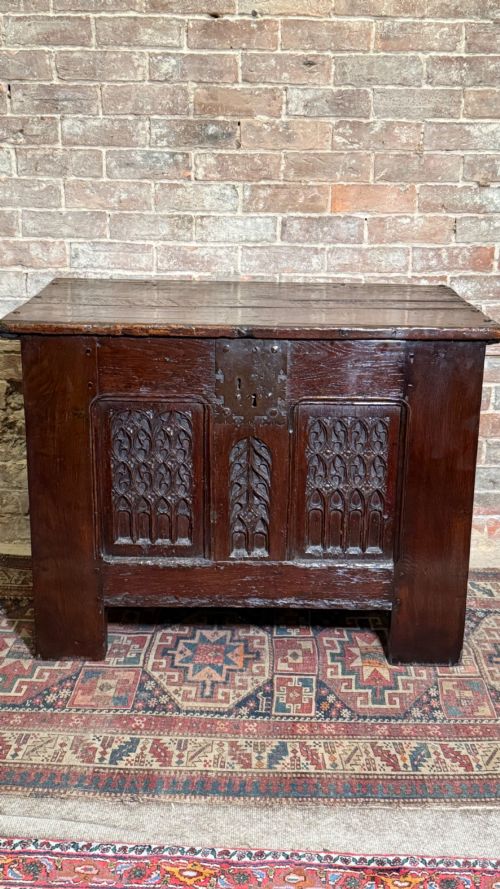
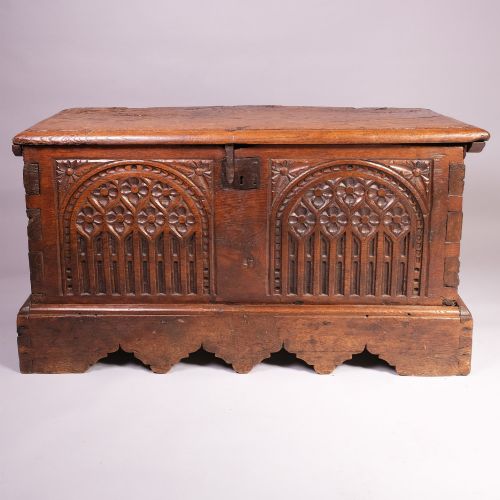
- A large heavy box with a lid, traditionally used for storing valuables or church vestments. Early examples feature boarded oak construction and hand-carved front panels.
- Flamboyant Gothic
- A late medieval architectural style characterised by undulating window tracery resembling flame shapes. This aesthetic appears on sixteenth-century cupboards and architectural fragments.
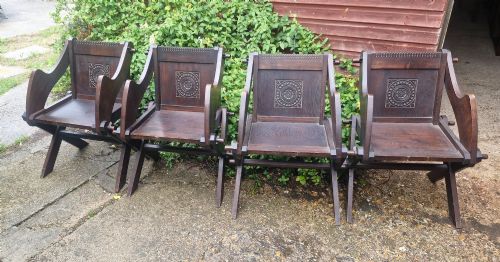
- Glastonbury Chair
- A traditional type of wooden armchair featuring a sloping panel back and intersecting X-form underframing. These ecclesiastical seats gained popularity during the Victorian Gothic Revival.
- Corbel
- A structural stone or timber projection built into a wall to support a weight above. Wooden examples often take the form of carved human heads or grotesque figures.
Medieval Style Oak Carving: Frequently Asked Questions
How do I identify a real medieval piece?
Authentic early pieces display tool marks left by hand chisels, irregular grain shrinkage, and natural dry patination accumulated over centuries.
Examination of the joinery reveals hand-cut wooden pegs and structural wear consistent with heavy historic usage rather than decorative ageing.
Where should I place a heavy oak coffer?
These robust chests suit spacious hallways, living rooms, or large bedrooms where their substantial timber presence anchors the room.
Keep them away from direct heat sources and strong sunlight to prevent the dry oak from splitting or warping over time.
What is a Glastonbury chair?
A Glastonbury chair is a distinctive ecclesiastical armchair designed with a sloping panel back and intersecting diagonal arm supports. Originating from medieval monastic design, nineteenth-century makers revived the form in solid oak.
They function well as reading chairs or decorative seating in study spaces and libraries.
How do I care for antique oak carvings?
Maintain the surface by applying a neutral beeswax sparingly and buffing gently with a soft brush to preserve the historic patina. Avoid liquid polishes containing silicones or harsh cleaning agents that damage the porous old timber.
Stable room humidity protects the wood structure from cracking.