

Carved Wood Religious Sculpture
These pieces of carved wood religious sculpture range from fifteenth-century devotional figures to nineteenth-century continental saints, shaped by centuries of European and Asian workshop traditions.
Carved Wood Religious Sculpture
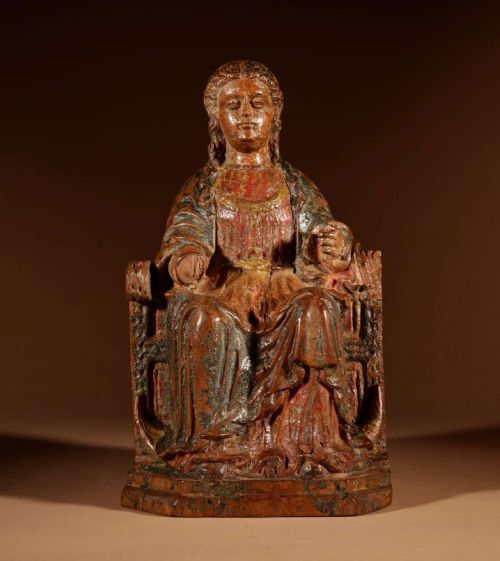
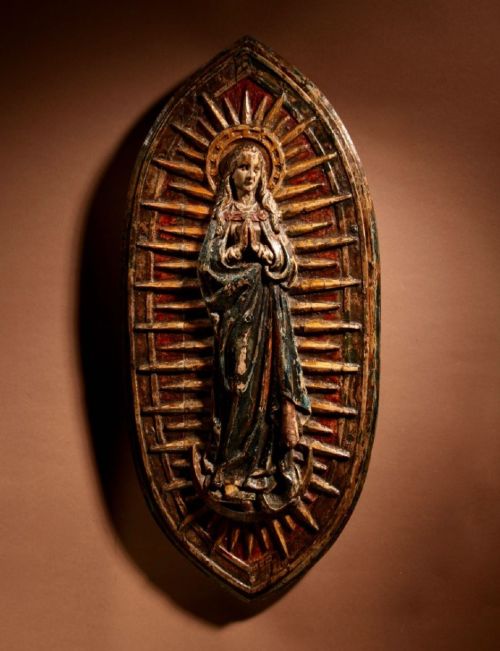
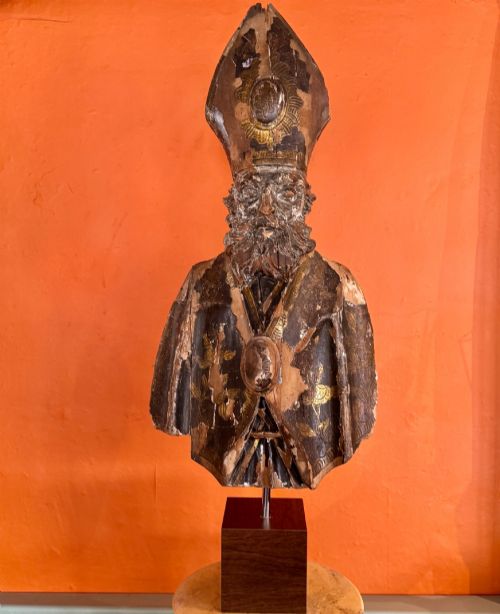
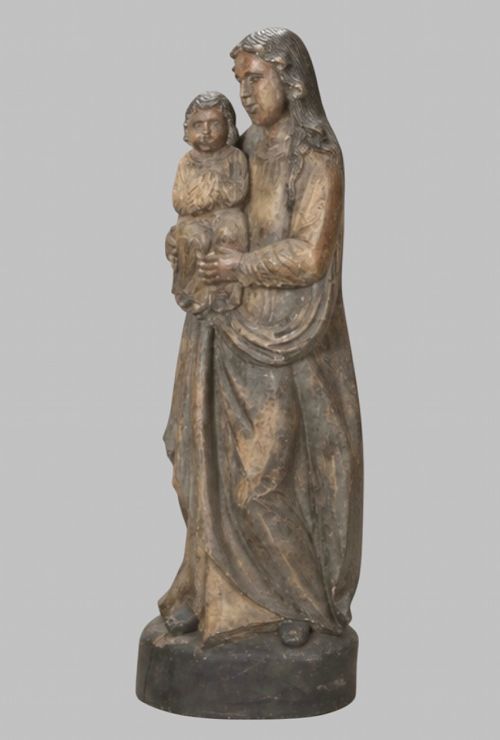
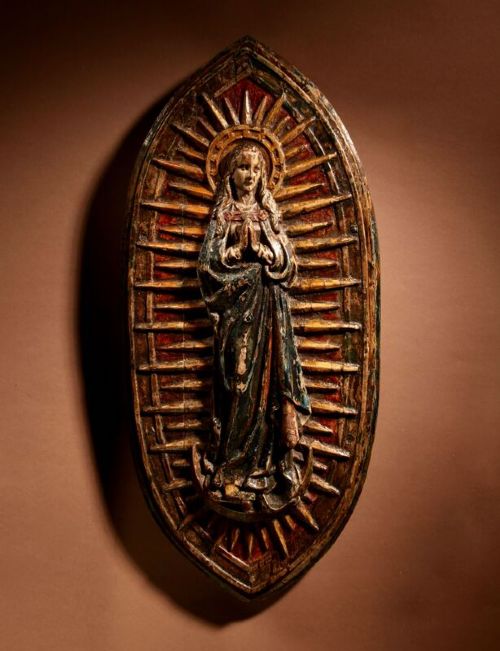
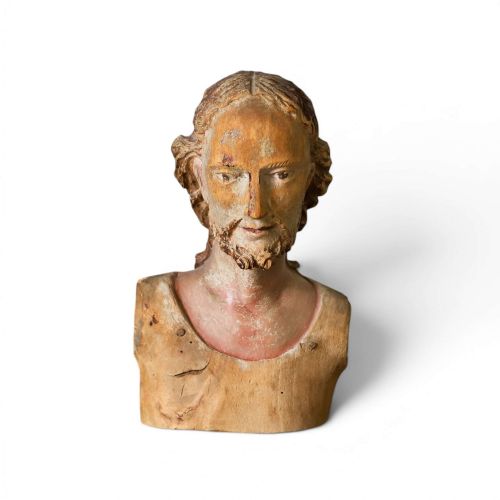
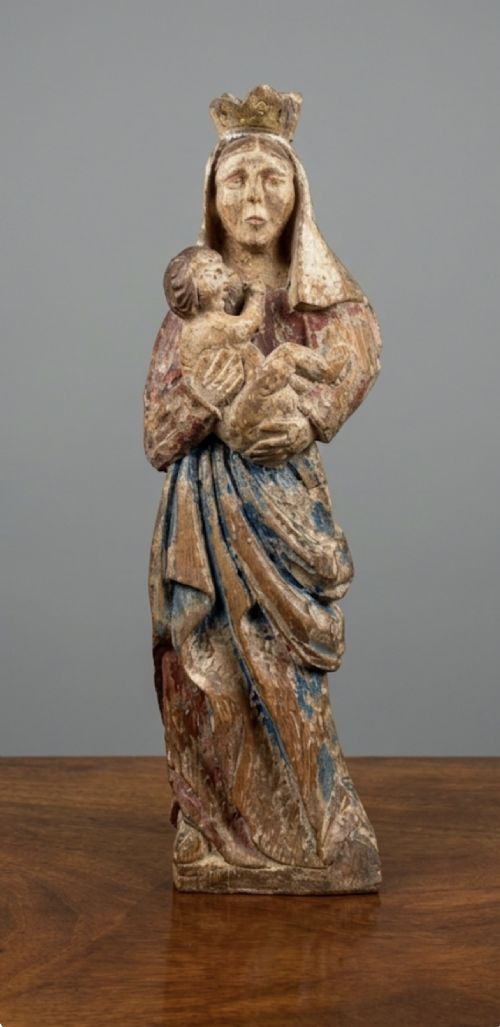
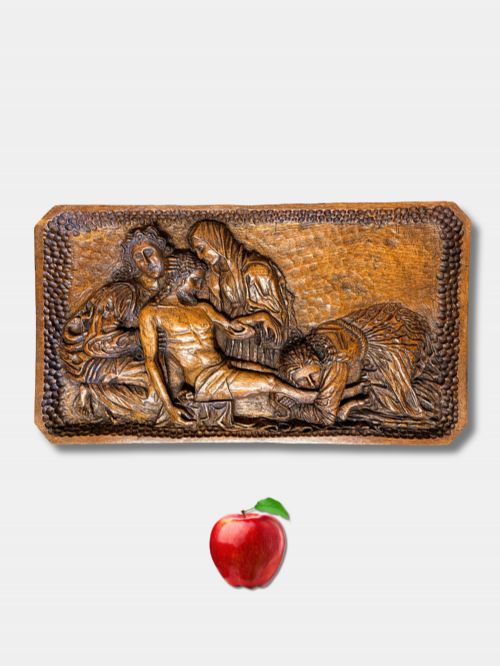
When you search for carved wood religious sculpture, you encounter figures of saints, madonnas, altarpiece panels, and ecclesiastical busts spanning the sixteenth to the nineteenth centuries. These works served private devotion in homes or communal worship in churches across England, France, Italy, Spain, and Germany.
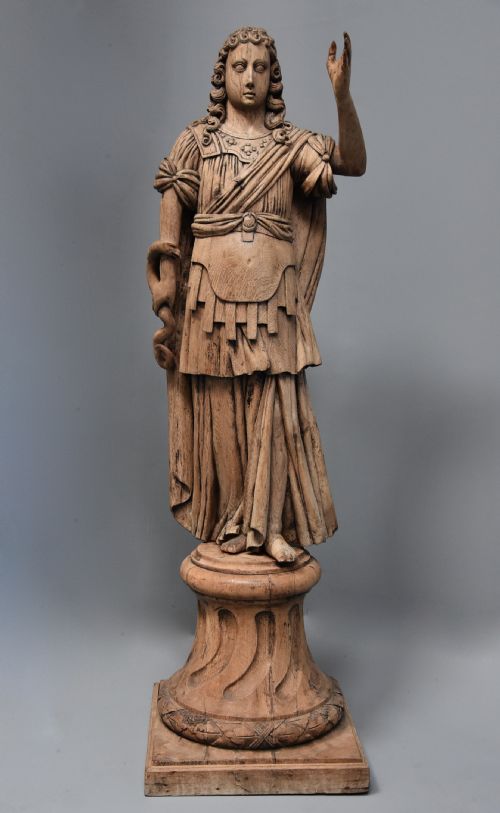
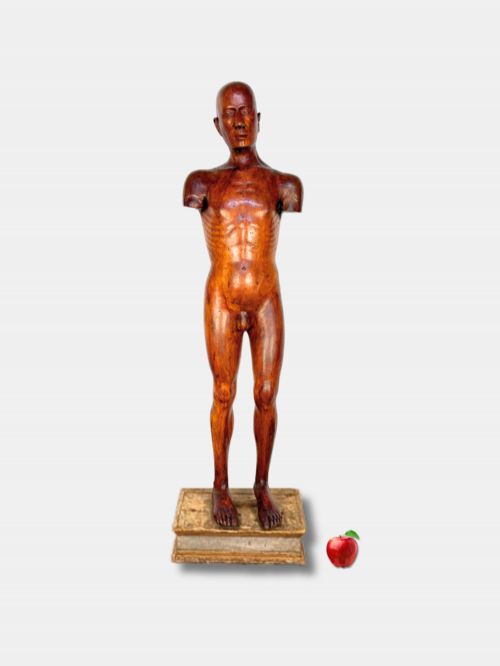
The most frequent examples on this page are eighteenth-century oak and polychrome figures, alongside nineteenth-century devotional statues and European limewood or walnut studies. Formats range from life-size standing figures and wall reliefs to small panel fragments and cherub heads.
Materials and construction methods
Carvers shaped these pieces primarily from oak, walnut, chestnut, limewood, and fruitwood, selecting dense timbers that permitted sharp detail in drapery and facial expressions. Master carvers worked the raw wood with gouges and chisels before applying preparatory layers.
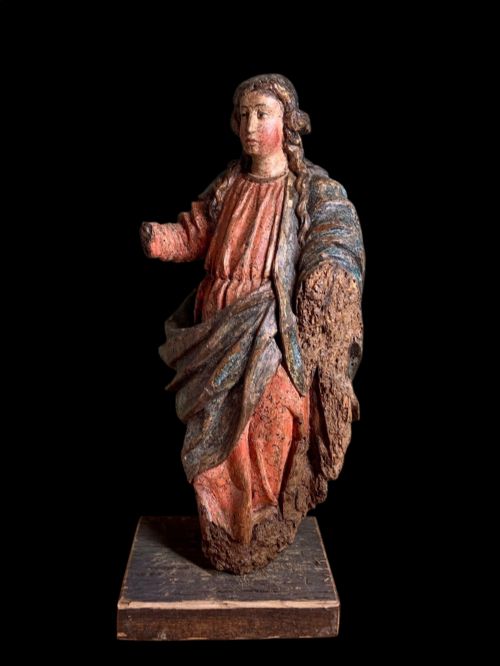
Many surfaces received gesso grounds followed by polychrome paint, oil colours, or gold leaf. Figures often combined carved timber sections with applied pigments to create realistic flesh tones and gilded vestments.
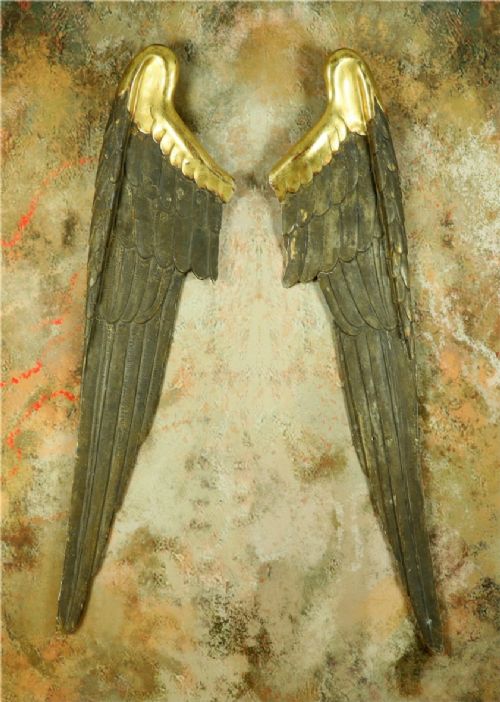
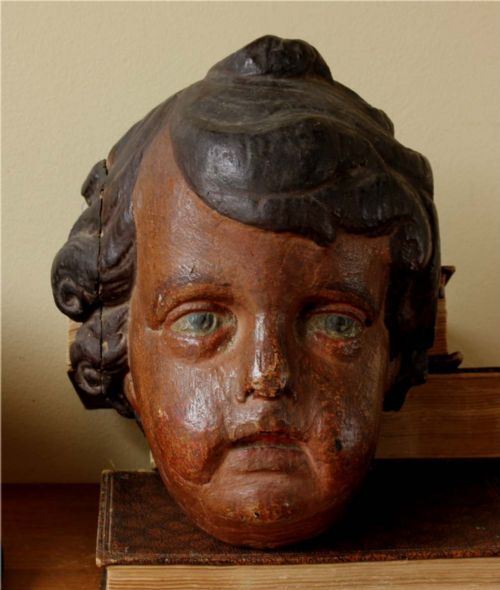
Several eighteenth-century putti share wall space with reclining Buddhas and seventeenth-century angels keeping a watchful, silent vigil.
Factors determining quality
The preservation of original surface finishes, such as early polychrome paint or gilding beneath later layers, distinguishes superior examples. Surviving historic pigments and uncompromised timber integrity elevate the standing of a piece.
The Carved Wood Religious Sculpture Glossary
- Gesso
- A plaster mixture applied to wood as a smooth base for painting and gilding. It provides the white foundation seen beneath many historic gilt surfaces.
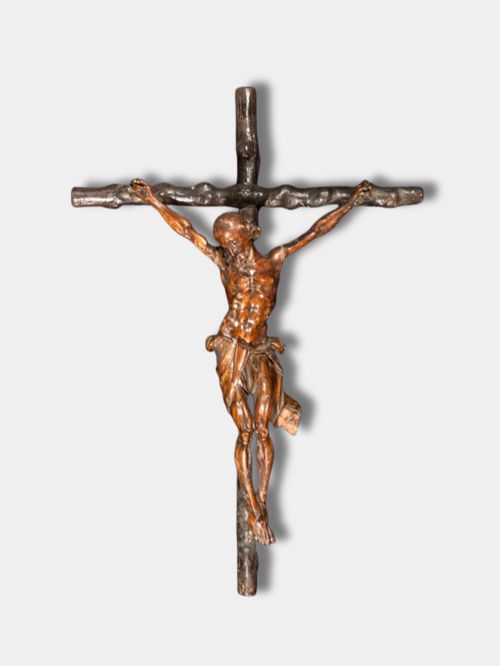
- Corpus Christi
- An image of Christ on the cross. These wooden figures focus on the crucifixion and vary from small domestic carvings to large church displays.
- Altarpiece
- A structure depicting religious subjects mounted behind an altar. Central panels often feature high-relief carved wooden saints and biblical scenes.
- Santos
- A carved figure of a saint or religious figure. These statues are common in southern European and Latin devotional contexts.
Carved Wood Religious Sculpture: Frequently Asked Questions
How do I date an antique wooden carving?
Dating relies on stylistic clues in clothing, hair, and carving tool marks left in the timber. Tool evidence from hand chisels helps distinguish sixteenth-century work from later nineteenth-century revivals.
Wood shrinkage cracks, grain oxidation, and the remnants of historic gesso or paint layers provide further physical indicators of age.
Were these sculptures originally painted?
Many figures carried layers of gesso and polychrome paint or gold leaf when first created. Over centuries, some pieces lost their paint through cleaning or intentional stripping to expose the bare wood.
Traces of original pigments often survive in deep crevices of the carving, revealing the initial colourful appearance intended by the workshop.
How should I care for antique wood carvings?
Keep wooden sculptures away from direct heat sources and sudden humidity shifts to prevent the timber from splitting. Dust them gently with a dry, soft brush rather than liquid polishes.
Stable indoor conditions protect fragile gesso and historic paint layers from flaking off the wooden substrate.
What is the difference between a panel and a statue?
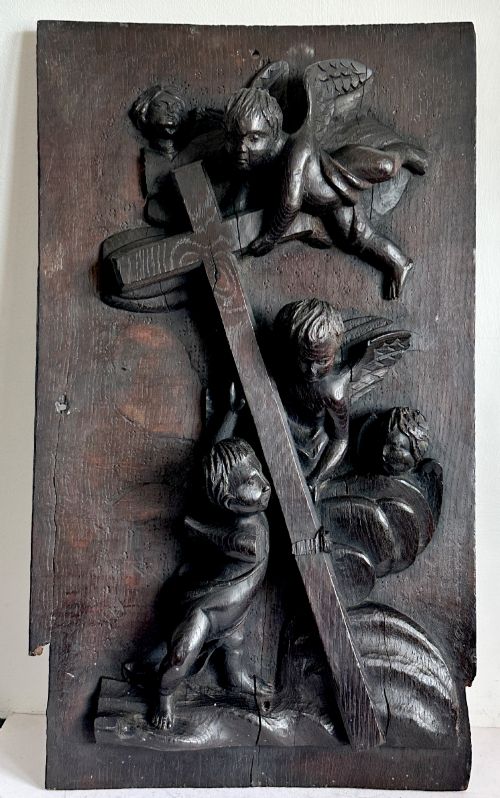
Panels are flat or low-relief carvings designed to be set into altarpieces, walls, or furniture. They illustrate narrative scenes with perspective carved directly into the wood.
Statues are freestanding or high-relief figures intended to be viewed in the round or mounted individually on plinths.