
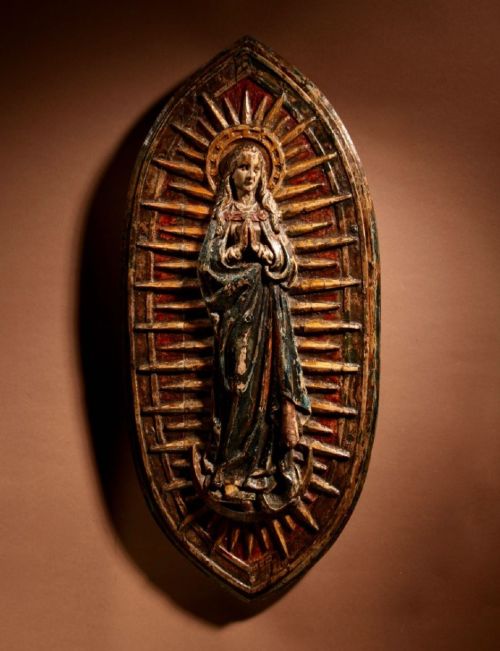
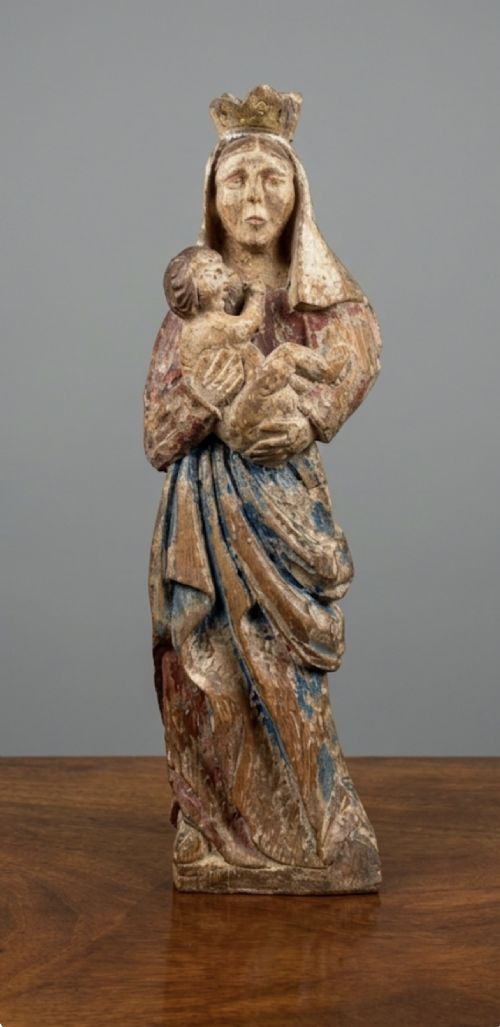


Oak Madonna Statue
An oak madonna statue brings carved devotion into a room, holding centuries of craftsmanship in solid timber.
Oak Madonna Statue
When you search for an oak madonna statue, you encounter religious sculptures and wall sculptures depicting Mary, often with the infant Jesus or in moments of prayer and grief. These pieces range from pre-16th century Gothic fragments and 16th century works to later 18th century, 19th century, and 1900 interpretations.
The forms vary from central panels of altarpieces to standalone statues and wall sculptures. You are most likely to meet carved wooden figures and devotional panels reflecting Gothic, Renaissance, and Baroque traditions.
How they were made
Carvers shaped these figures primarily from solid oak and carved wood, utilising traditional hand tools to form the drapery, figures, and architectural elements. Many surfaces received applications of gesso, paint, and polychrome paint to add colour and life to the timber.
Certain examples incorporate gold leaf to highlight sacred details and garments. The combination of carved wood and surface decoration defines the technical execution across the periods.
Materials recorded across the inventory include oak, carved wood, polychrome, gesso, gold leaf, and paint.
What varies in quality
The sophistication of the carver's hand determines the distinction between standard figures and superior works. Expression in the face of Mary, the fluidity of the carved folds in the robes, and the depth of relief separate simpler pieces from masterworks.
The survival of original surface treatments such as polychrome paint and gesso influences the character of the sculpture. Earlier pre-16th century and 16th century examples often display greater sculptural ambition than later Gothic Revival interpretations.
The Oak Madonna Statue Glossary
- Polychrome
- Painted in several colours. This term describes wooden sculptures adorned with layers of historic paint.
- Gesso
- A plaster mix applied to wood as a base for paint or gold leaf. It creates a smooth surface for detailed decoration.
- Gold leaf
- Gold beaten into extremely thin sheets used for gilding. It adorns sacred highlights on religious figures.
- Altarpiece
- A structure set above an altar. Central panels often featured carved figures of the Virgin and Child.
Oak Madonna Statue: Frequently Asked Questions
How old are these statues?
The pieces span several centuries, beginning with pre-16th century and 16th century examples, moving through the 18th and 19th centuries, up to 1900.
Earlier items often reflect Gothic and Renaissance traditions, while later ones include Gothic Revival and Baroque influences.
Where were they originally placed?
Many figures formed parts of larger architectural church settings, such as altarpieces or wall installations.
Others functioned as private devotional objects for domestic or chapel prayer.
How do I care for an oak sculpture?
Keep the carved wood away from direct heat sources and sudden temperature shifts to prevent timber movement.
Dust gently with a dry cloth and avoid applying modern polishes to historic surfaces.
Are all the statues made of oak?
The primary material is oak, though listings also include general carved wood descriptions.
Surface materials like gesso, paint, and gold leaf frequently cover the underlying timber.