


Oak Virgin Mary Sculpture
These oak virgin mary sculpture pieces carry centuries of devotion in carved timber, offering collectors profound historical depth.
Oak Virgin Mary Sculpture
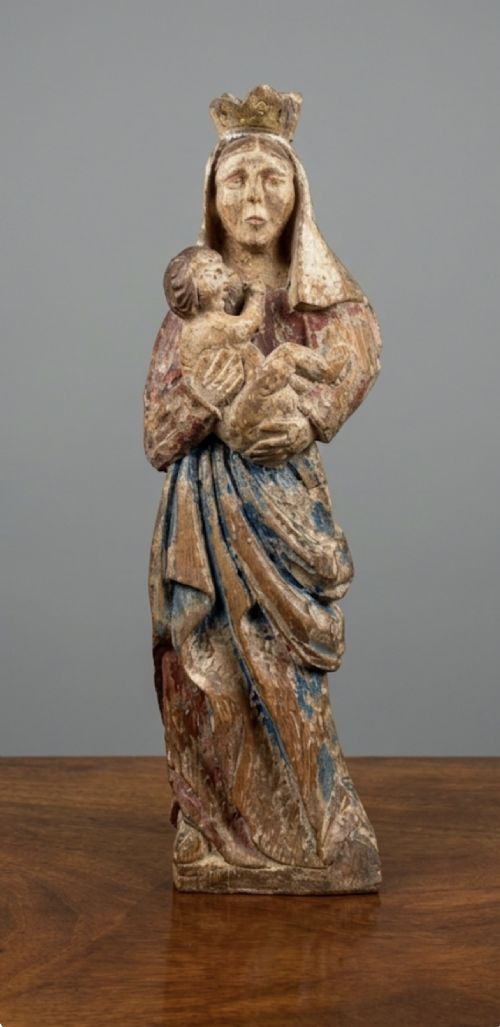
An oak virgin mary sculpture represents the central figure of Christian devotion, appearing in forms such as the Madonna and Child, the Pieta, or as part of larger altarpieces. When exploring an oak virgin mary sculpture, buyers encounter works spanning the medieval era up to the nineteenth century, reflecting deep religious traditions.
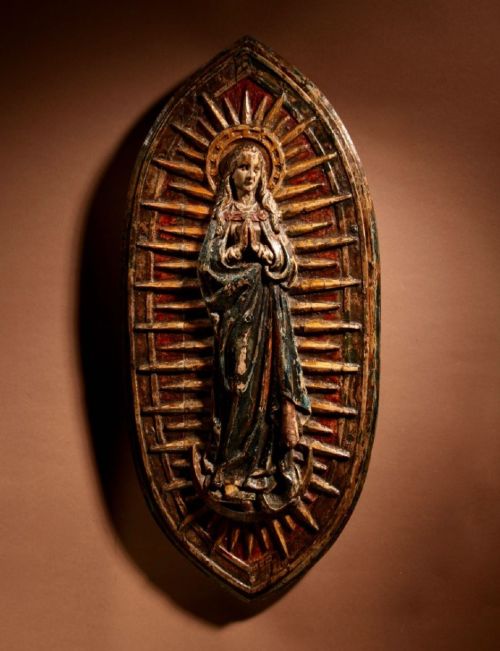
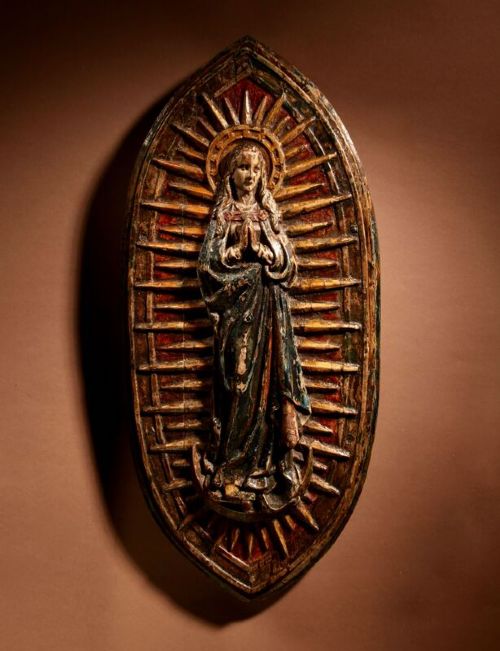
The most likely examples to meet on this page date from the pre-sixteenth century to the sixteenth century, often characterised by Gothic or Renaissance sensibilities. These sacred carvings take the shape of freestanding statues, wall sculptures, and central panels depicting scenes like the Annunciation or the praying Virgin on the crescent moon.
How they were made
Many surfaces received layers of polychrome paint and gold leaf, adding rich colour and luminosity to the devotional imagery. Over centuries, these painted and gilded finishes have aged, often leaving subtle traces of pigment across the carved wood.
Several Virgin Mary figures share floor space with a discreet carved snake beneath a half moon, keeping watch over the centuries.
What varies in quality
The quality of an oak virgin mary sculpture rests largely on the expressive power of the carving and the preservation of its original form. Master carvers achieved a fluid grace in the drapery and a psychological depth in the facial expressions that distinguish superior works from simpler village productions.
Survival of early surface treatments, such as original polychrome paint or remnants of gold leaf, elevates the historical significance of a piece. The crispness of detail in Gothic or Renaissance execution separates the most accomplished workshops from more rudimentary hands.
The Oak Virgin Mary Sculpture Glossary
- Polychrome
- Decorated in a variety of colours. This term describes sculpture painted with multiple pigments, often applied over a gesso ground.
- Gesso
- A plaster-like mixture used as a base for painting or gilding on wood. It provides a smooth surface for applying gold leaf and fine pigments.
- Pieta
- A subject in Christian art depicting the Virgin Mary supporting the dead body of Christ. This poignant iconography appears frequently in medieval wooden sculpture.
- Altarpiece
- A piece of art such as a carving set above and behind an altar. Central panels often depicted the Virgin Mary standing on the half moon with the snake.
- Gothic
- A style of European architecture and art spanning the medieval period. It is marked by graceful verticality and expressive figurative carving.
Oak Virgin Mary Sculpture: Frequently Asked Questions
How old are these sculptures typically?
The pieces span several centuries, with notable examples dating from the fourteenth, fifteenth, and sixteenth centuries. Later revivals from the nineteenth century also appear.
Early works often display the distinct stylistic traits of medieval Gothic craftsmanship, whereas later interpretations adopt Renaissance or revival aesthetics.
What subjects do these carvings depict?
Common subjects include the Madonna and Child, the Pieta, and depictions of the Virgin of the Annunciation. Some pieces formed central panels from larger altarpieces.
Iconography frequently incorporates symbolic elements such as the half moon and the snake beneath the feet of the praying Virgin.
Where were these sculptures made?
Originating largely from European workshops, surviving pieces reflect the religious artistic traditions of regions such as South Germany and the Low Countries. Continental carvers utilised local timbers like oak to create devotional works for churches and domestic shrines.
Trade and migration of styles influenced how these religious figures evolved across different centuries.
How should I display a wooden sculpture?
Place the sculpture away from direct sunlight and sudden temperature fluctuations to protect the aged timber and any remaining polychrome paint. Stable indoor humidity helps preserve the structural integrity of historical carved wood.
Wall sculptures require secure fixings suited to the weight of dense oak.