

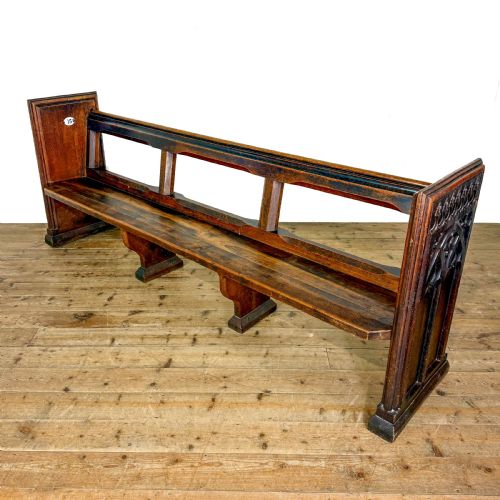


Church Pew Carving
These church pew carving pieces bring centuries of woodwork into your hall, offering robust oak benches and architectural fragments shaped by Gothic hands.
Church Pew Carving
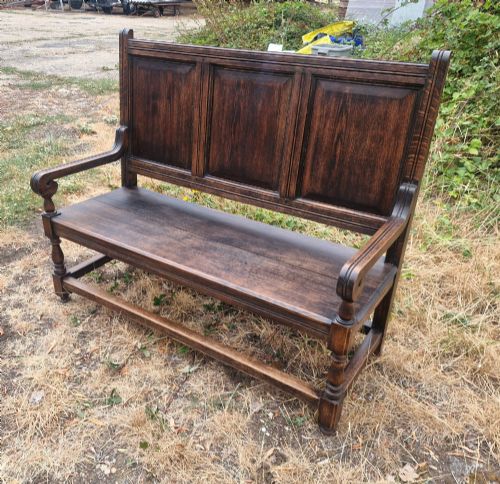
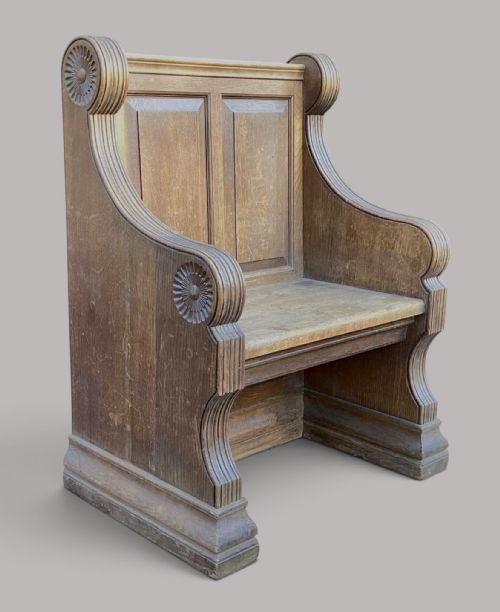
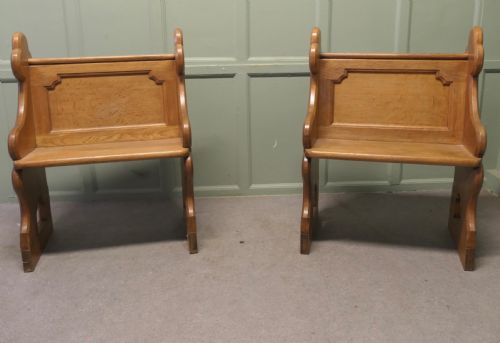
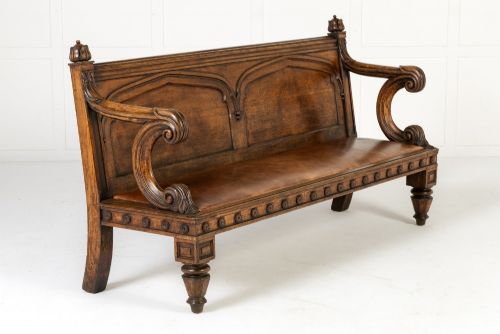
A church pew carving search brings up benches, settles and architectural fragments salvaged from ecclesiastical and domestic settings. You will most frequently meet solid oak pieces spanning the seventeenth through the nineteenth centuries, often showing Gothic revival influences or simple country forms.
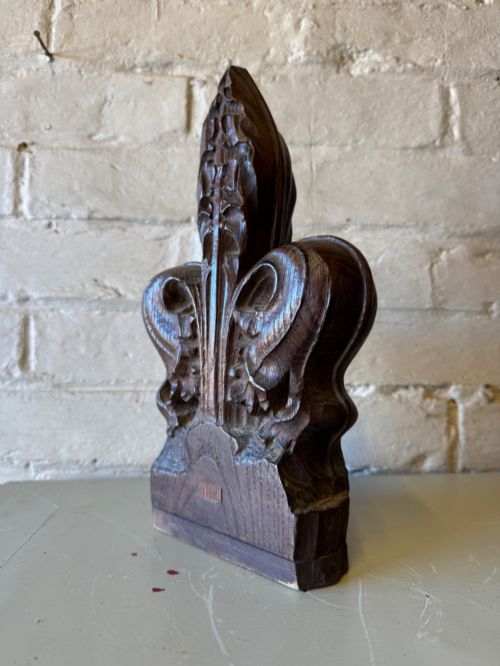
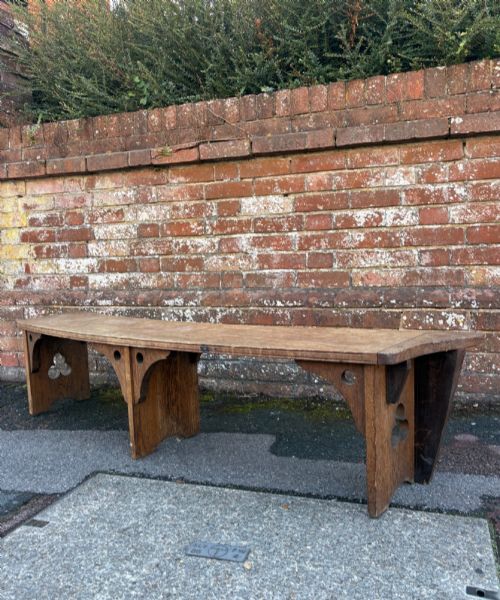
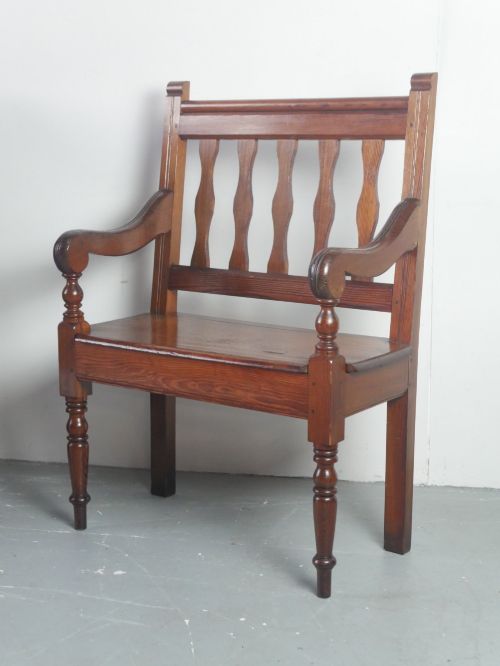
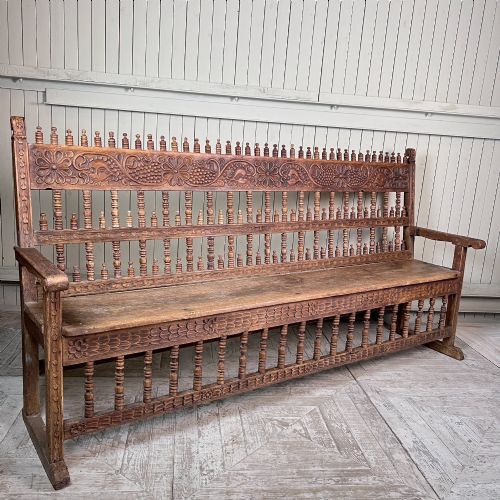
The objects range from poppy head finials and trefoil carved supports to full-length settles and hall seats. English oak predominates, though you also encounter pine, pitch pine, walnut and Spanish colonial hardwood.
Makers adapted these forms for domestic hallways and libraries during the Victorian and Edwardian periods, reusing earlier timbers or building in historical revivals. The resulting furniture bridges architectural salvage and practical seating.
Materials and construction methods
Carpenters relied primarily on oak, pine and pitch pine, working the timber with hand tools to create heavy benches and structural panels. Joinery techniques included tenons and pegs, ensuring the long benches remained rigid under heavy daily use.
Carvers applied Gothic revival motifs directly into the solid wood, cutting poppy head finials, trefoils and architectural tracery by hand. Some items retain original paint or finish, while others show the bare grain of aged hardwood.
Gothic revival and Arts and Crafts styles dominate the decorative carving seen on these benches and settles.
Assessing quality in carved seating
Quality rests in the crispness of the hand-carved detail and the integrity of the original timber. Pieces retaining early poppy heads or sophisticated tracery demonstrate superior craftsmanship compared to plain utilitarian benches.
The proportion and survival of original structural elements dictate the piece's standing. Intact architectural forms and well-preserved seventeenth or eighteenth-century oak hold greater presence than later adaptations.
The Church Pew Carving Glossary
- Poppy head
- An ornamental finial carved on the top end of a bench end, typically taking a leaf or bud shape. You see this form frequently on seventeenth-century oak fragments.
- Trefoil
- A graphic ornament composed of three rounded lobes arranged in a cloverleaf shape. This motif appears often in Gothic revival carved supports.
- Settle
- A wooden bench with a high back, solid arms and a storage box seat beneath. They were designed to block draughts in large halls.
- Architectural salvage
- Building elements removed from structures for reuse or display. This category includes pew ends and carved panels taken from demolished churches.
- Gothic Revival
- An architectural and decorative style drawing on medieval ecclesiastical design. The listings show this style in nineteenth-century pews and Pugin-inspired chairs.
Church Pew Carving: Frequently Asked Questions
How do I care for old oak benches?
Keep wooden pews away from direct heat sources and sudden humidity changes to prevent the old oak from splitting. Apply a suitable beeswax occasionally to nourish the dry timber.
Avoid modern liquid polishes that can build up a sticky residue over the hand-carved surfaces. A soft, dry cloth is usually sufficient for routine dusting.
Were these pews always used in homes?
Most of these pieces originated in churches, chapels and abbeys before being salvaged for domestic hallways and libraries. Victorian and Edwardian buyers often sourced church pews to create an ecclesiastical atmosphere at home.
Over time, makers adapted longer benches into hall seats or incorporated carved fragments into new furniture. This reuse explains why many pews show signs of alteration.
How can I tell the age of a carved pew?
Examine the tool marks, timber shrinkage and joinery methods visible on the underside and back of the bench. Seventeenth-century pieces display hand-riven oak and pegged joints that differ noticeably from machine-sawn nineteenth-century work.
Style provides another clue, as seventeenth-century carvings are simpler and deeper, whereas Victorian pieces often follow structured Gothic revival patterns.
Are these benches comfortable for daily seating?
Church pews and settles were built with rigid wooden backs and upright posture in mind. They function well as hall seats or dining benches rather than lounging chairs.
Some owners add loose leather or fabric cushions to soften the hard wooden seat. The solid construction easily supports regular daily use.