

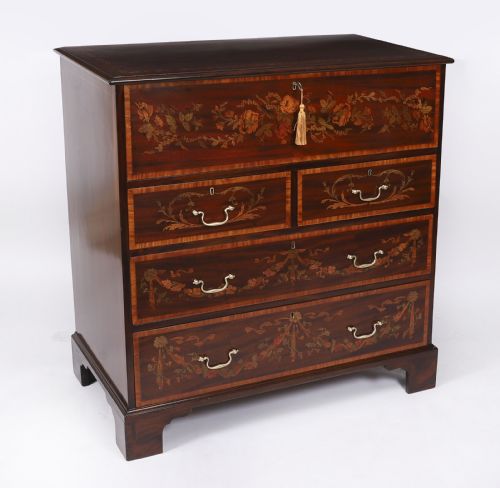
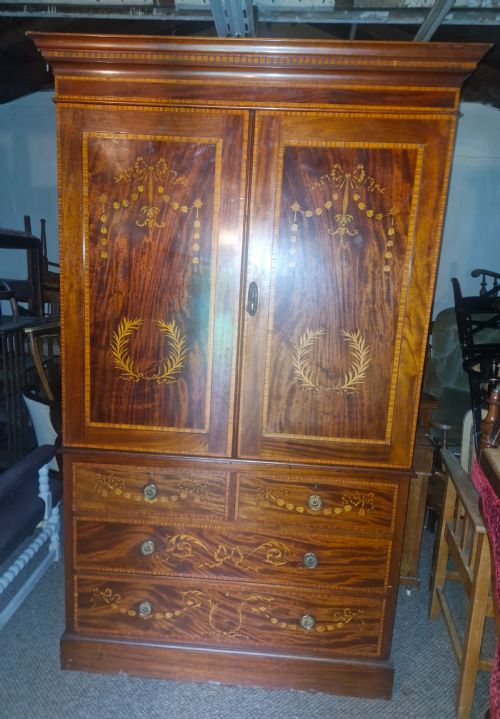
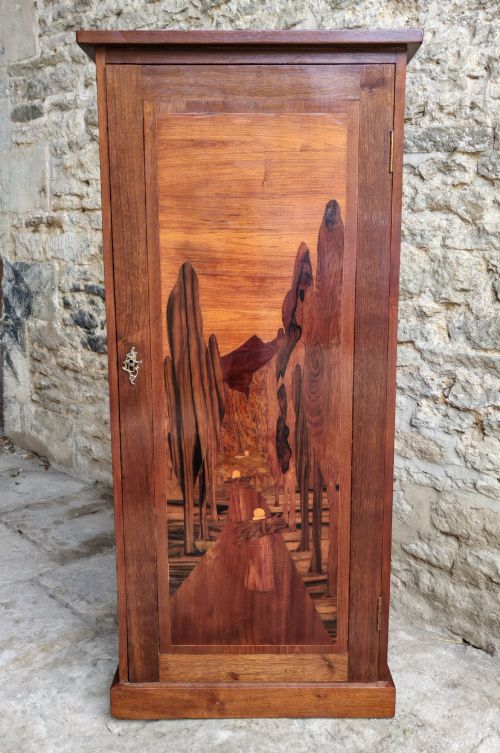
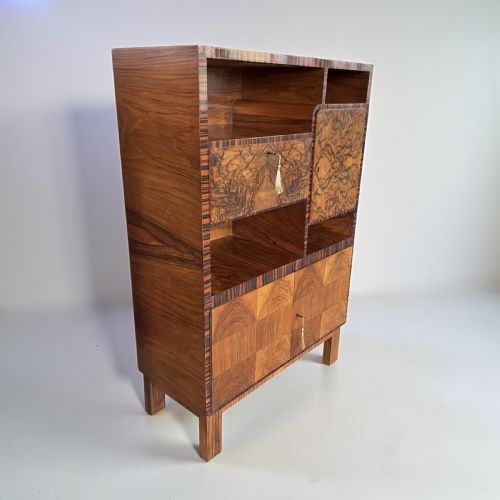


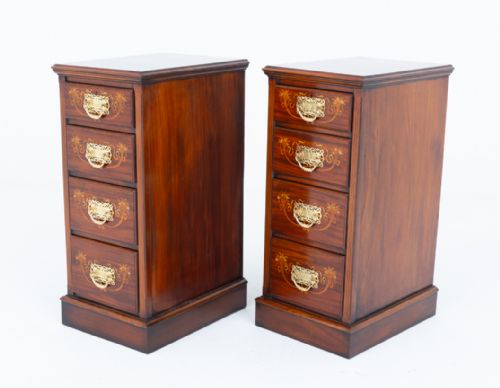
Marquetry Tallboy Cabinet
Marquetry tallboy cabinet pieces combine tall vertical storage with intricate wood inlay, offering both functional presence and distinct decorative depth for the home.
Marquetry Tallboy Cabinet
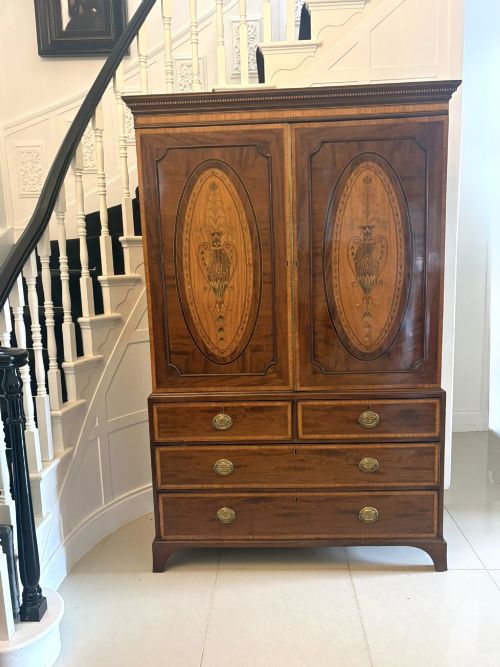
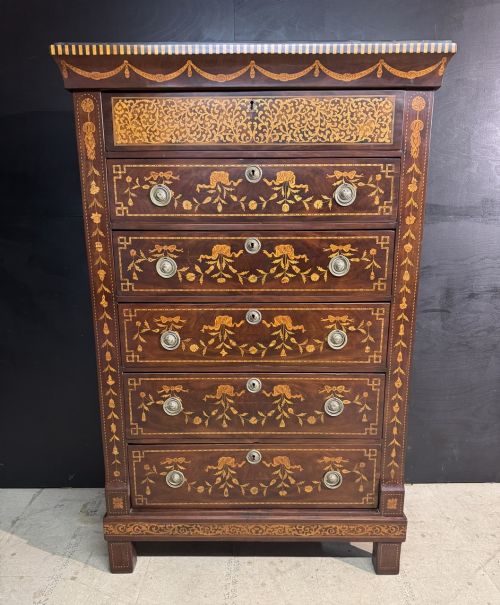
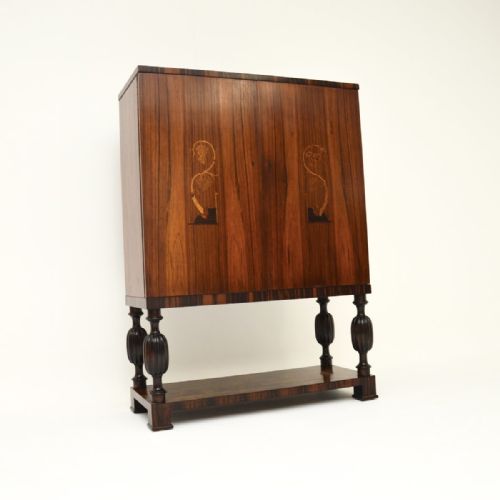
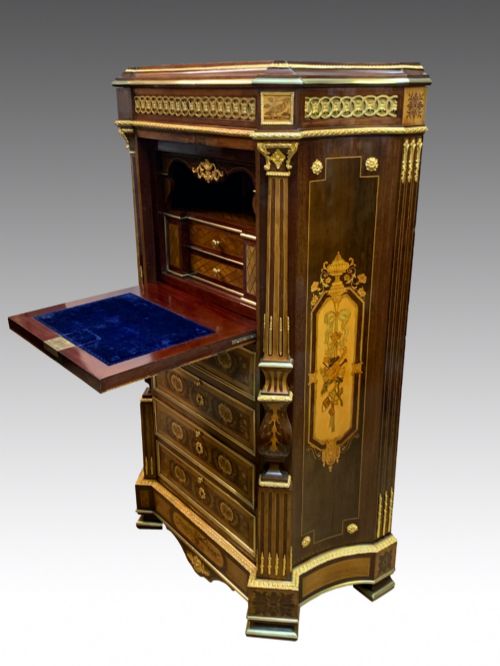
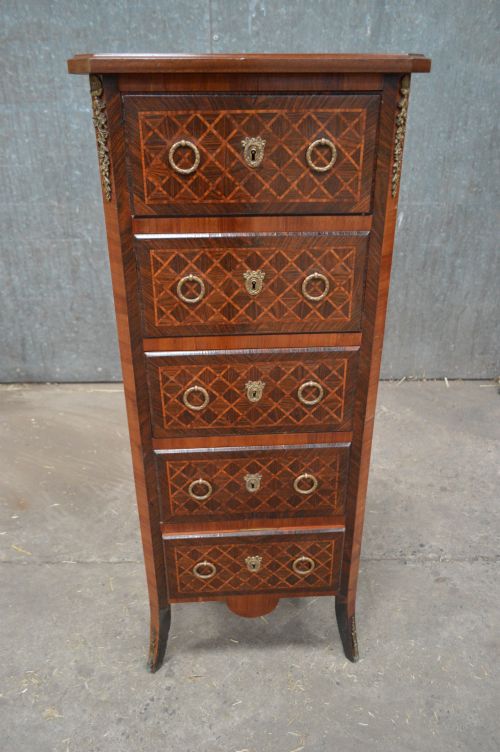
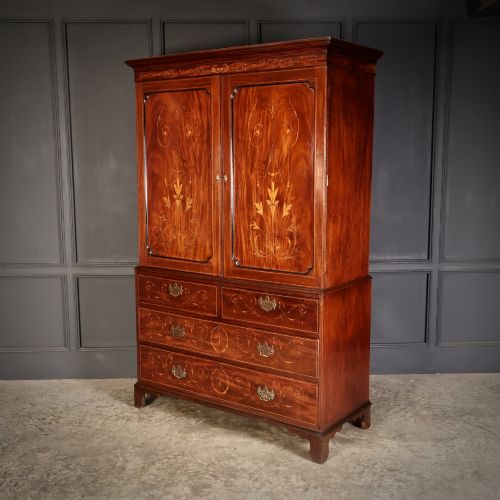
A marquetry tallboy cabinet brings together elevated storage capacity and detailed floral or geometric wood patterns. Buyers exploring this category encounter tall chests of drawers, linen presses, and secretaire cabinets originating from periods such as the 18th century, 19th century, and Edwardian era.
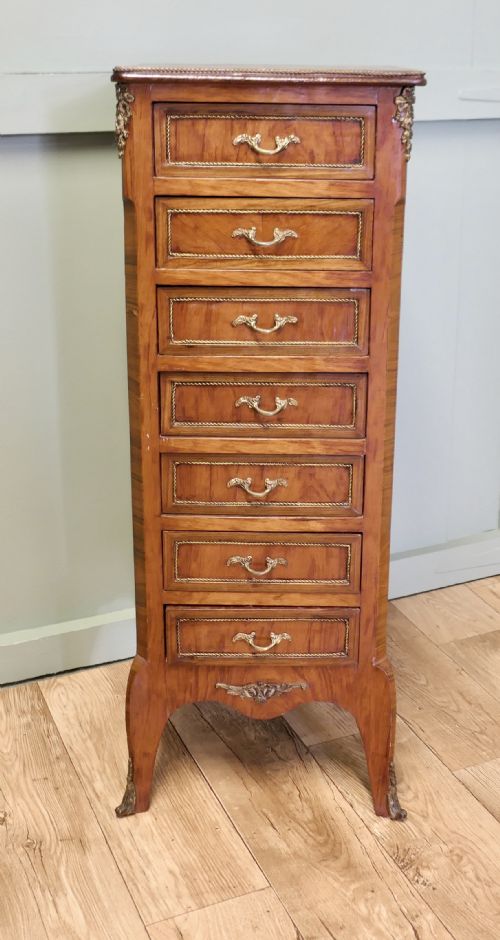
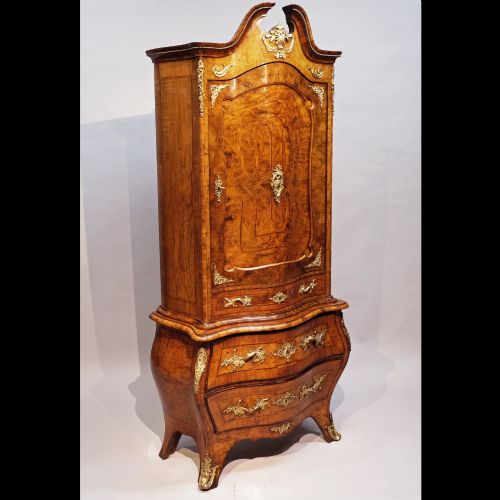
Dutch workshops and French makers produced significant numbers of these tall forms, utilising walnut, mahogany, and rosewood. The pieces on this page range from early Georgian designs to later revival styles featuring brass and ormolu mounts.
How They Were Made
Craftsmen built these cabinets using foundational timbers like mahogany, walnut, and oak, applying fine veneers of satinwood, kingwood, and rosewood over the surfaces. Floral and pictorial inlay was meticulously cut and fitted into the primary wood ground.
Structural embellishments frequently include cast brass, ormolu, or gilt bronze mounts framing the drawers and corners. Marble tops appear on specific French examples, adding a contrasting stone surface to the veneered timber structure.
Object forms on this page include linen presses, secretaire desks, Wellington chests, and bedside cabinets.
What Varies in Quality
The precision of the marquetry cutting and the choice of veneer timbers dictate the visual standard of each cabinet. Finer examples display tightly registered floral details and deeply figured walnut, mahogany, or amboyna grains without lifting or poorly matched sections.
Execution of the secondary mounts, drawer construction, and the integrity of the original carcase timber separate standard production from exceptional cabinet work. Smooth operation of deep drawers and properly fitted doors indicate superior workshop assembly.
Maison Krieger·Druce & Co·Holland & Sons·Leonard Boudin
The Marquetry Tallboy Cabinet Glossary
- Marquetry
- Decorative veneer work forming pictures or patterns by assembling small pieces of various coloured woods. This technique defines the primary surface ornamentation on these tall cabinets.
- Tallboy
- A tall chest of drawers, often constructed in two sections with a smaller set placed upon a larger base. It provides maximum vertical storage capacity.
- Oyster veneer
- Cross-sections of branches cut to reveal circular growth rings resembling oyster shells. Cabinetmakers arranged these in repeating geometric patterns across the carcase.
- Ormolu
- Gilt bronze mounts applied to furniture for decorative effect and corner protection. French pieces frequently incorporate these metallic accents.
- Semainier
- A tall seven-drawer chest traditionally designed with one drawer for each day of the week. This narrow vertical format is common in French examples.
Marquetry Tallboy Cabinet: Frequently Asked Questions
What is a marquetry tallboy cabinet?
A marquetry tallboy cabinet is a tall storage piece featuring patterned wood inlay across its front and sides. These pieces typically combine multiple drawers or a cupboard section to offer vertical storage.
Craftsmen used contrasting timbers to create floral or geometric designs that cover the main structure. They function as both storage furniture and decorative focal points in a room.
How were these cabinets used?
These tall cabinets served primarily for storing clothing, linens, and personal valuables in domestic chambers. The upper sections often held folded textiles while lower drawers accommodated bulkier items.
Certain variants included writing surfaces or specialised compartments for papers. Their height maximised storage floor space while keeping everyday items accessible at standing level.
Where do most marquetry cabinets originate?
The listings show regional traditions spanning Dutch, French, English, and Swedish workshops. Dutch pieces frequently display elaborate floral marquetry, while French examples often incorporate gilt bronze mounts.
English cabinets tend to focus on figured mahogany and satinwood veneers with restrained inlay patterns. Each regional style reflects the distinct aesthetic preferences of its period.
How do I care for wood veneer?
Maintaining veneered furniture requires stable indoor humidity levels to prevent the underlying wood from expanding and loosening the surface. Keep pieces away from direct heat sources and strong sunlight.
Dust the surface regularly with a soft dry cloth and avoid applying modern chemical polishes. Professional conservation ensures the shellac or wax finish remains protective.
How can I tell the period?
Dating relies on examining the construction methods of the drawer linings, backboards, and internal carcase timbers. Earlier pieces from the seventeenth and eighteenth centuries utilise hand-cut joinery and native woods.
Stylistic indicators such as Louis XV curves, Edwardian satinwood banding, or Victorian walnut proportions help assign a specific era. Comparing the hardware and mount fixings further clarifies the manufacturing date.