
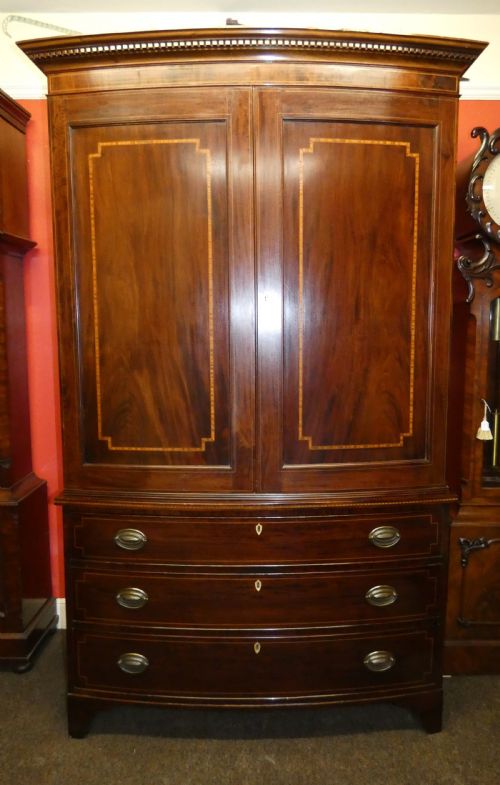
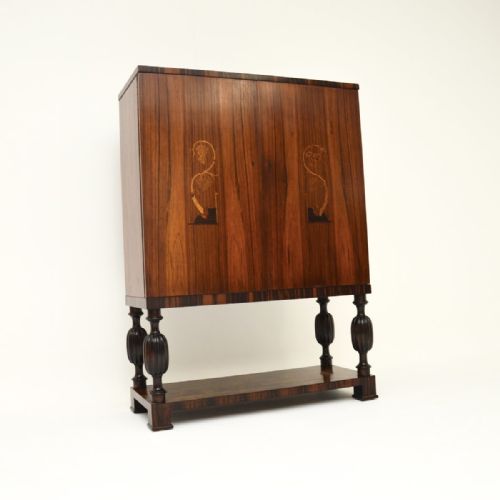
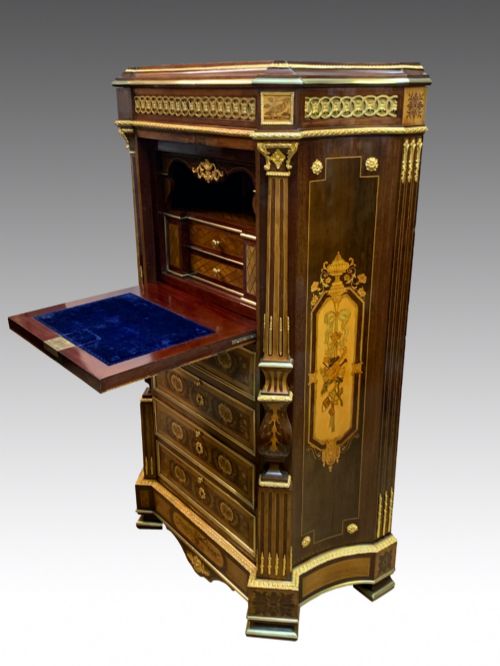
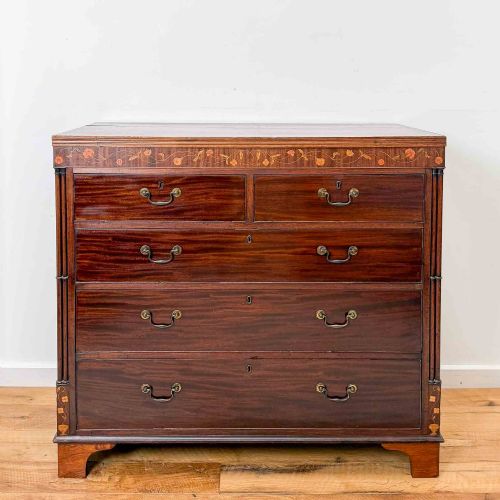

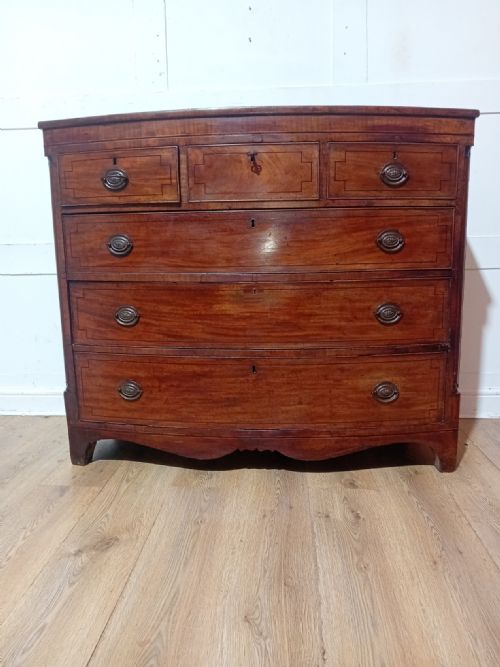


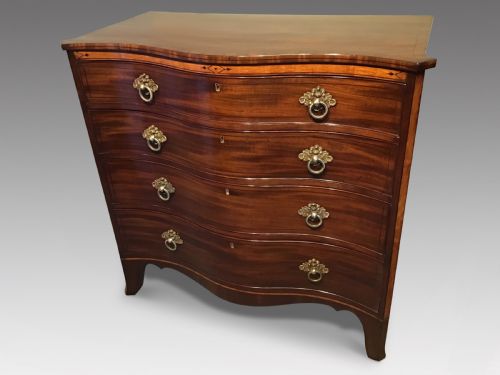


Dark Wood Inlaid Tallboy
These dark wood inlaid tallboy pieces bring deep timbers and delicate stringing together in practical chests that anchor a room.
Dark Wood Inlaid Tallboy
A dark wood inlaid tallboy combines towering vertical storage with contrasting light woodwork, appearing primarily across Georgian and Victorian periods in forms such as tallboys and chests on chests, linen presses, and tall chests of drawers. These pieces give substantial presence to a bedroom or dressing room while keeping daily garments organised within stacked drawers.
Makers often employed mahogany, walnut, and rosewood as primary dark timbers, enriched with satinwood, boxwood, and floral marquetry or stringing. The inventory shows examples spanning from the seventeenth century through to Swedish vintage pieces from nineteen thirty, demonstrating a long tradition of vertical cabinetmaking.
Buyers encounter variations ranging from bowfront linen presses to serpentine chests and secretaire cabinets, reflecting regional cabinet shops and metropolitan workshops alike. Each piece relies on solid proportions to balance the visual weight of dark timbers against intricate panel details.
What varies in quality
Quality rests upon the precision of the inlay work and the choice of primary timber grain. Finer examples display tight, even botanical stringing and crisply cut marquetry that remains flush with the surrounding mahogany or walnut.
Construction methods dictate longevity, seen in hand-cut dovetails joining drawer sides and clean, substantial timber linings inside the carcase. Superior pieces maintain smooth drawer movement within frames that have resisted seasonal timber movement over centuries.
The sophistication of the overall proportion and secondary details, such as bracket feet, dentil cornices, or shaped aprons, separates standard workshop production from exceptional cabinetmaking.
Some nineteenth-century drawers still retain faint traces of old herbal sachets tucked into the bottom corners to keep linens smelling sweet.
Maison Krieger·Mawer & Stephenson
The Dark Wood Inlaid Tallboy Glossary
- Tallboy
- A tall chest of drawers made in two sections, placing a smaller set of drawers on top of a larger base chest. This form maximises storage floor space while maintaining elegant vertical proportions.
- Marquetry
- Decorative veneer work forming pictures or patterns by assembling small pieces of various woods, metals, or ivory. Craftsmen arrange these elements meticulously onto the carcase surface.
- Stringing
- Thin inlay lines of contrasting timber used to outline drawer fronts, tabletops, or panel borders. It creates a subtle linear frame around the darker primary wood.
- Bowfront
- A convex curved cabinet or drawer front that swells outward in the centre. This shape softens the rigid angles of a standard rectangular chest.
- Secretaire
- A desk disguised as a chest of drawers, featuring a drop-front writing flap that conceals small pigeonholes and letter drawers. It combines normal bedroom storage with a compact writing surface.
Dark Wood Inlaid Tallboy: Frequently Asked Questions
How do I clean dark wood surfaces?
Dust surfaces regularly with a soft, dry lint-free cloth to prevent particle buildup. Avoid silicone sprays and household polishes that leave residues and attract dust.
Apply a quality microcrystalline wax sparingly once or twice a year to nourish the timber and protect the polish. Buff gently after application to maintain a soft, natural sheen without creating a greasy film.
Can I use a tallboy in a modern bedroom?
These tall pieces fit naturally into contemporary spaces by providing substantial vertical storage without consuming excessive floor area. Their dark tones and warm inlay work contrast cleanly against neutral plastered walls.
Pair them with simple, low-profile modern furniture to let the historical proportions and timber grain stand out as a focal point in the room.
How do I spot a marriage of two sections?
Examine the timber species, colour, and grain continuity between the upper and lower sections of a tallboy or chest on chest. Mismatched woods or differing degrees of fading often indicate that two separate periods have been joined together.
Check the internal construction marks, side mouldings, and dovetail styles to confirm that the cabinet parts originated from the same workshop and date.
What is a linen press used for today?
Originally designed for storing folded household linens on sliding trays behind upper cabinet doors, a linen press adapts easily to modern wardrobes. The interior shelves hold folded sweaters, heavy cottons, or bedding.
The deep drawers below accommodate bulkier items, offering practical storage capacity for rooms lacking fitted wardrobes.