


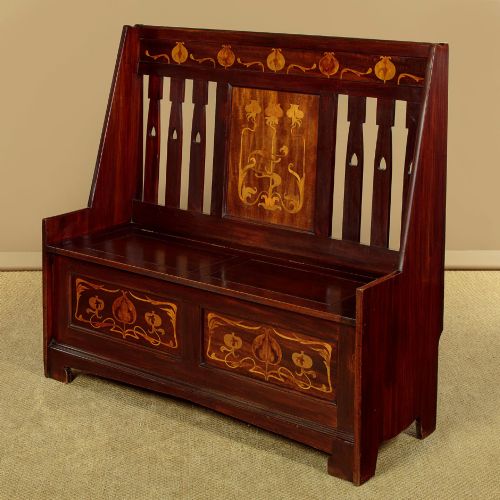
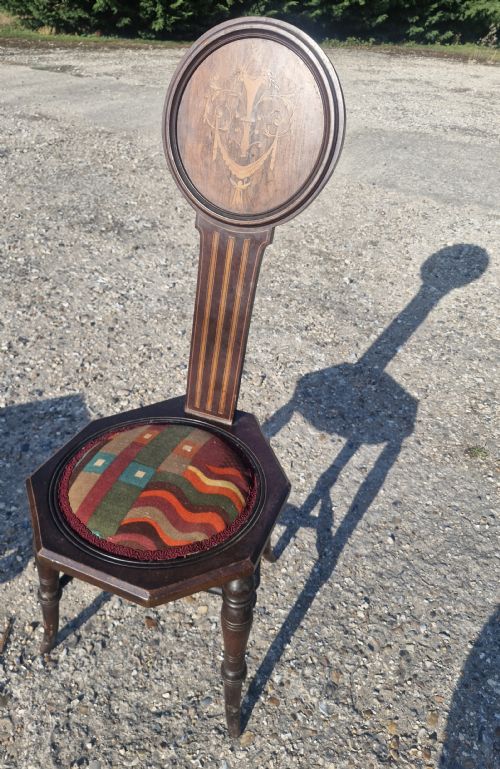


Marquetry Mahogany Seat
These marquetry mahogany seat options bring together rich timber and intricate inlay, offering both functional seating and classic design for any room.
Marquetry Mahogany Seat
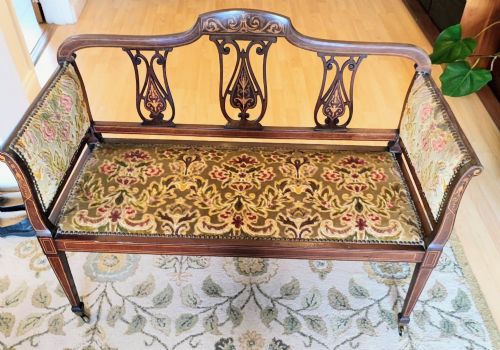
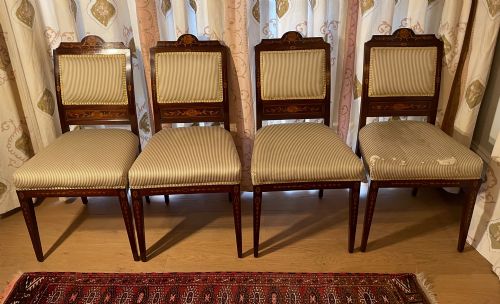
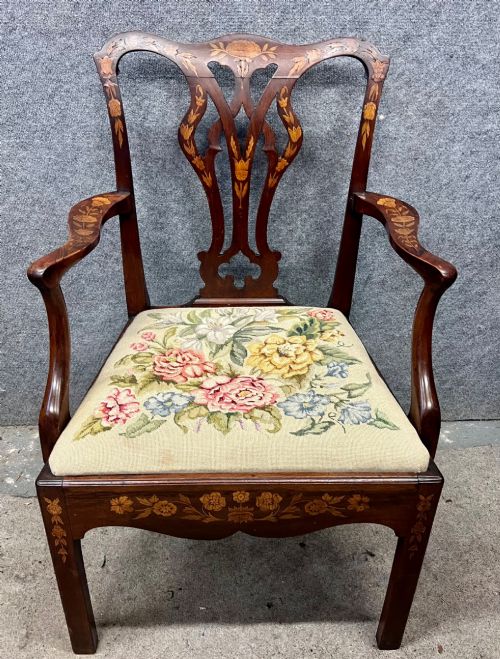
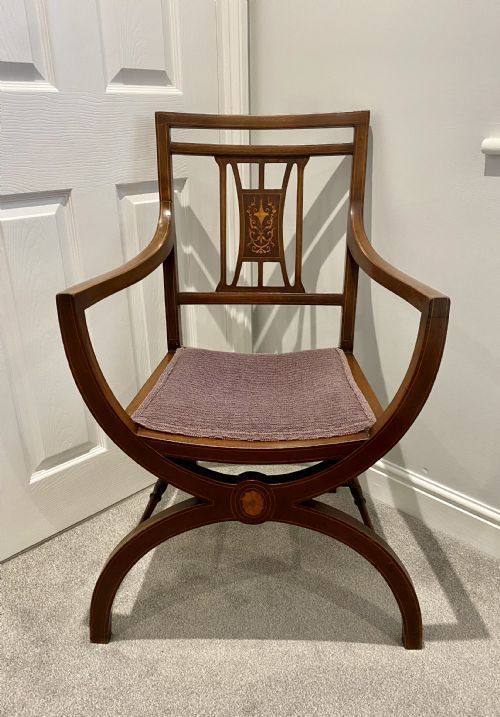
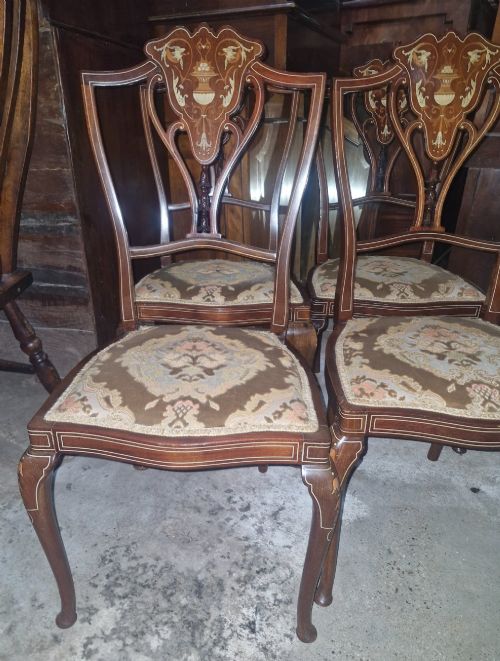
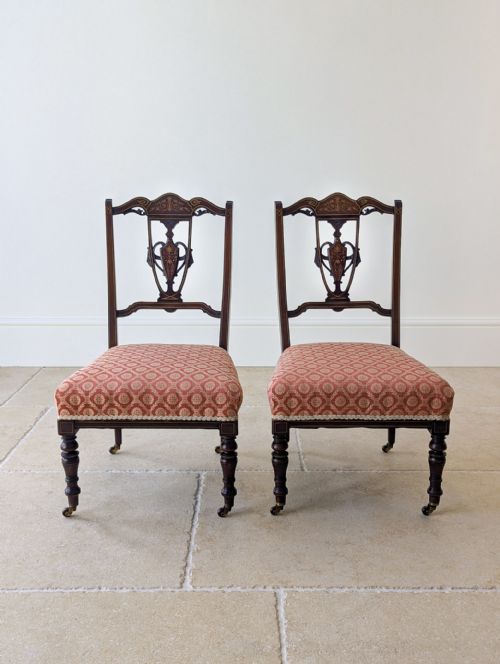
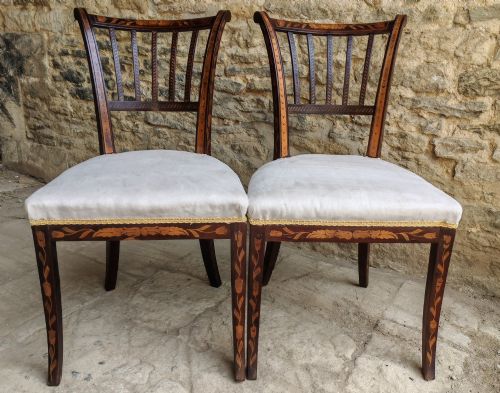
When searching for a marquetry mahogany seat, buyers encounter a diverse range of furniture forms designed for various domestic spaces. The selection spans distinct eras, appearing predominantly in Edwardian, Victorian, Regency, and Georgian periods. Dining chairs, armchairs, settees, sofas, and window seats make up the primary forms available on this page.
Edwardian pieces dominate the current selection, often showcasing delicate inlay work and lighter frames suited for bedrooms, salons, and morning rooms. Earlier Georgian and Regency examples offer heavier proportions, robust timber frames, and formal brass or contrasting wood detailing. Buyers will find everything from single desk chairs and rocking chairs to large sets of dining chairs and multi-seater settees.
How they were made
Cabinet makers utilised solid mahogany and supporting timbers as the structural foundation for these seats, applying decorative techniques to elevate the visual appeal. Satinwood inlay, marquetry, and occasional bone elements were integrated into the primary wood grain to create contrasting geometric or floral patterns.
Upholstery forms an integral part of many pieces, utilising fabrics such as velvet and silk alongside supportive internal webbing and stuffing. Brass inlay and hardware appear on formal Regency and Edwardian pieces, adding metallic contrast to the polished timber surfaces.
Marquetry Mahogany Seat Retail Price Guide 2026
Typical asking prices for marquetry mahogany seat among the pieces listed under this phrase on Sellingantiques today, from the lower quarter to the upper quarter. They describe what is for sale here now, not the wider market.
Listings feature mahogany, satinwood inlay, brass, and velvet across Edwardian, Victorian, and Regency periods.
What varies in quality
The precision and complexity of the marquetry and satinwood inlay separate standard workshop output from exceptional cabinet work. Crispness in the floral or geometric motifs indicates superior hand-cut craftsmanship rather than mass-produced uniformity.
Timber selection and frame integrity dictate the upper tier of the range. Tighter grain patterns in the mahogany and robust joinery in stress points such as chair arms and sofa legs mark the difference between everyday utility and fine antique manufacture.
James Shoolbred & Co.
The Marquetry Mahogany Seat Glossary
- Marquetry inlay
- Decorative patterns formed by fitting small pieces of veneer into the primary wood surface. This technique allows for detailed pictorial or geometric designs across the backrests and seats.
- Satinwood
- A lustrous, yellowish timber often used for contrasting inlay work on darker mahogany frames. It provides sharp visual definition against the deeper reddish-brown base wood.
- Settee
- A small upholstered sofa designed for two or more people, featuring a backrest and arms. These forms range from bedroom end-of-bed benches to grand salon seating.
- Sheraton Revival
- A late nineteenth and early twentieth-century design style inspired by eighteenth-century neoclassical furniture. It prioritises light proportions, straight tapered legs, and subtle marquetry decoration.
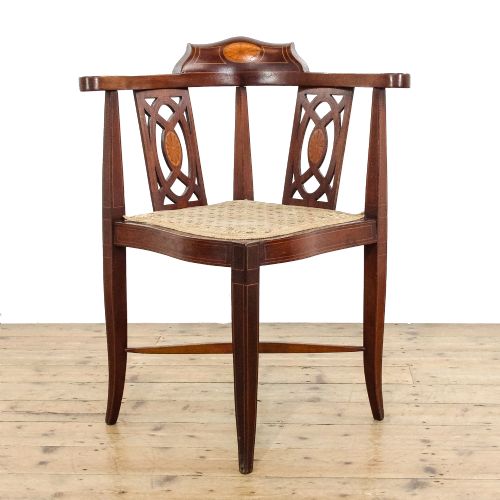
- Corner armchair
- A specialised seating form designed to fit into room corners, featuring a continuous curved backrest supported by multiple spindles or columns.
Marquetry Mahogany Seat: Frequently Asked Questions
Where were window seats placed?
Window seats were traditionally positioned in deep bay windows or hallways to provide casual seating while maintaining clear views outward. They offered a convenient resting place in bedrooms at the foot of the bed or within formal morning rooms.
Their elongated proportions and low backs ensured they did not block natural light entering through tall windows. Today, they function well in similar transitional spaces or living areas needing compact seating.
How do I identify Edwardian pieces?
Edwardian furniture generally exhibits lighter proportions and brighter mahogany tones compared to heavier Victorian counterparts. Pieces from this era frequently incorporate delicate satinwood inlay and Sheraton Revival styling cues.
Craftsmen during this period focused heavily on bedroom and salon furniture, resulting in numerous occasional chairs, nursing chairs, and small settees. The decorative elements are typically refined and geometric rather than heavily carved.
What is a nursing chair?
A nursing chair is a low-seated armchair designed historically to provide comfort while holding or feeding infants. The low height allowed the sitter to maintain a relaxed posture close to the floor or fireplace.
These chairs often feature upholstered seats and backrests, sometimes with open arms to accommodate bulky garments or children. Their compact scale makes them useful in modern bedrooms and smaller sitting spaces.
How should I care for mahogany?
Mahogany furniture requires stable indoor humidity levels to prevent timber movement and cracking in the joints. Regular dusting with a soft, dry cloth preserves the polished surface without building up chemical residues.
Direct sunlight should be avoided to prevent the rich reddish-brown timber and inlaid veneers from fading over time. Applying appropriate beeswax polishes occasionally helps maintain the moisture and natural lustre of the wood.