

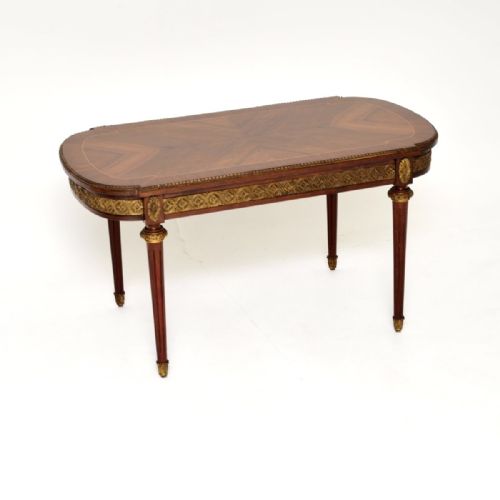


Marquetry Low Table
These marquetry low table pieces bring intricate timber inlay and low proportions together, offering a surface that anchors a room with historic craft.
Marquetry Low Table
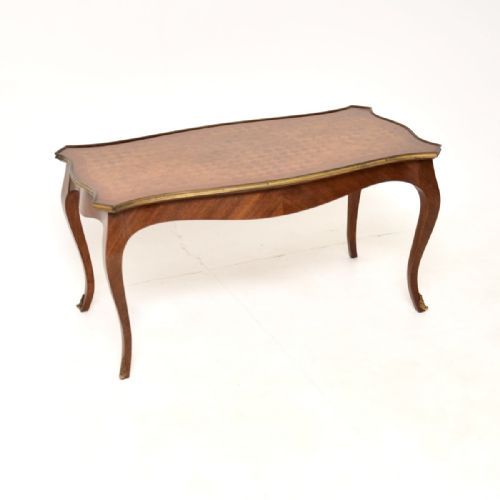
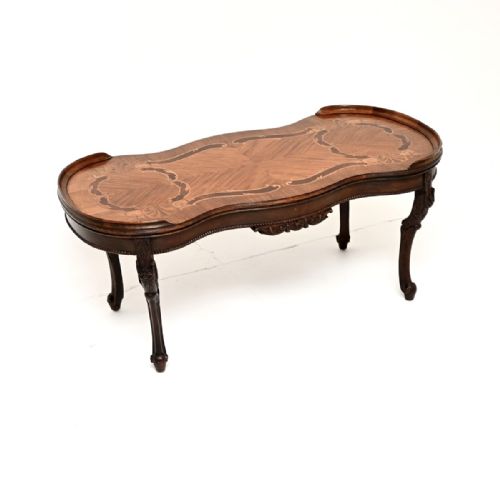
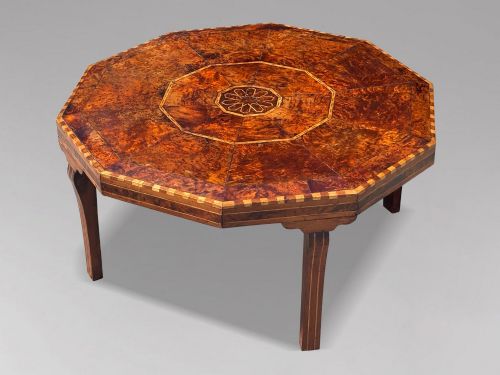
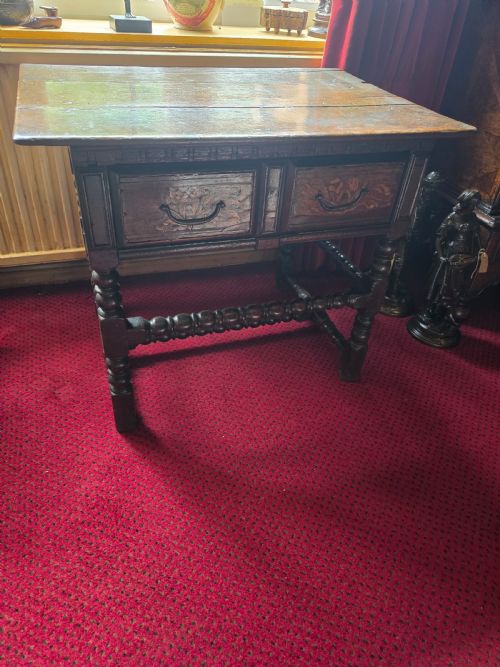
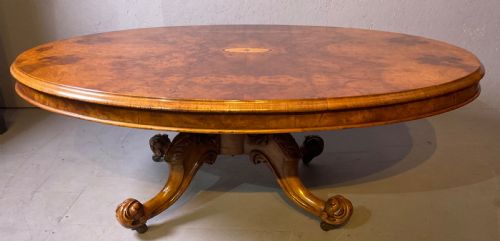
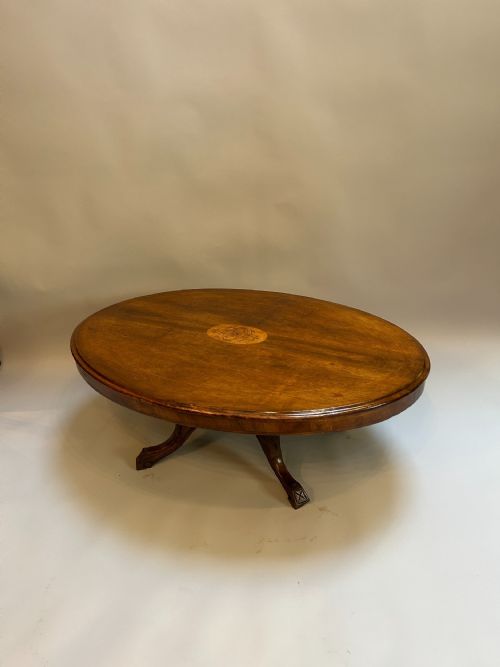
When you search for a marquetry low table, you encounter pieces spanning from the seventeenth century through the Victorian era and into the nineteen-thirties. The selection includes coffee tables, side tables, centre tables, and lamp tables, often adapted or built low for modern use.
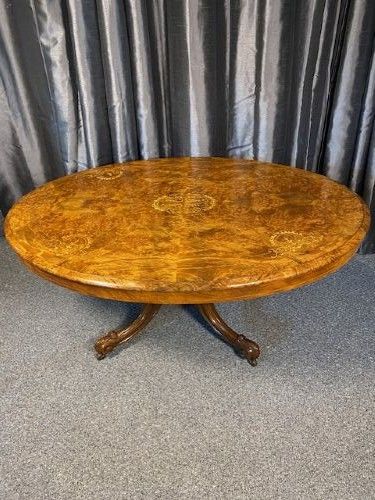
French styles heavily influence the inventory, alongside English Victorian walnut pieces and Italian Sorrento productions. You find rectangular, square, oval, round, octagonal, and kidney-shaped formats utilising diverse timbers.
Materials and construction methods
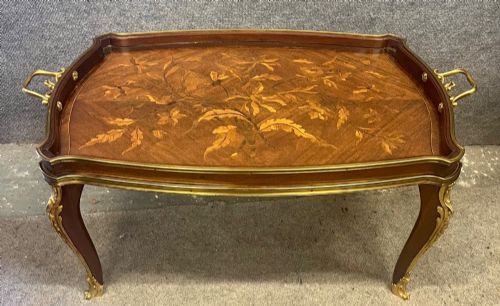
Craftsmen built these tables using walnut, burr walnut, kingwood, satinwood, oak, yew wood, and fruitwood veneers. They combined these with boxwood inlay, brass ormolu mounts, and hand-carved wooden or cast iron bases.
The decorative surfaces rely on precise wood inlay and parquetry techniques, sometimes paired with drop leaves, pedestal supports, or tiered tripod legs.
The listings show materials ranging from simple fruitwood and oak to exotic kingwood, satinwood, and burr walnut.
Distinctions in craftsmanship
The upper tier of these pieces reveals itself through the precision and complexity of the wood inlay, where varied fruitwoods and boxwood create intricate floral or geometric patterns. Superior examples display carefully chosen burr walnut or satinwood veneers that wrap harmoniously around the frame.
Construction depth also separates standard items from the finest examples, seen in gilt bronze mounts, hand-carved bases, and robust structural joinery that maintains integrity across centuries.
Edwards and Roberts·Gillows·Waring and Gillow
The Marquetry Low Table Glossary
- Marquetry
- Decorative veneer work arranged in pictorial or geometric patterns using various coloured woods. This technique requires exceptional precision in cutting and fitting individual timber segments.
- Parquetry
- Geometric mosaic woodwork used for floors or table tops. It relies on symmetrical patterns formed from rectangular or triangular veneer pieces.
- Ormolu
- Gilded bronze furniture mounts and decorative details cast in metal and applied to wood. This French technique adds metallic contrast to timber surfaces.
- Burr walnut
- Wood grain taken from a walnut tree growth, yielding swirling, knotty patterns. It forms highly prized decorative surfaces on Victorian tables.
- Sutherland table
- A narrow drop-leaf table with hinged flaps supported by pivoting legs. This form folds compactly when not in use.
Marquetry Low Table: Frequently Asked Questions
What is a marquetry low table?
A marquetry low table is a surface decorated with intricate wood veneer patterns, set at a lower height suitable for contemporary living spaces.
These items draw on historical formats like centre tables, side tables, and games tables, often modified for use as coffee or lamp tables.
How were these tables used originally?
Many of these pieces began life as full-height centre tables, dressing tables, or side tables in nineteenth-century drawing rooms.
Over time, some have had their legs reduced or structures adapted to serve as coffee or occasional tables in modern interiors.
How do I identify French styles?
French-influenced pieces typically exhibit Louis XV revival characteristics, featuring curved cabriole legs, asymmetrical floral marquetry, and gilt bronze ormolu mounts.
Walnut, kingwood, and tulipwood veneers frequently appear on these continental designs alongside serpentine edges.
How do I care for inlaid wood?
Protect the polished timber and delicate wood inlay by keeping tables away from direct sunlight and excessive heat sources.
Regular dusting with a dry, soft cloth preserves the finish without introducing moisture that could harm old veneers.