
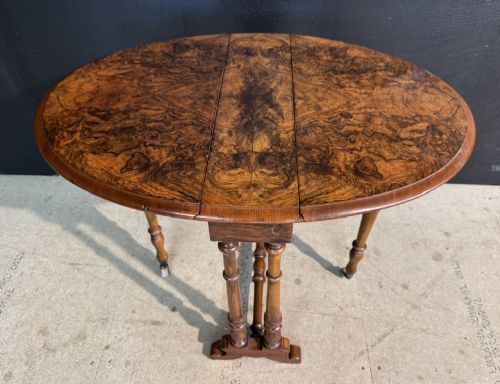


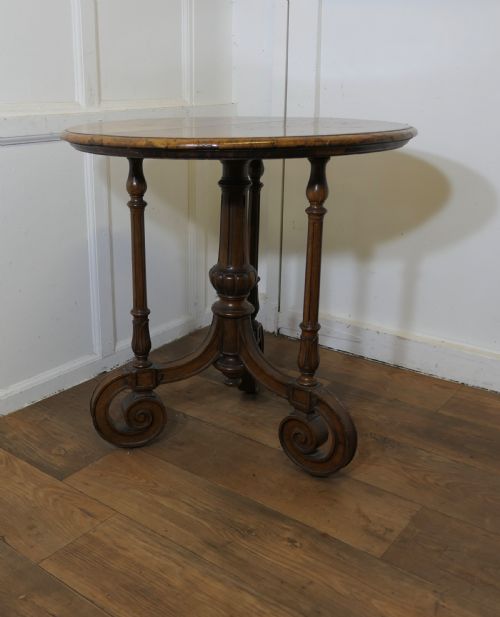
Traditional Walnut Occasional Table
These traditional walnut occasional table pieces offer compact utility and rich timber grain, spanning Victorian to 1930s revivals.
Traditional Walnut Occasional Table
A traditional walnut occasional table serves as a flexible surface piece within the home, appearing in forms such as tripod wine tables, lowboys, and coffee tables. Buyers searching this phrase encounter a mix of Victorian originals and early twentieth-century revivals spanning the Edwardian era up to 1930.
The inventory showcases numerous nests of tables alongside side tables and pedestal centre tables. Queen Anne style revivals and Georgian design influences dominate the aesthetic among these pieces.
Origins include English workshops utilising figured timber and burr veneers. Most examples date from the late nineteenth century through the interwar period.
How they were made
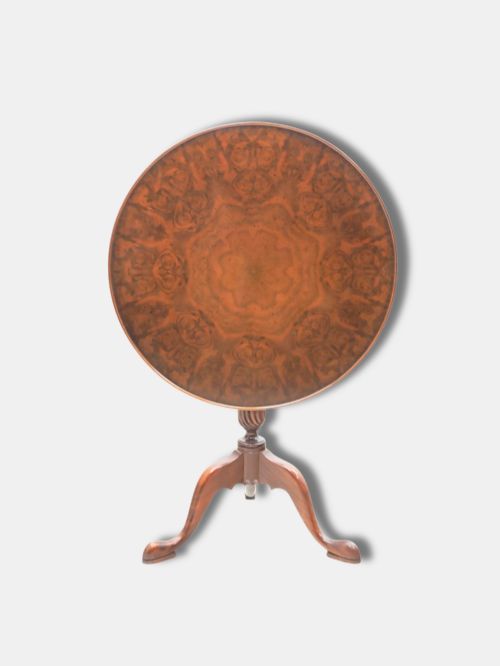
Cabinetmakers constructed these tables using solid walnut and applied burr walnut or figured walnut veneer to tabletops. Secondary woods such as oak and fruitwood appear for inlay work and structural support.
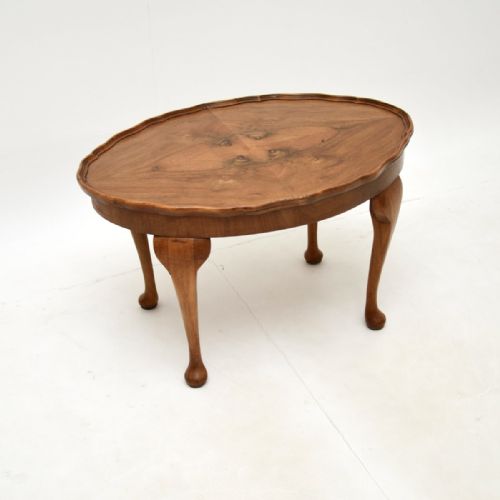
Surface decoration relies on marquetry inlay, hand-carved bases, and pie crust edging. Specific examples incorporate brass fittings, ceramic elements, or parquetry patterns.
The selection ranges from mid-nineteenth-century Victorian pedestal tables to 1930s coffee tables and nests.
What varies in quality
The selection of timber grain defines the visual appeal, with highly figured burr walnut and complex parquetry sitting at the upper end of the scale. Plain solid walnut surfaces represent a simpler standard of production.
Construction methods distinguish fine cabinetwork from utilitarian manufacture. Hand-carved bases, pie crust mouldings, and stable multi-tiered nest designs reflect greater craftsmanship than plain turned legs.
The Traditional Walnut Occasional Table Glossary
- Burr walnut
- Timber taken from a walnut tree growth, yielding complex, swirling grain patterns. It is sliced into thin veneers for tabletops.
- Lowboy
- A small occasional table with drawers, resembling the lower section of a tallboy. These typically date from revival periods in the early twentieth century.
- Pie crust table
- A small circular table featuring a raised, carved, undulating rim resembling pastry. This decorative edge is shaped from solid timber.
- Quartetto nest
- A set of four graduating tables designed to slide neatly beneath one another. They became popular during the Victorian and Edwardian periods.
- Tripod table
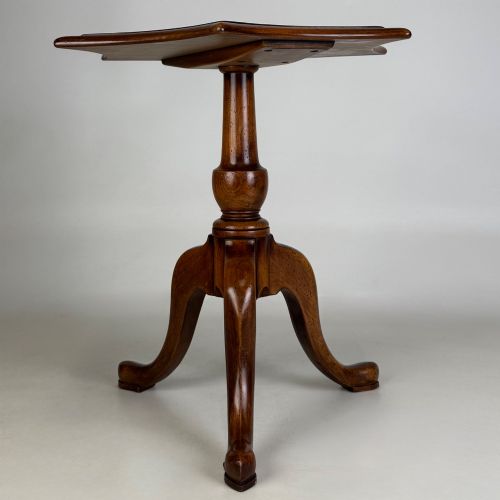
- A small standalone table supported by a central pillar on three feet. They function as wine or lamp tables.
Traditional Walnut Occasional Table: Frequently Asked Questions
What is a traditional walnut occasional table used for?
These pieces serve as movable surface tables for lamps, drinks, or decorative objects. Their compact size allows them to sit beside seating or in corners.
Many designs, such as nests or tripod tables, pack away easily or move between rooms as needed.
How do I identify a Victorian table?
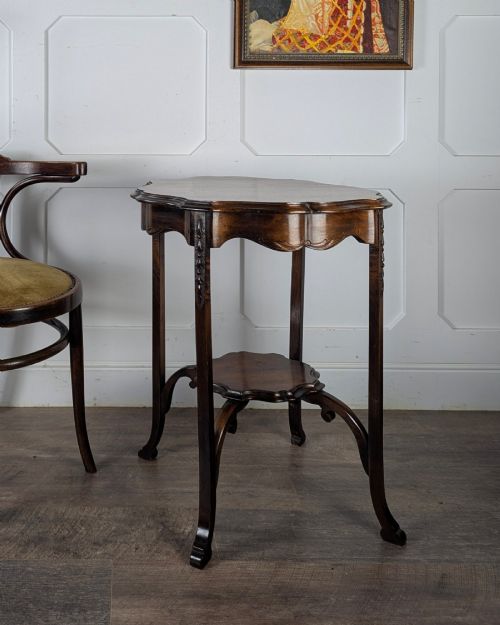
Victorian examples often feature heavier timber construction, hand-carved bases, and darker finishes. Details like bobbin turnings or marquetry inlay point to nineteenth-century origin.
By contrast, 1930s pieces lean towards lighter figured veneers and simpler revival lines.
What does Queen Anne style mean for these tables?
Queen Anne style pieces typically feature cabriole legs curving outward and inward down to pad feet. This aesthetic was heavily revived during the early twentieth century.
The profile prioritises smooth, curved outlines over straight geometric framing.
How do I care for walnut veneer?
Keep walnut tables away from direct sunlight and heat sources to prevent the veneer from drying or cracking. Dust gently with a dry cloth and avoid harsh chemical polishes.
Applying a traditional wax occasionally helps maintain the moisture and depth of the timber grain.