

Marquetry Ladies Bureau
These marquetry ladies bureau examples combine intricate wood inlay with compact writing surfaces, offering refined utility for domestic correspondence.
Marquetry Ladies Bureau
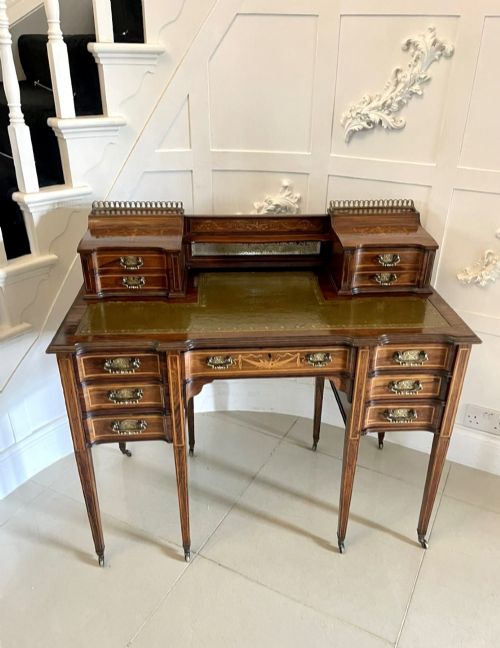
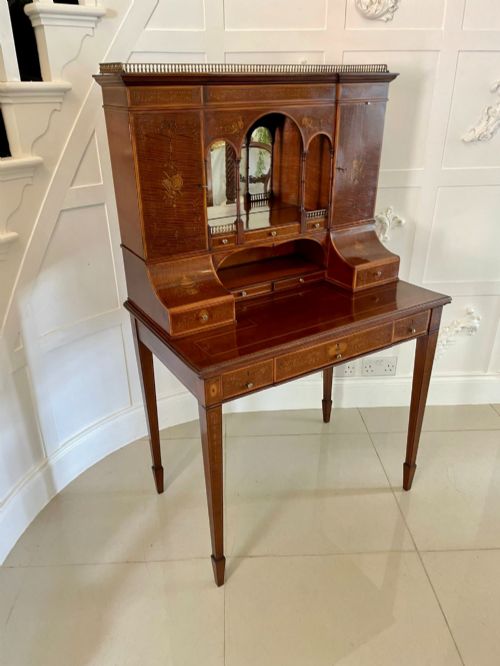
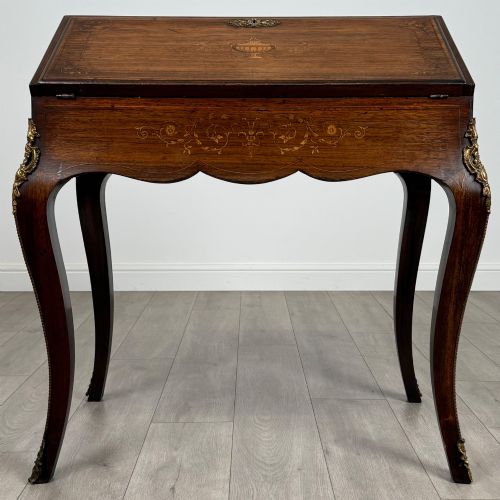
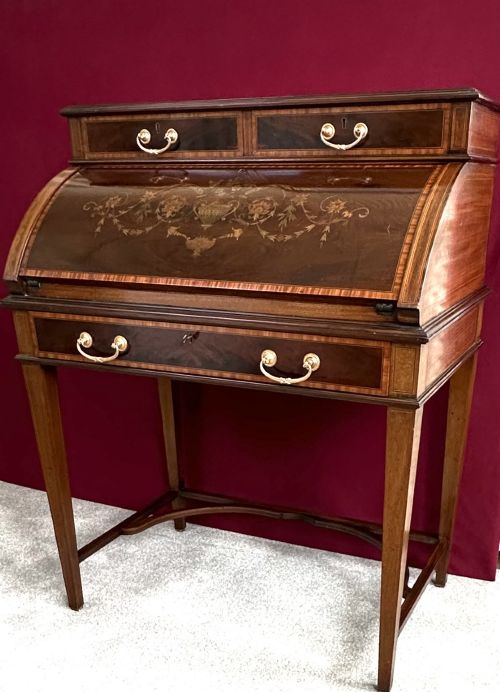
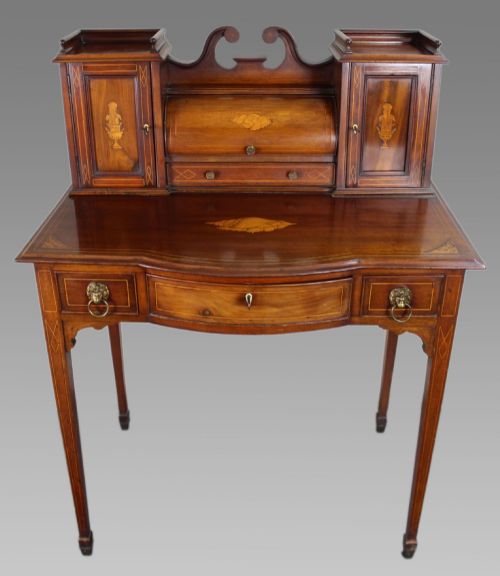
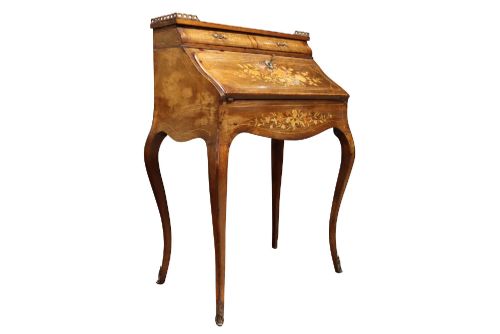
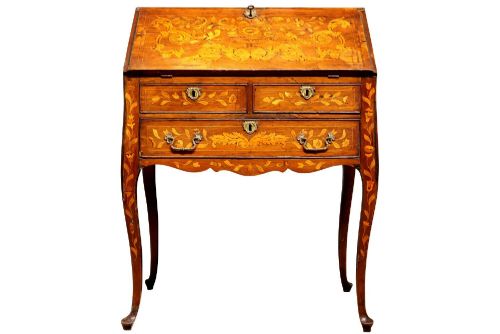
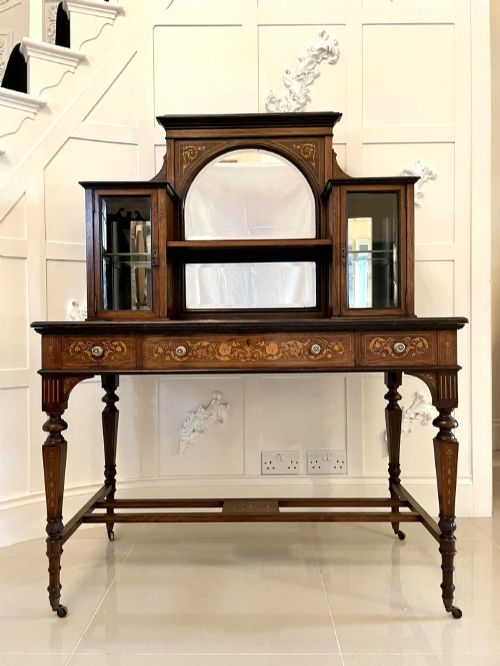
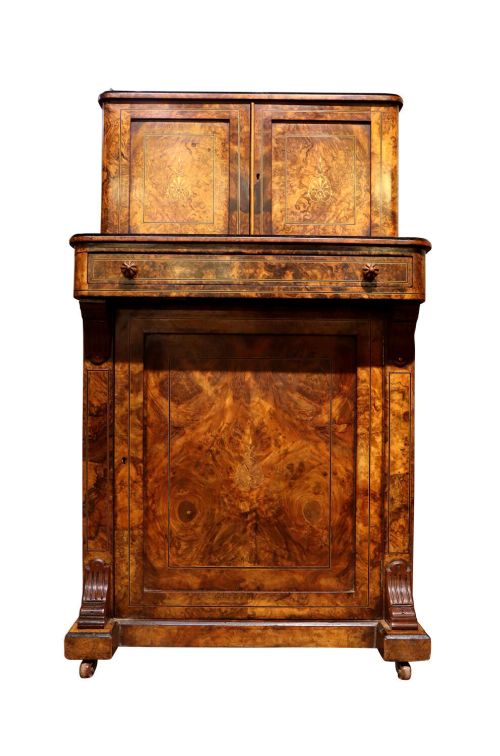
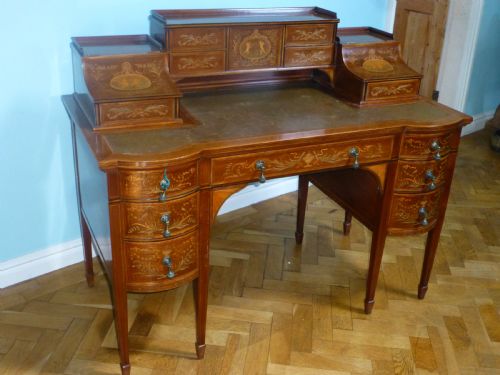
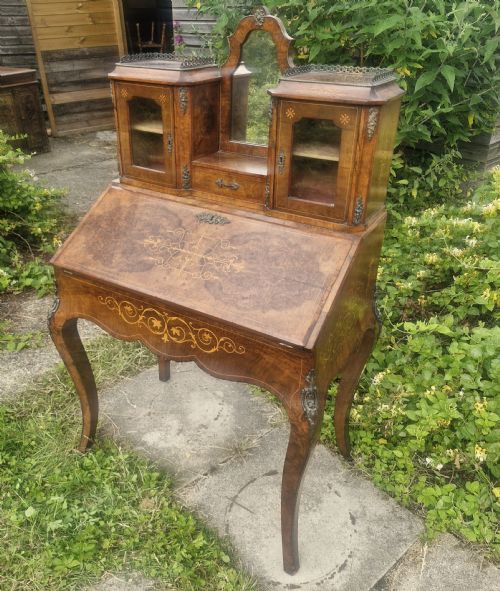
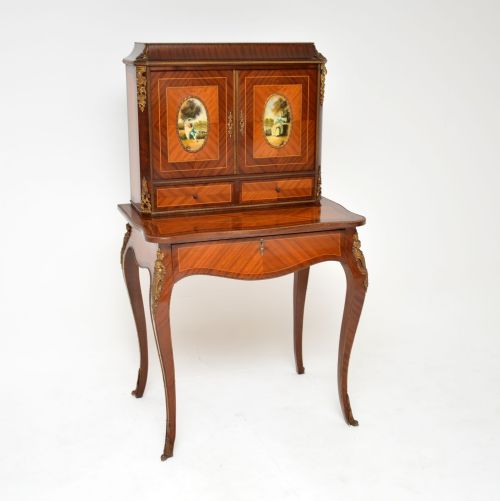
A marquetry ladies bureau represents a specialised form of writing furniture designed primarily for private correspondence and personal paperwork. The selection on this page encompasses compact writing desks, fall-front bureaux, and tiered bonheur-du-jour cabinets intended for boudoir or parlour use.
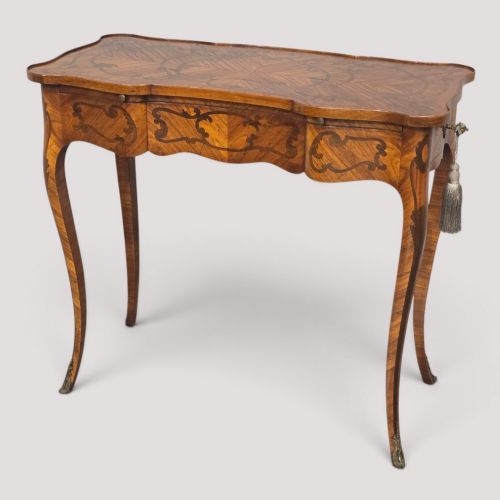
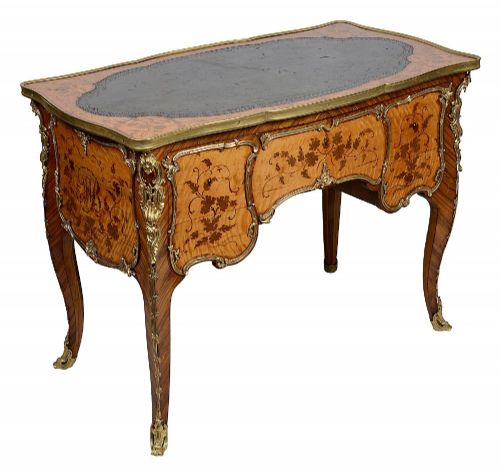
Victorian and Edwardian iterations dominate the listings, alongside French Louis XV style influences and specific nineteenth-century pieces. Buyers frequently encounter variations in satinwood, rosewood, and walnut, often ornamented with floral or pictorial wood veneers.
Materials and construction
Cabinetmakers utilised dense timbers such as mahogany, kingwood, and burr walnut as the foundation for intricate surface decoration. Contrasting veneers of satinwood and maple were then cut and fitted by hand to create elaborate floral or geometric marquetry patterns.
Mounts in cast brass and ormolu often edge the writing surfaces, framing the timber panels and protecting vulnerable corners. Internal fittings typically include small pigeonholes, concealed drawers, and slanted leather-lined writing slopes.
The listings span Victorian, Edwardian, and eighteenth-century origins, featuring rosewood, satinwood, and ormolu mounts.
Evaluating craftsmanship
Quality rests upon the precision of the veneer work and the integration of secondary timbers within hidden drawer linings. Superior examples display seamless joins in the marquetry without excessive filler, maintaining crisp botanical or scroll details across curved surfaces.
The sophistication of the internal mechanism, from smoothly operating cylinder tops to well-fitted locking fall-fronts, distinguishes standard production from exceptional cabinet work. Ormolu mounts that retain sharp chased details rather than soft, cast blurring indicate higher workshop standards.
Maple & Co·Edwards and Roberts
The Marquetry Ladies Bureau Glossary
- Marquetry
- The art of applying decorative veneer pieces to a wooden structure to form pictorial or geometric designs. Artisans cut various coloured woods together to achieve precise interlocking patterns.
- Bonheur-du-jour
- A small, light lady's writing desk featuring a tiered cabinet or superstructure with shelves and small drawers above the main writing surface. This form gained immense popularity during the nineteenth century.
- Ormolu
- Gilt bronze ornamentation applied to furniture and decorative objects. It provides metallic contrast against dark exotic woods.
- Satinwood
- A durable tropical timber valued for its lustrous, golden sheen and fine texture. It frequently serves as a contrasting veneer in inlaid neoclassical furniture.
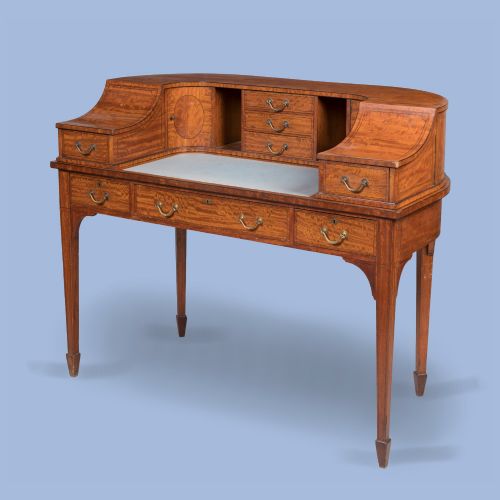
- Carlton House desk
- A distinctive writing table featuring a low, fitted superstructure curving around the back and sides of the desk. It contains multiple small drawers and compartments.
Marquetry Ladies Bureau: Frequently Asked Questions
What is a marquetry ladies bureau?
A marquetry ladies bureau is a compact, decorative writing desk featuring detailed wood inlay work designed for domestic correspondence.
These pieces typically incorporate small drawers, compartments, and a slanted or flat writing surface suited for intimate domestic spaces.
How were these desks used?
Owners utilised these compact writing surfaces for writing letters, managing household accounts, and storing personal stationery.
The enclosed compartments and lockable sections kept private papers secure within the household.
How do I date a bureau?
Dating relies upon timber choices, structural styles, and hardware details documented across Victorian and Edwardian periods.
French stylistic revivals and specific construction methods in the secondary wood help narrow the manufacturing era.
How do I care for inlaid wood?
Maintain inlaid surfaces by avoiding direct sunlight and excessive humidity fluctuations that cause veneers to lift.
Apply traditional wax sparingly and polish gently with a soft cloth to protect the finish without sealing the timber.