


Marquetry Inlaid Whatnot
These marquetry inlaid whatnot pieces combine multiple display tiers with intricate wood inlay, offering both functional storage and decorative appeal.
Marquetry Inlaid Whatnot
A marquetry inlaid whatnot is a multi-tiered stand designed for displaying decorative objects, ornaments, and books in the principal rooms of the house. Most examples encountered here date from the Victorian and Edwardian periods, constructed primarily during the latter half of the nineteenth century and the early years of the twentieth.
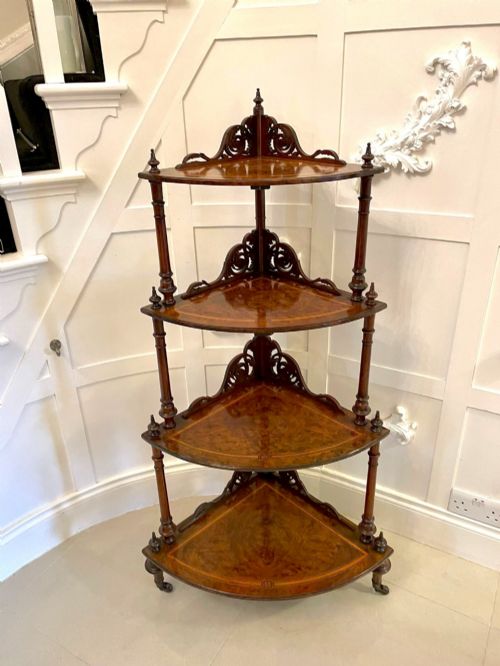
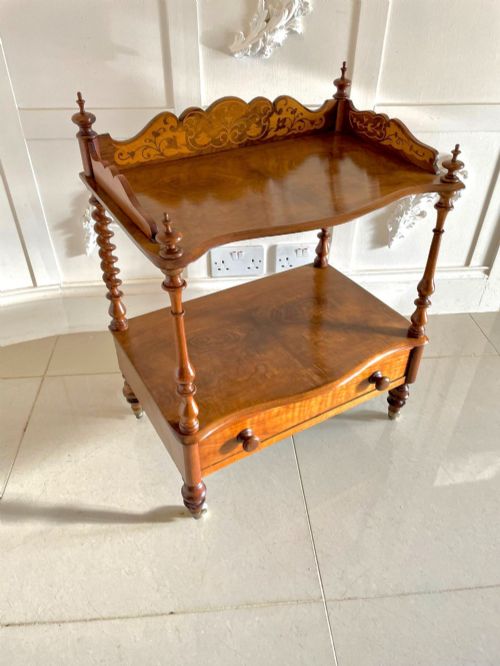
The standard form comprises three or four open shelves supported by upright columns or turned corner posts, though specialised variations include corner stands, chiffoniers, and combinations with desks or jewellery cabinets. Walnut and burr walnut dominate the selection, frequently enhanced by detailed marquetry and boxwood inlay.
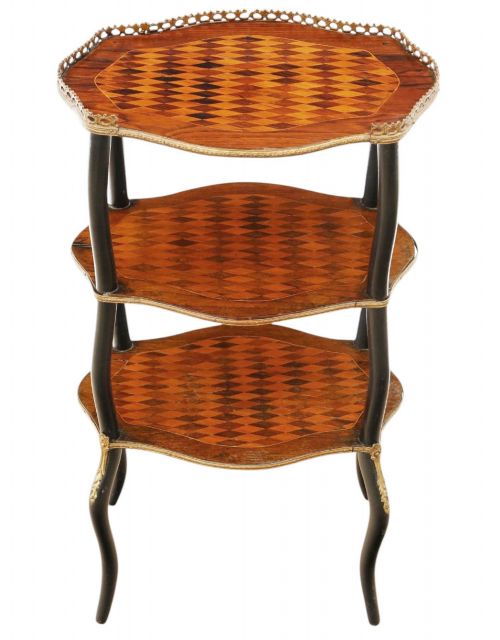
Origin influences the character of the piece significantly, with distinct groups reflecting English cabinet-making traditions alongside French Revival and Napoleon III influences. Buyers select them for their vertical storage capacity and the decorative enrichment that inlaid floral and geometric patterns bring to an interior.
Materials and construction methods
Cabinet-makers relied on walnut and burr walnut as the primary timbers, utilising their rich grain patterns as a background for contrasting inlay work. Boxwood inlay and intricate marquetry panels were meticulously cut and fitted into the primary surfaces to create floral and foliate motifs.
Structural embellishments frequently include cast or chased ormolu mounts, brass details, and ebonised wood accents that define the edges and corners of the shelves. Glass components appear in associated display sections, while turned supports and delicate columns bear the weight of the multiple tiers.
Several pieces squeeze multiple shelves into surprisingly tight corners, proving that Victorian cabinet-makers possessed an absolute obsession with vertical display space.
Distinctions in quality
Quality in a marquetry inlaid whatnot is determined by the precision and complexity of the wood inlay and the selection of timber used for the carcase. Finer pieces feature highly figured burr walnut veneers combined with dense, multi-coloured marquetry rather than simpler surface decoration.
The architectural execution of the tiers, the integration of ormolu mounts, and the stability of the upright supports separate standard production items from exceptional workshop examples. Refined turning on the columns and careful attention to edge banding indicate a higher standard of cabinet-making.
The Marquetry Inlaid Whatnot Glossary
- Marquetry
- Decorative veneer applied to wood furniture in patterns and pictures using different coloured woods and materials. This technique defines the visual appeal of the primary display surfaces.
- Whatnot
- An open set of shelves for books, ornaments, or brica-brac, developed in the Victorian era. These pieces utilise vertical space effectively in domestic interiors.
- Etagere
- A piece of furniture consisting of a set of open shelves for displaying small objects. The form is closely related to the traditional whatnot.
- Burr walnut
- Walnut timber taken from a growth on the tree, yielding highly figured and swirling grain patterns. It is heavily utilised on the finest cabinet fronts and table tops.
- Ormolu
- Gilt bronze mounted as an ornament or fitting on furniture. It provides metallic contrast against the dark walnut timbers.
- Parquetry
- Geometric mosaic woodwork used for floors and furniture tops. It offers a structured contrast to flowing marquetry floral designs.
Marquetry Inlaid Whatnot: Frequently Asked Questions
What is a whatnot used for?
A whatnot is designed to hold and display small decorative items, ceramics, and books across its multiple open shelves. In nineteenth-century interiors, they provided accessible surface space in parlours and drawing rooms without dominating the floor plan.
Today, they serve the same practical function in modern homes, allowing collectors to group small objects vertically in hallways, alcoves, or living spaces.
How do I date a Victorian whatnot?
Dating relies on examining the timber selection, the style of the turning on the upright supports, and the specific character of the inlay work. Pieces from the mid-nineteenth century often display simpler structural lines, while later examples incorporate elaborate French Revival or Belle Epoque motifs.
Associated hardware, such as brass fittings and ormolu mounts, further helps narrow the period of manufacture when combined with construction evidence from the underside and joints.
Where should I place a corner whatnot?
Corner whatnots fit directly into ninety-degree room angles, making them ideal for utilising under-decorated or awkward corners. Their triangular shelf design draws the eye upward and turns unused space into an attractive display area.
They work particularly well in smaller rooms where floor space is limited, providing three or four tiers of display without jutting out into primary walkways.
What is the difference between an etagere and a whatnot?
While both terms describe multi-tiered shelving units intended for display, an etagere historically carries stronger associations with French decorative design and lighter, more ornate framing. A whatnot often references the heavier English cabinet-making tradition of the Victorian period.
In practice, nineteenth-century makers and modern dealers frequently used the terms interchangeably for pieces sharing the same tiered configuration.