
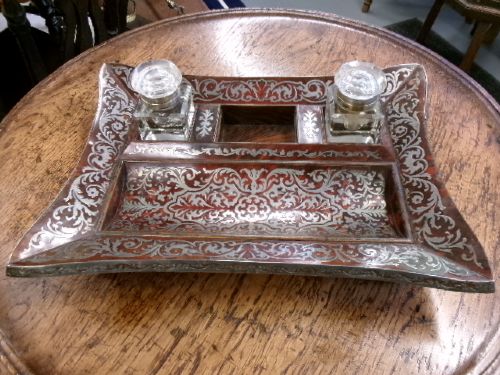
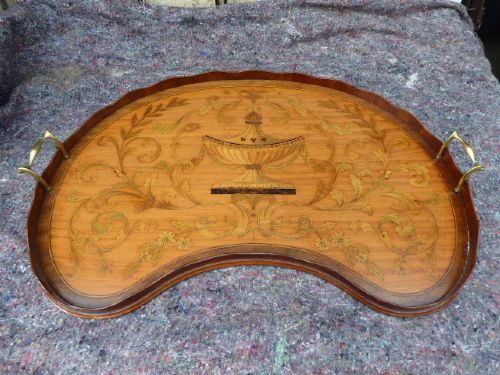
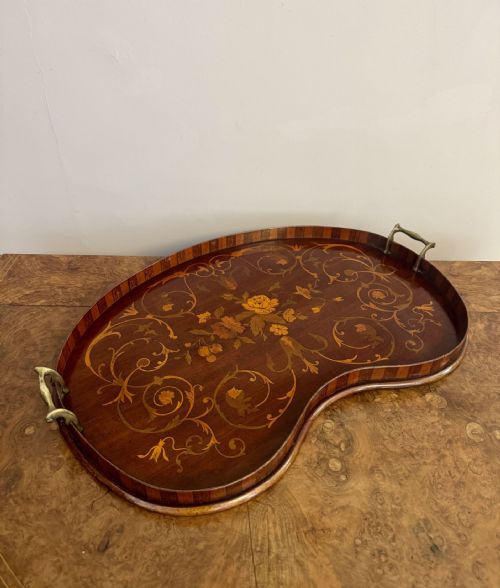


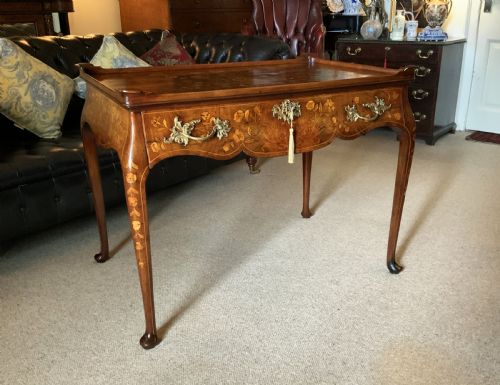
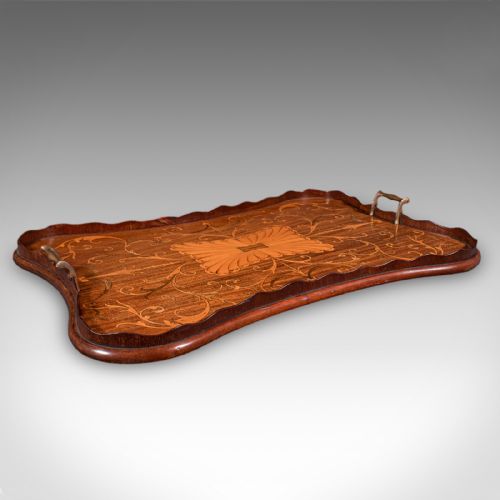
Marquetry Inlaid Tray
A marquetry inlaid tray brings intricate wood patterns and polished surfaces to a room, serving drinks or sitting neatly on a table.
Marquetry Inlaid Tray
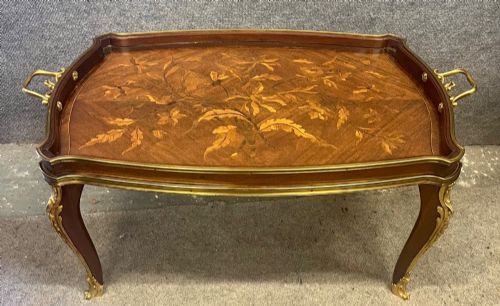
A marquetry inlaid tray combines decorative woodworking with everyday utility, appearing in forms from tea platters to coffee tables with tray tops. Buyers seeking this search phrase encounter pieces originating primarily from the Victorian and Edwardian eras, alongside earlier Georgian examples and later twentieth-century interpretations.
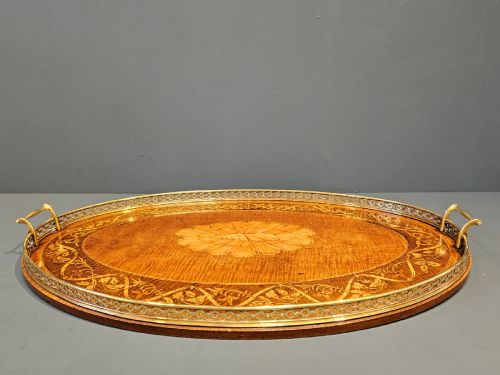
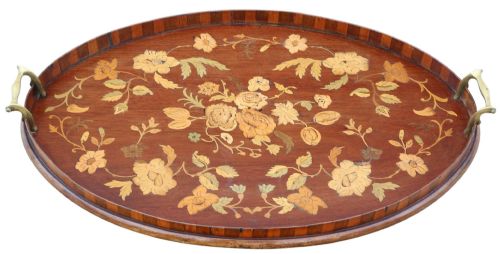
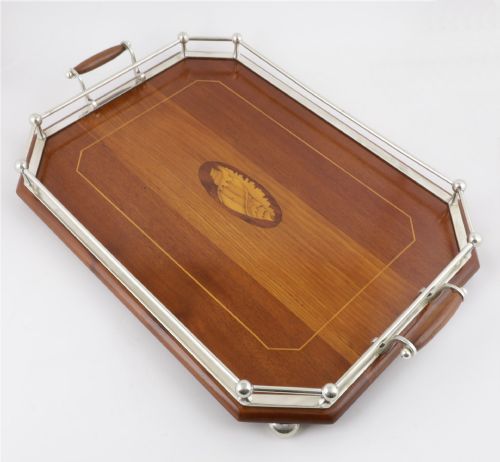
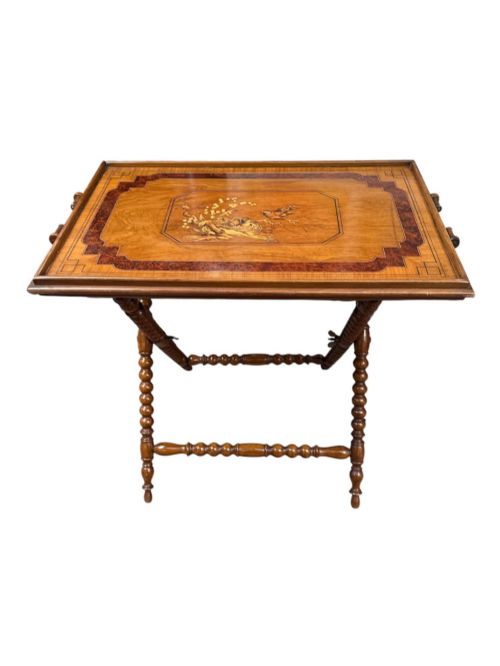
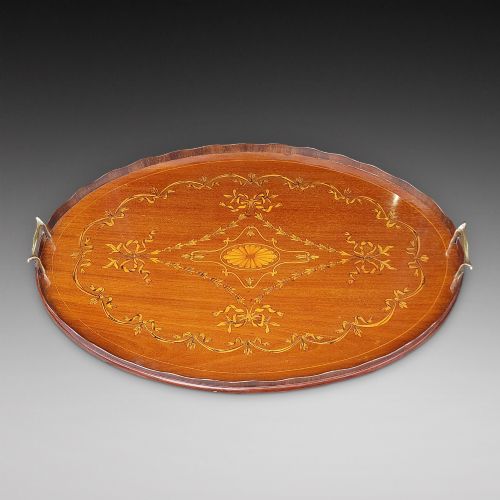
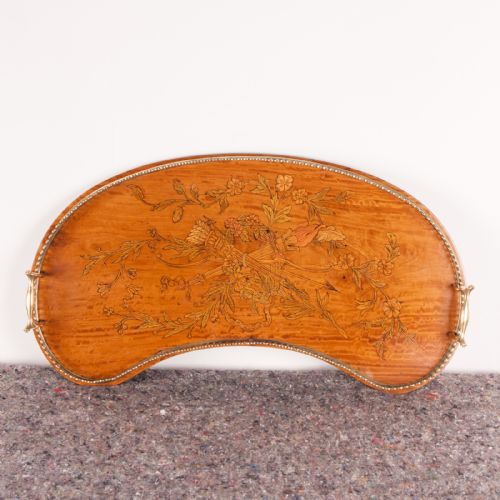
The most common forms on this page include oval and kidney-shaped serving trays made from mahogany and satinwood, frequently fitted with brass handles or galleries. Many examples function independently for hospitality, while others rest upon dedicated stands to operate as occasional tables.
Origins span English cabinetmaking workshops, French Napoleon III production, and Italian Sorrento ware centres. These pieces offer a tangible link to historical interior styling, functioning equally well in active service or as static display items.
How they were made
Craftsmen built these trays using a mahogany or satinwood carcase as a foundation, applying contrasting timbers such as boxwood, burr yew, and rosewood for the decorative surface. Artisans cut thin veneers by hand, assembling intricate pictorial or geometric marquetry panels before gluing them to the timber base.
Metal elements including brass galleries, silvered side rails, and cast handles were screwed or pinned to the wooden edges to secure items placed on the surface. French polishing finished the wood, sealing the grain and bringing out the natural warmth of the diverse timbers.
Listings feature trays constructed from mahogany, satinwood, and walnut, incorporating brass hardware and delicate boxwood inlay across multiple periods.
What varies in quality
The standard of a piece depends heavily on the precision of the veneer cutting and the complexity of the timber selection. Finer examples display tight joins in the marquetry work with minimal filler, whereas simpler items rely on painted details or sparse inlay.
Structural integrity also separates grades, with superior trays employing robust dovetail joints or solid brass mounts rather than flimsy plated alternatives. The crispness of the turned wooden handles and the depth of the polished finish further indicate the original maker's investment of time.
Edwards and Roberts·Rupert Favell
The Marquetry Inlaid Tray Glossary
- Marquetry
- The art of forming decorative patterns by fitting together thin slices of wood and other materials onto a structural surface. This technique allows for detailed floral, pictorial, or geometric designs across the tray floor.
- Satinwood
- A durable hardwood known for its golden-yellow colour and lustrous, reflective grain. Makers utilised this timber extensively for high-end inlay work and entire tray fields.
- Gallery
- A low raised border, often pierced brass or turned wood, fitted around the perimeter of a tray. This feature prevents items from sliding off during transit.
- Sorrento ware
- Woodwork decorated with micro-mosaic and marquetry, originating from the Italian town of Sorrento during the nineteenth century. Pieces often depict local scenes, floral motifs, or intricate banding.
- Etagere
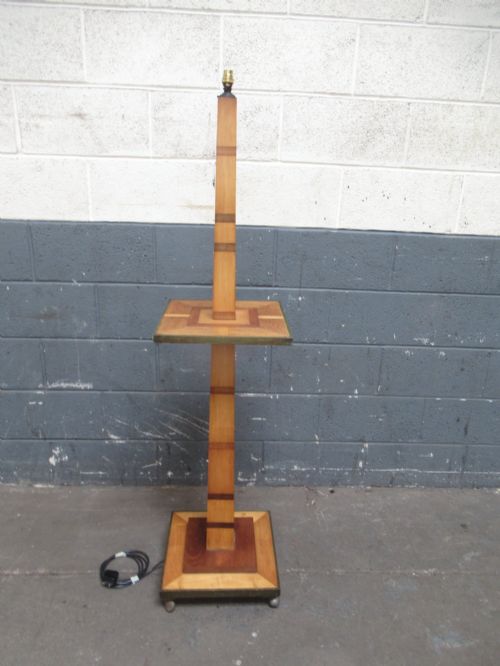
- A set of open shelves or tiered trays used for display or serving. These pieces combine multiple tray surfaces within a single freestanding furniture frame.
Marquetry Inlaid Tray: Frequently Asked Questions
How were marquetry trays used?
These pieces served primarily for carrying tea sets, afternoon refreshments, and wine glasses across formal reception rooms. Households also utilised them on side tables to corral smaller desk accessories and correspondence.
Over time, many of these items transitioned from active hospitality service to permanent display fixtures on coffee tables and sideboards. Their decorative surfaces made them suitable for showcasing silver, glassware, and small ornaments within a drawing room setting.
How do I tell Victorian from Edwardian trays?
Victorian examples tend to feature darker timbers like heavy mahogany and walnut, accompanied by dense, elaborate floral marquetry and robust brass mounts. The overall aesthetic leans towards heavy ornamentation and deep, saturated wood tones.
Edwardian pieces frequently incorporate lighter woods such as satinwood and lighter mahogany, reflecting a shift towards brighter, more delicate Sheraton Revival designs. The marquetry on these later trays often feels airier, utilising symmetrical ribbon and urn motifs.
Can I use an antique tray daily?
Daily use remains possible provided owners handle the items with care and avoid placing extreme heat or liquids directly onto the polished wood. Placing protective coasters underneath heavy decanters helps preserve the historical surface.
For heavy service, many buyers prefer using a discreet liner or mat on top of the tray to catch condensation. Gentle handling ensures the delicate brass handles and older veneer work survive years of continued appreciation.