


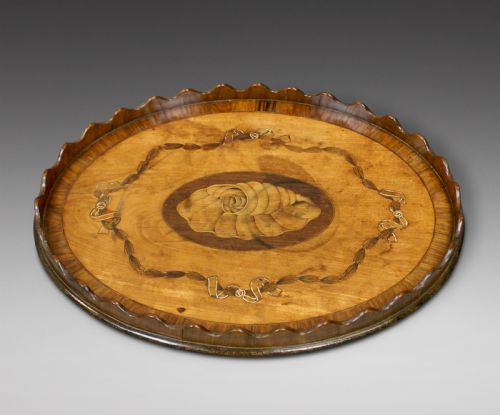


Shell Inlay Serving Tray
These shell inlay serving tray pieces bring tactile warmth to any room, offering practical elegance for hosting afternoon tea.
Shell Inlay Serving Tray
When you search for a shell inlay serving tray, you are looking at timber platters and serving boards decorated with contrasting wood veneers or shell motifs. These items range from Georgian masterpieces to Edwardian and Victorian tea trays designed for parlour entertaining.
The objects serve as both functional hospitality items and decorative centrepieces for home display. Their origins span the eighteenth century through to the early twentieth century, showing lasting British cabinet-making traditions.
How they were made
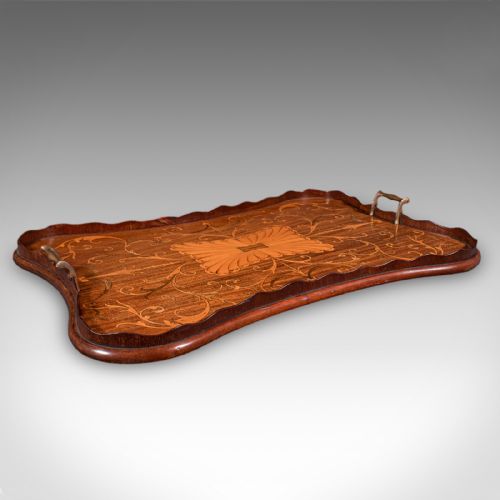
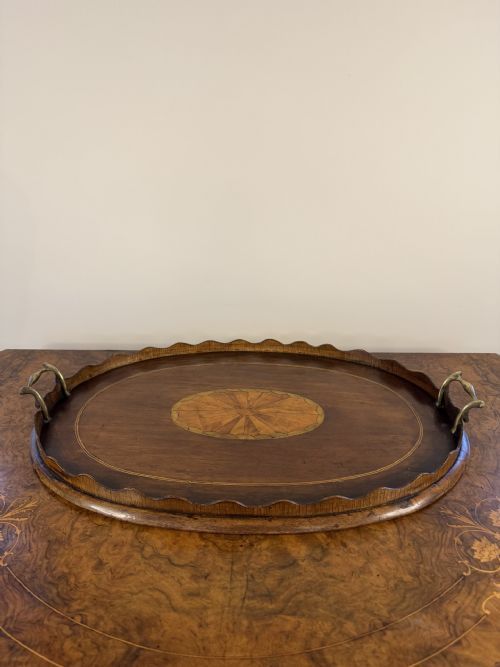
Cabinet makers constructed these trays using solid mahogany, burr yew, and rosewood timbers for the primary body. Craftsmen then shaped boxwood and satinwood veneers into intricate marquetry patterns, cutting each section by hand to form the shell motifs.
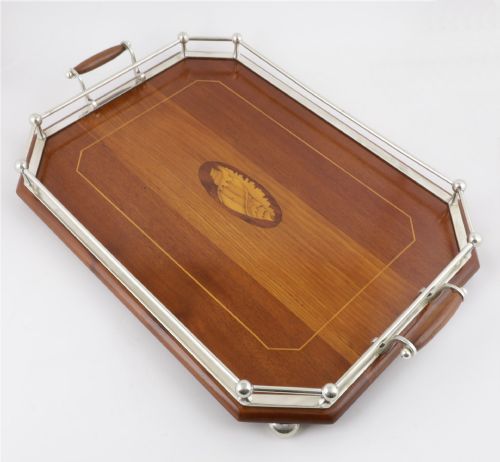
Many examples incorporate brass gallery rails secured around the perimeter to retain glassware and porcelain during service. Handles were integrated directly into the timber frame or formed from polished brass fittings attached firmly to the sides.
Listings feature items spanning the eighteenth century through to the Edwardian and Victorian periods, executed in mahogany, rosewood, and burr yew.
What varies in quality
The standard of a tray rests upon the precision of the marquetry inlay and the choice of primary timber. Finer pieces employ figured woods like burr yew and rosewood with tight, seamless grain matching.
Structural refinement also separates standard production from superior work, seen in the smoothness of the timber finishing and the secure integration of brass galleries. Proportion and balanced weight dictate the elegance of the piece during service.
The Shell Inlay Serving Tray Glossary
- Marquetry inlay
- The art of applying small pieces of veneer to a structure to form decorative patterns. This technique creates the distinctive shell motifs seen across the timber surface.
- Gallery tray
- A serving platter featuring a raised border or pierced metal rail around the edge. This design prevents items from sliding off during transit.
- Kidney shaped
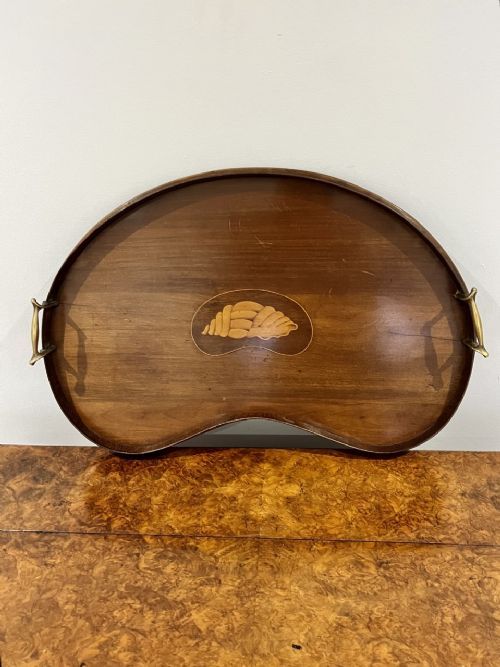
- A curved, asymmetrical form popular in Edwardian serving trays. This silhouette rests comfortably against the body when held.
- Sheraton Revival
- A late nineteenth and early twentieth century style inspired by eighteenth century neoclassical furniture. It prioritises light woods, symmetrical geometry, and delicate floral or shell inlays.
Shell Inlay Serving Tray: Frequently Asked Questions
What is a shell inlay serving tray?
A shell inlay serving tray is a wooden platter decorated with contrasting veneer work, designed for carrying tea or displaying objects.
These pieces utilise timbers such as mahogany, rosewood, and burr yew, often finished with brass gallery rails and integrated handles.
How were these trays used historically?
Victorian and Edwardian households utilised these trays primarily for serving afternoon tea in drawing rooms and parlours.
Servants carried porcelain teapots, cups, and silver sugar bowls upon them, while owners later displayed them on side tables as decorative items.
How do I care for my tray?
Protect the wooden surface by avoiding direct contact with standing moisture and excessive heat.
Dust the marquetry gently with a soft dry cloth and apply occasional specialist wax to maintain the polish on mahogany and satinwood.
How do I date an antique tray?
Examine the underlying timber, handle construction, and prevailing decorative style to determine the period of origin.
Georgian and George III examples display heavier structural framing, whereas Edwardian and Victorian pieces frequently utilise lighter kidney shapes and intricate satinwood banding.