


Antique Afternoon Tea Tray
An antique afternoon tea tray organises the ritual of hospitality, bringing portable elegance to the parlour through sturdy timber and gleaming metal.
Antique Afternoon Tea Tray
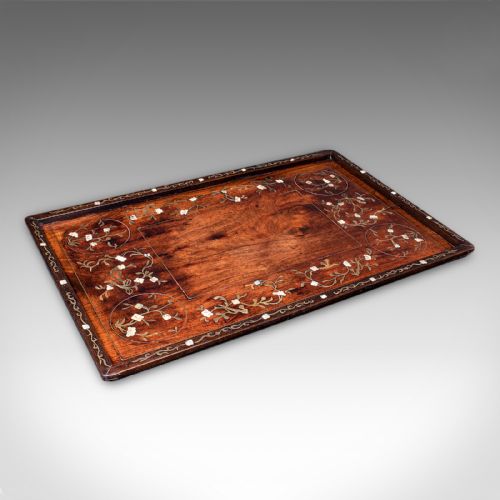
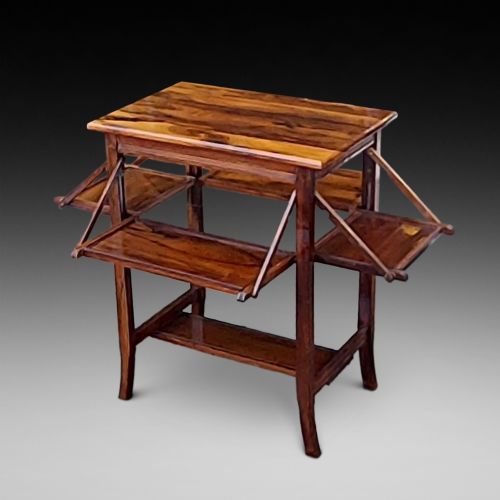
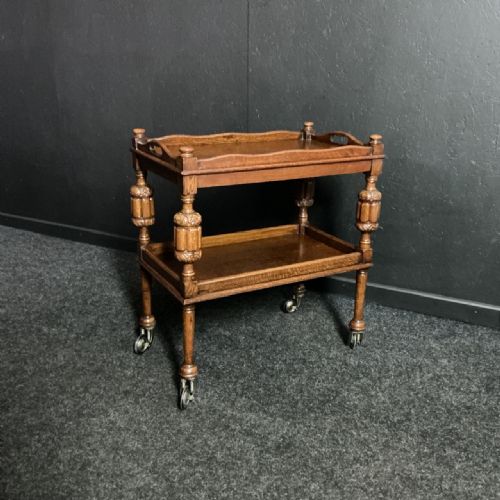
When you search for an antique afternoon tea tray, you encounter everything from flat presentation platters to multi-tiered stands and folding cake stands designed for domestic service. The items appearing across these listings span the Victorian, Edwardian, and Regency periods, alongside later twentieth-century pieces.
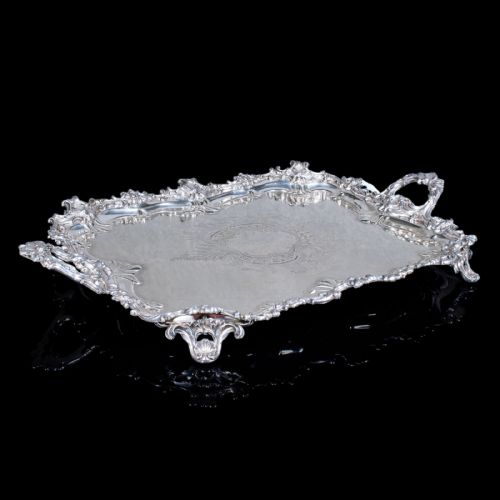
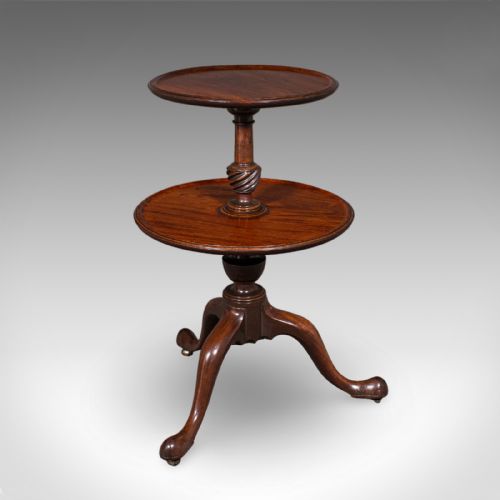
Serving trays form the majority of the available selection, often rendered in rich hardwoods or silver plate. Alongside them, you discover occasional side tables, tea trolleys, and tiered stands that supported the afternoon ritual in large households.
Origins vary between English workshops and Anglo-Indian production centres, each bringing distinct regional materials to the serving form. The heavy presence of Victorian and Edwardian examples reflects the peak of formal afternoon tea culture.
Materials and construction methods
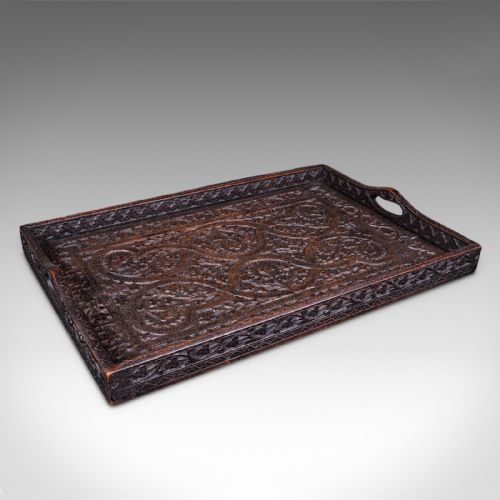
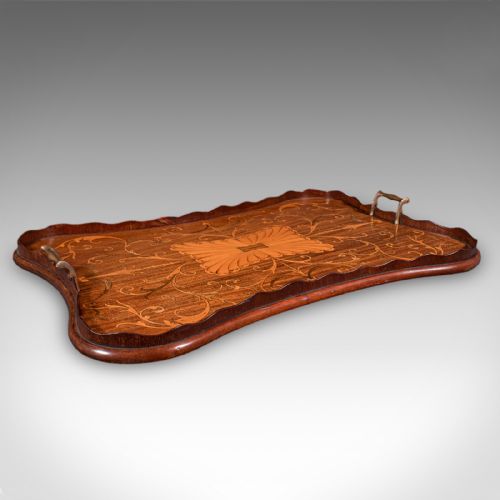
Timbers such as mahogany, teak, walnut, oak, and satinwood provide the structural integrity for wooden trays and stands, often enhanced by intricate inlay, bone details, or carved decoration. Artisans shaped these hardwoods to withstand heavy daily use while maintaining a refined domestic appearance.
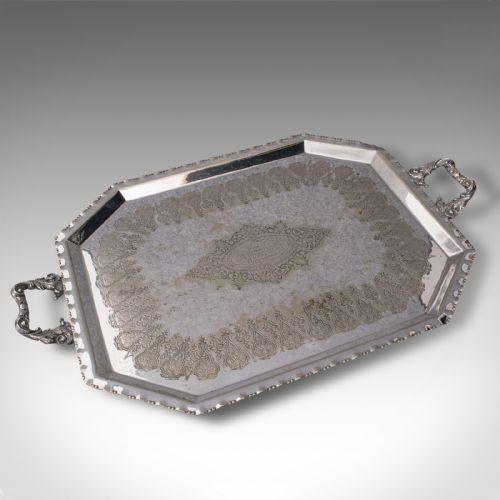
Silver plate and solid silver serve as the primary metallic mediums for presentation platters and tea sets, paired occasionally with handbeaten copper or brass fittings. These metals reflect the bright parlour light and require careful joinery or plating to endure decades of service.
A surprise biscuit compartment tucked beneath the tray rim solves the perpetual dilemma of where to place the ginger nuts.
What separates the finest examples
Quality rests upon the crispness of the carving, the precision of the wood inlay, and the integrity of the silver plating. Superior pieces display seamless joints on folding stands and deep, deliberate hand-carving on Anglo-Indian teak platters.
Substantial weight in metal trays and dense, well-figured grain in wooden items indicate superior material selection by the maker. Lesser examples show hurried finishing or replacement hardware that disrupts the period harmony of the piece.
The Antique Afternoon Tea Tray Glossary
- Butler's tray
- A removable wooden tray featuring hinged or shaped sides, designed to sit atop a folding stand for easy transport of service items. These practical pieces were staples in large English country houses.
- Presentation tray
- A large flat platter, typically fashioned from silver plate or English hardwood, utilised for carrying multiple cups and teapots. They often bear engraved decoration or handles.
- Anglo-Indian
- Descriptive of furniture and serving wares produced in the Indian subcontinent under British rule, frequently characterised by dense teak and elaborate floral carving. These items combined traditional local craftsmanship with British domestic forms.
- Satinwood
- A lustrous, yellow-hued timber utilised for fine cabinetry and decorative inlay work on late nineteenth-century tables and trays. Its grain catches the light uniquely.
- Tiered stand
- A vertical furniture form featuring two or more graduated platforms, built to display cakes and pastries during afternoon tea service. They save valuable space on crowded parlour tables.
Antique Afternoon Tea Tray: Frequently Asked Questions
How were afternoon tea trays used?
These trays transported teapots, cups, and sandwiches from the kitchen to the drawing room during formal afternoon gatherings.
Servants utilised them to clear away service items efficiently once the meal concluded.
How do I clean a silver plated tray?
Utilise a soft cloth and a dedicated silver cream to gently lift tarnish without removing the underlying plate.
Avoid abrasive pads that scratch the delicate metal surface over time.
Are wooden trays water resistant?
Most antique wooden trays feature traditional varnish or polish finishes that repel minor moisture from condensation.
Leaving standing liquid on the timber for extended periods can still cause permanent staining.
How can I date an Edwardian tray?
Examine the timber species, joinery methods, and any maker stamps typical of the early twentieth century.
Edwardian pieces often lighter proportions and simpler inlay compared to heavy Victorian predecessors.