
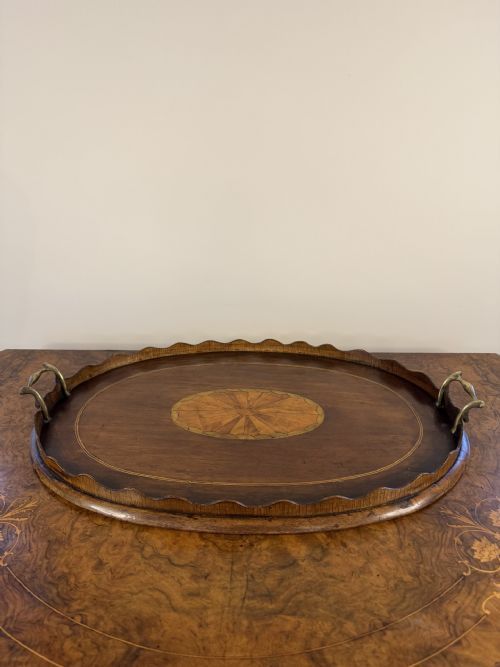


Victorian Mahogany Gallery Tray
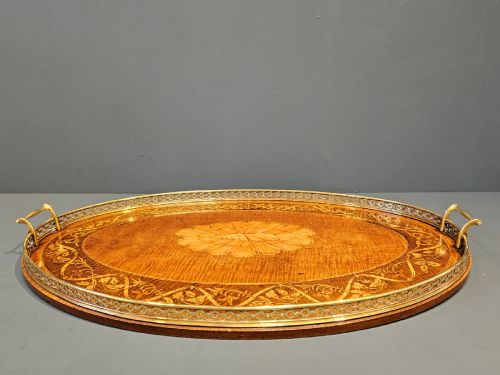
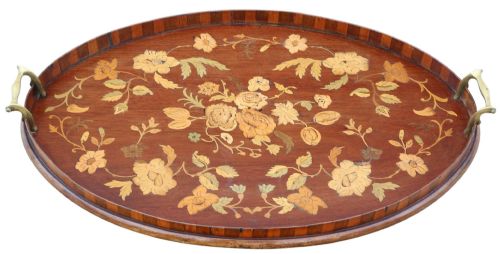
These Victorian mahogany gallery tray examples offer practical elegance for serving or display, combining rich timber and raised borders to secure your glassware.
Victorian Mahogany Gallery Tray
A Victorian mahogany gallery tray brings together 19th Century timber work and raised borders designed to keep glassware and decanters secure during service. Most pieces on this page take the form of serving trays, tray tables, or occasional tables dating from the Victorian period.
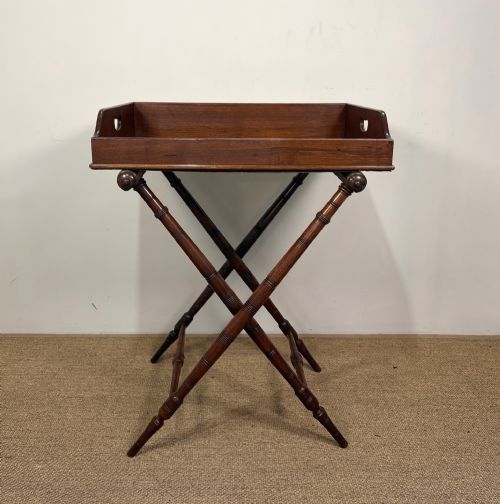
The form spans straightforward oval and rectangular shapes with scalloped edging, alongside folding butler trays on stands and sophisticated drinks tables. These items reflect the domestic routines of the 19th Century, where portable hospitality surfaces were essential for entertaining.
Makers utilised mahogany as the primary ground, frequently enriching the surfaces with satinwood inlay and brass fittings. The style bridges standard Victorian utility and revivals like Chippendale, offering both simple serving boards and raised gallery designs.
Materials and construction
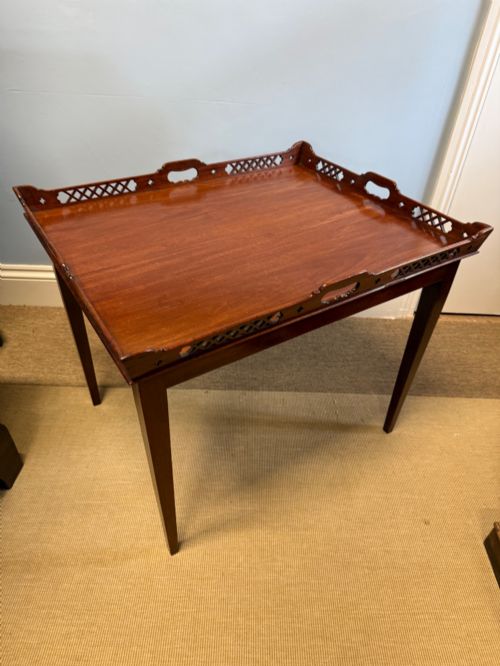
Craftsmen built these trays using solid mahogany and mahogany veneers, often selecting timber with deep grain patterns for the base boards. Raised galleries were shaped from matching hardwoods, sometimes pierced or scalloped along the edge to lighten the visual weight.
Inlay work in satinwood provided geometric or floral contrast against the dark mahogany ground, a technique requiring precise hand-cutting and fitting. Brass handles, hinges, and gallery rails were integrated to reinforce corners and provide secure lifting points on serving pieces.
Some trays hide patent brass mechanisms, ensuring your afternoon gin remains secure even if the tea table takes a sudden wobble.
Assessing quality in 19th Century trays
Quality rests heavily on the crispness of the gallery fretwork and the tightness of the joinery where the raised rim meets the baseboard. Superior examples show careful timber selection, ensuring the mahogany grain runs harmoniously across the serving surface without warping.
The presence of refined satinwood inlay work and heavy cast brass hardware distinguishes finer pieces from plain utilitarian servants' trays. Original stands and folding mechanisms that operate smoothly without modern repairs also elevate the standing of a tray table.
Halls Patent
The Victorian Mahogany Gallery Tray Glossary
- Gallery
- A raised border or pierced railing running around the edge of a tray or tabletop to prevent items from sliding off. This feature defines the primary function of these serving pieces.
- Satinwood
- A pale, lustrous exotic timber native to India and Ceylon, frequently employed for contrasting inlay work on dark mahogany surfaces. It provides bright decorative detail.
- Butlers tray
- A removable tray designed to sit upon a folding wooden stand, allowing portable service and easy storage when not in use. These units combine furniture and serving ware.
- Scalloped edging
- A decorative border shaped into a series of flowing, rounded curves resembling scallop shells. This treatment softens the perimeter of rectangular or oval trays.
Victorian Mahogany Gallery Tray: Frequently Asked Questions
What is a Victorian mahogany gallery tray used for?
These pieces were originally designed for serving tea, wine, or spirits in 19th Century households, using the raised border to secure glasses during transit.
Today, they function well as portable coffee table surfaces, decorative display bases, or traditional serving items for modern entertaining.
Are these trays sturdy enough for daily use?
Solid mahogany construction and strong corner joints make these pieces durable, provided the timber has not suffered from excessive dryness or moisture exposure.
Routine handling of drinks and tableware poses no issue for sound Victorian examples, though antique finishes benefit from careful cleaning rather than harsh modern polishes.
What periods do these pieces date from?
The selection spans the 19th Century, with particular concentrations in the Victorian era around 1860, 1880, and late Victorian production up to 1900.
Stylistic influences range from classic Regency lines to Chippendale Revival details, reflecting changing domestic tastes across the Victorian decades.