





Oval Wooden Serving Tray
These oval wooden serving tray pieces offer period timber work and practical hospitality, spanning Georgian craftsmanship to Edwardian revival designs.
Oval Wooden Serving Tray
An oval wooden serving tray brings together centuries of timber working traditions, serving both practical functions and decorative display across dining rooms and drawing rooms. When searching for an oval wooden serving tray, buyers encounter forms ranging from simple eighteenth-century examples to elaborate Edwardian and Victorian inlaid iterations.
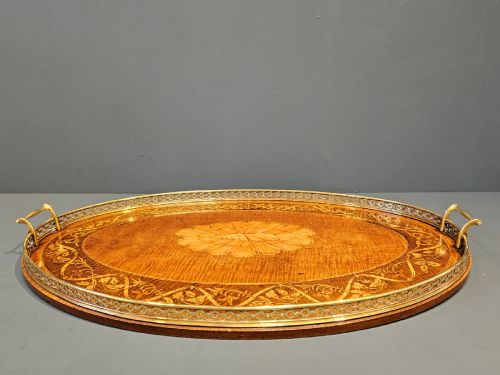
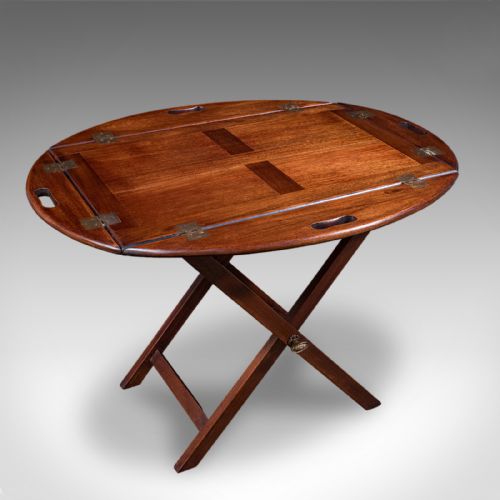
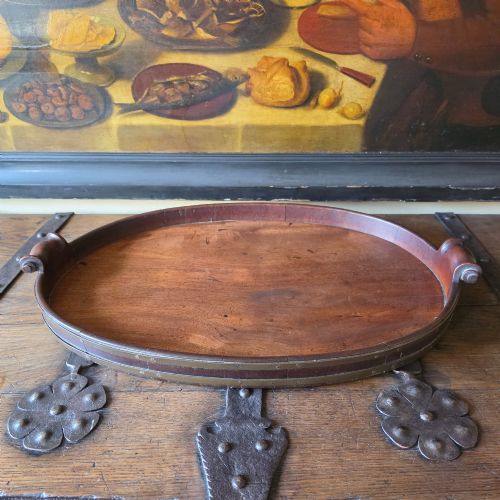
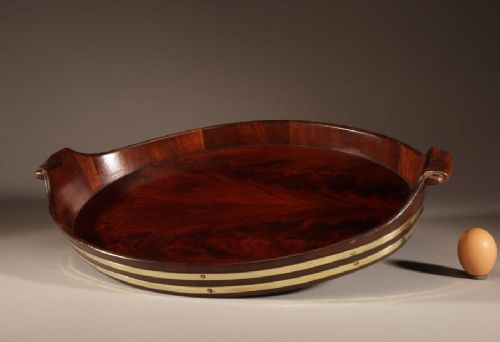
The pieces on this page encompass various formats including standalone serving trays, galleried tea trays, coopered vessels, and complete butler trays mounted on folding stands or occasional tables. Mahogany forms the backbone of these selections, alongside oak, satinwood, walnut, and exotic veneers such as macassar.
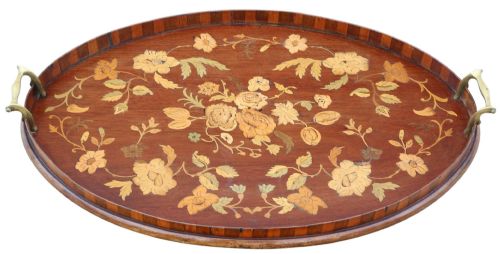
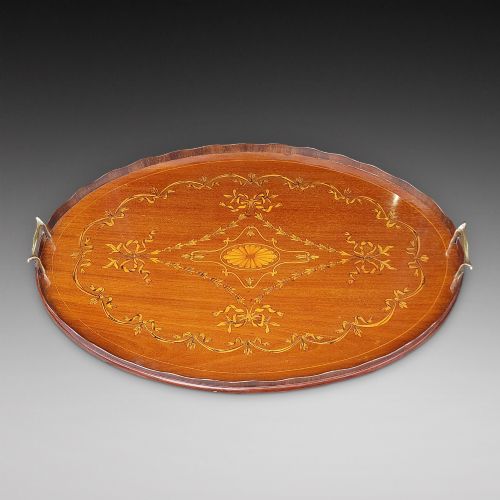
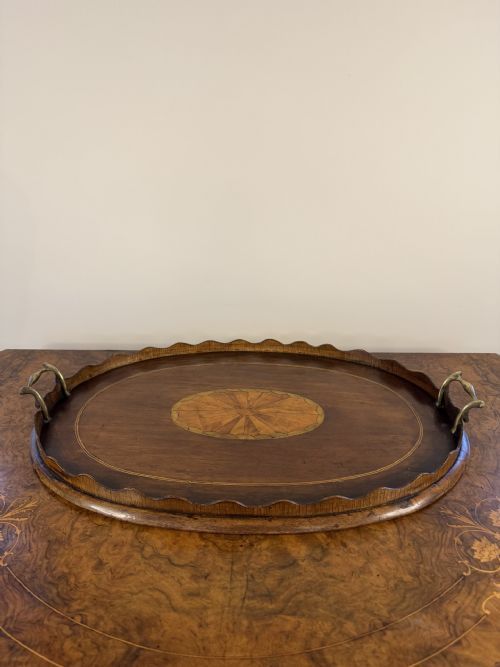
Origins stretch from Georgian and George III periods through the Regency era, Victorian decades, Edwardian times, and into twentieth-century Art Deco expressions. Buyers are most likely to meet mahogany variants featuring brass handles or delicate marquetry inlay from the nineteenth and early twentieth centuries.
Materials and construction methods
Cabinetmakers utilised solid timbers like mahogany, oak, and walnut for structural integrity, often pairing them with contrasting decorative woods such as satinwood for intricate marquetry and line inlay. Oyster veneering and specialised wood veneers added rich surface patterns to the baseboards and borders of these serving pieces.
Metal elements played a crucial structural and aesthetic role, with cast brass used for galleries, carrying handles, and sturdy rims. Coopered construction techniques appeared in select vessels, binding wooden staves together with metal bands for liquid containment.
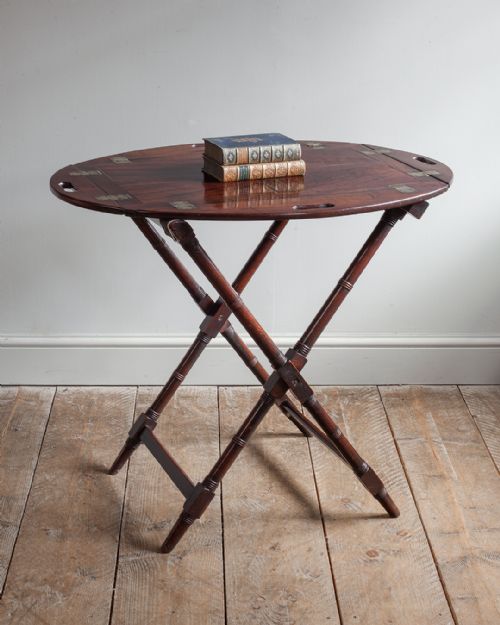
Raised edges, known as galleries, were either pierced directly from the timber or constructed as separate fretted and pierced rails attached to the tray base. Folding stands for butler trays utilised hinged wooden frames designed to collapse flat when not in use.
Materials recorded across these pieces include mahogany, oak, walnut, satinwood, brass, wood veneer, and marquetry inlay.
Factors determining the grade of a piece
The sophistication of the timber selection and inlay work separates standard examples from exceptional ones. Sharp, precise marquetry using contrasting timbers like satinwood denotes a higher level of workshop skill than plain veneer.
The retention of original brass hardware, such as shaped carrying handles and intact galleries, elevates the integrity of a tray. Construction details, including the snugness of dovetail joints in the gallery corners and the stability of coopered staves, reflect the original maker's standard.
Proportion and decorative restraint dictate visual success, where subtle line inlay and well-figured mahogany grain outweigh excessive ornamentation. Pieces that retain their original folding stands or display miniature proportions demonstrate greater collector interest.
The Oval Wooden Serving Tray Glossary
- Gallery
- A raised wooden or metal rim around the edge of a tray designed to prevent items from sliding off. These can be solid, pierced, or pierced with hand-grips.
- Marquetry
- Decorative veneer work where pieces of various woods are assembled into pictorial or geometric patterns on the tray surface. This technique requires precise cutting and fitting of contrasting timbers.
- Coopered
- Constructed from curved wooden staves joined side by side, traditionally utilising metal bands around the circumference. This method derives from barrel-making techniques applied to serving vessels.
- Butler tray
- A portable wooden tray with hinged or drop sides designed to lift off a folding X-frame stand. They were traditionally used by household staff to serve refreshments.
- Oyster veneering
- Cutting branches or small timber trunks across the grain to produce circular or oval wooden motifs resembling oyster shells. This decorative surface creates distinctive repeating patterns across the tray base.
Oval Wooden Serving Tray: Frequently Asked Questions
What is the difference between a tea tray and a butler tray?
Tea trays are typically designed with integrated handles or low galleries for carrying porcelain and silverware between rooms. They remain self-contained items meant for hand transport.
Butler trays feature hinged drop-flaps and are engineered to sit upon a separate folding wooden stand. This creates a temporary side table configuration used during hosting.
How do I care for an antique wooden tray?
Keep wooden serving pieces away from direct heat sources and strong sunlight to prevent the timber veneers from drying out and cracking. Maintain the finish by applying a light coat of appropriate furniture wax periodically.
Avoid submerging wooden trays in water or using harsh chemical cleaners. Wipe surfaces clean with a dry or barely damp soft cloth.
Are these trays suitable for daily use?
Many sturdy mahogany and oak trays retain sufficient structural integrity for serving drinks or displaying objects in a modern home. Heavier items or frequent moisture exposure require careful handling to preserve antique finishes.
Delicate marquetry or highly veneered satinwood pieces benefit from gentle treatment and protective placement. Using coasters helps safeguard historic polished surfaces from ring marks.
How can I tell an 18th-century tray from a later revival piece?
Eighteenth-century trays often display hand-carved solid mahogany construction with simpler, heavier proportions and natural timber ageing. The underside tooling marks and hand-cut dovetailing reflect period hand-tool usage.
Revival pieces from the Edwardian era frequently incorporate machine-cut elements, standardised brass fittings, and exceptionally bright satinwood inlay. Makers during the revival periods often reproduced Georgian aesthetic conventions with lighter core structures.