







Scalloped Edge Tea Tray
A scalloped edge tea tray brings refined curves to a room, offering a tactile surface shaped by Victorian, Georgian, and Edwardian hands.
Scalloped Edge Tea Tray
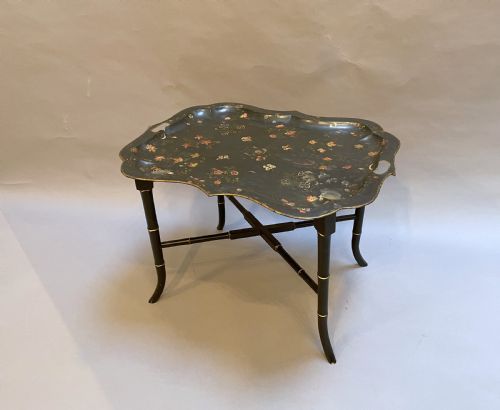
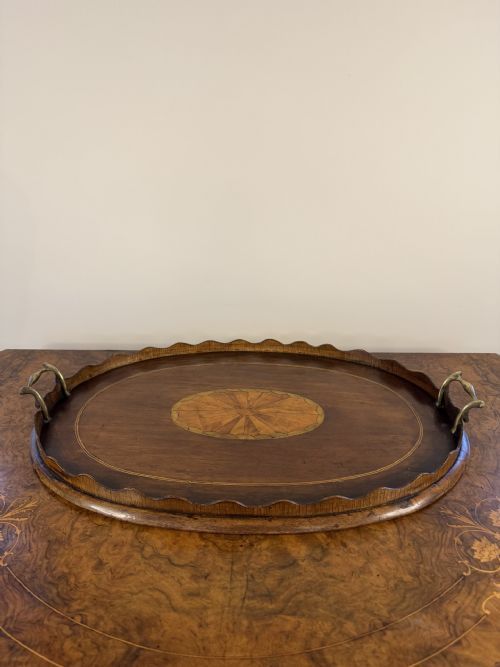
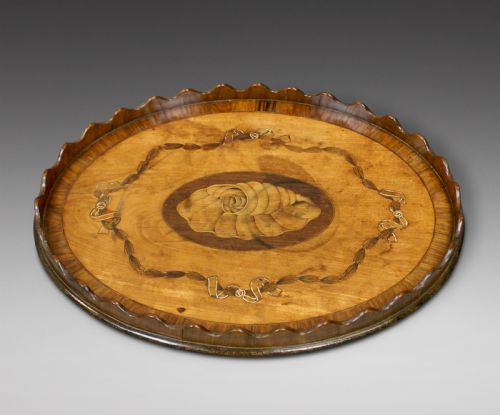
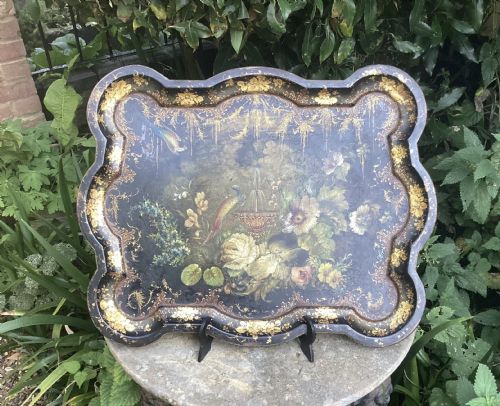
A scalloped edge tea tray takes several forms across the inventory, ranging from classic mahogany serving trays to occasional tables and gallery pieces. These items serve both practical and decorative roles in a home, often featuring distinct curved borders that define their silhouette.
Buyers most frequently encounter mahogany examples alongside walnut, silver plate, and toleware variations. Pieces span multiple periods including the Georgian era, the Victorian epoch, and the Edwardian years.
Origins stretch from British workshops to Kashmiri and Venetian hands, reflecting diverse regional interpretations of the form. Oval and rectangular shapes dominate the selection, sometimes elevated on table bases.
How they were made
Timbers such as mahogany, walnut, and satinwood provide the structural foundation for wooden trays, frequently enhanced by intricate wood veneer and inlay work. Craftsmen shape the edges into gentle scallops using hand tools suited to each material.
Metal versions combine silver plate and brass, while toleware pieces employ painted sheet metal finished with gilt embellishments. These varied techniques reflect the specific demands of the workshop and the era.
Miniature trays offer a charming nod to full-sized serving pieces, designed perhaps for dollhouses or apprentice displays.
What varies in quality
The sophistication of the timber selection and the precision of the inlay work largely determine the standing of a piece. Finer examples display harmonious grain patterns and carefully executed scalloping that retains its crispness along the edge.
The integrity of the surface finish, whether polished wood, painted toleware, or silver plate, distinguishes more ambitious workshop production from simpler utilitarian items.
Walker & Hall
The Scalloped Edge Tea Tray Glossary
- Toleware
- Painted or lacquered metalware, typically tin or steel, popular for decorative trays and household items in the Regency and Victorian periods.
- Gallery tray
- A tray featuring a raised railing or border around its perimeter, designed to keep contents secure during transport.
- Oyster veneer
- Cross-cut sections of branches or small tree trunks arranged to create repeating circular patterns across a wooden surface.
- Inlay
- The technique of inserting contrasting materials into a depression in the wood base to form decorative patterns.
Scalloped Edge Tea Tray: Frequently Asked Questions
What is a scalloped edge tea tray?
A scalloped edge tea tray is a serving piece or display item featuring a wavy, curved perimeter. These trays appear in wood, metal, and painted finishes across multiple historic periods.
Craftsmen shaped these borders by hand to add decorative movement to an otherwise utilitarian object, making them suitable for both display and service.
How were these trays used historically?
Historically, servants used these trays to carry tea services, glassware, and small items between rooms. They functioned as portable surfaces for entertaining guests.
Over time, many of these trays transitioned into decorative items or were mounted onto table bases to serve as occasional furniture.
How do I care for antique wooden trays?
Antique wooden trays require gentle cleaning with a soft cloth to preserve the polished surface and any delicate veneer. Avoid excessive moisture and harsh chemical polishes.
Keeping wooden items away from direct heat sources prevents the timber and inlay from drying out or warping.
How can I tell a Georgian tray from a Victorian one?
Georgian trays often showcase restrained elegance with classical mahogany construction and subtle proportions. Victorian examples tend to embrace varied materials, including elaborate inlay, toleware, and silver plate.
Examining the underlying timber preparation and the style of decoration helps clarify the period of manufacture.