
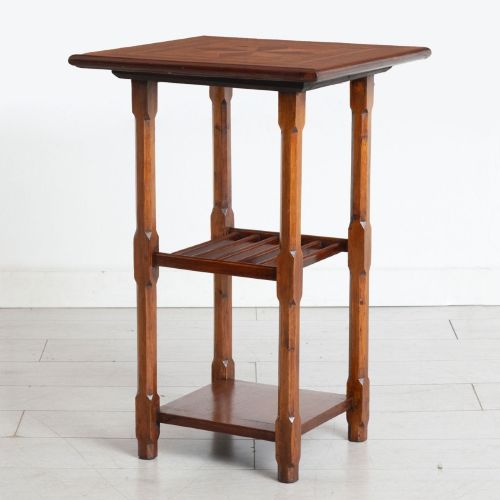
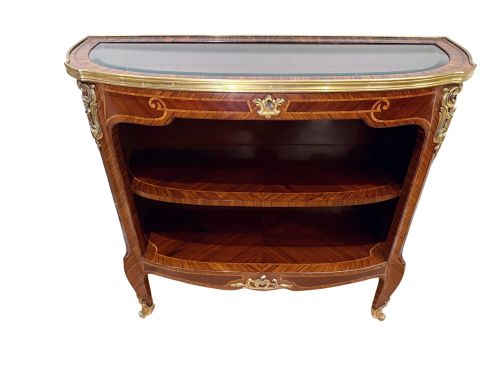
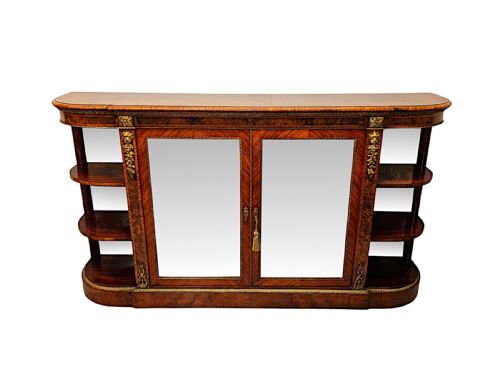
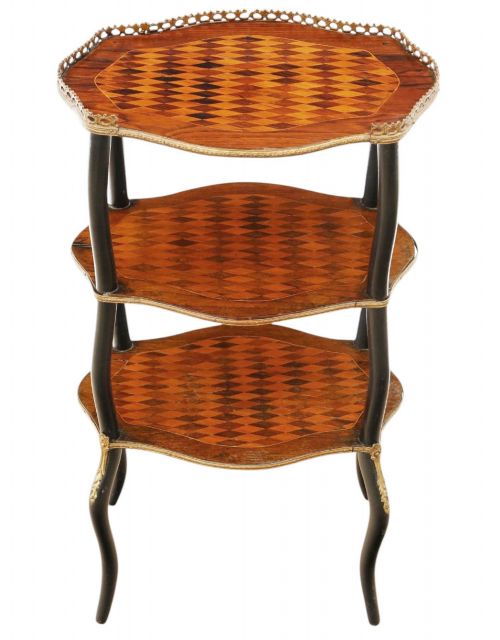


Marquetry Display Shelf
A marquetry display shelf is a decorative piece for staging objects, combining inlaid wood with practical tiers.
Marquetry Display Shelf
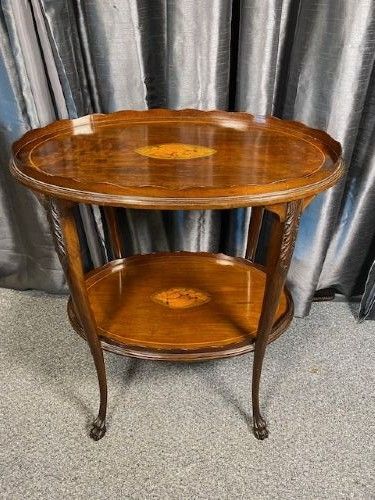
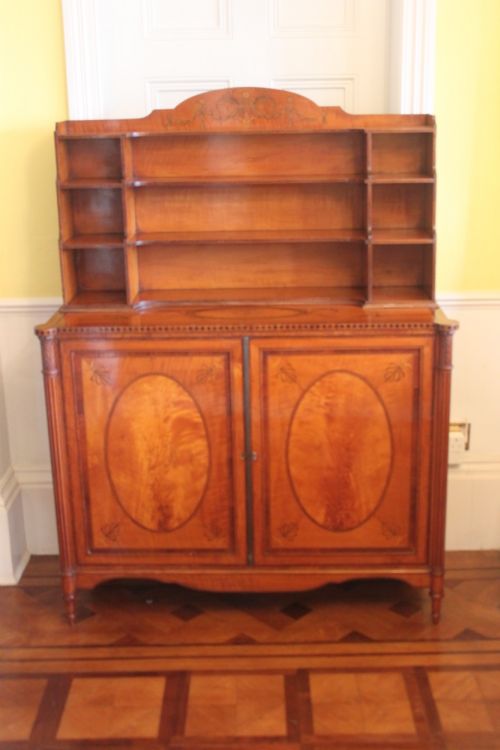
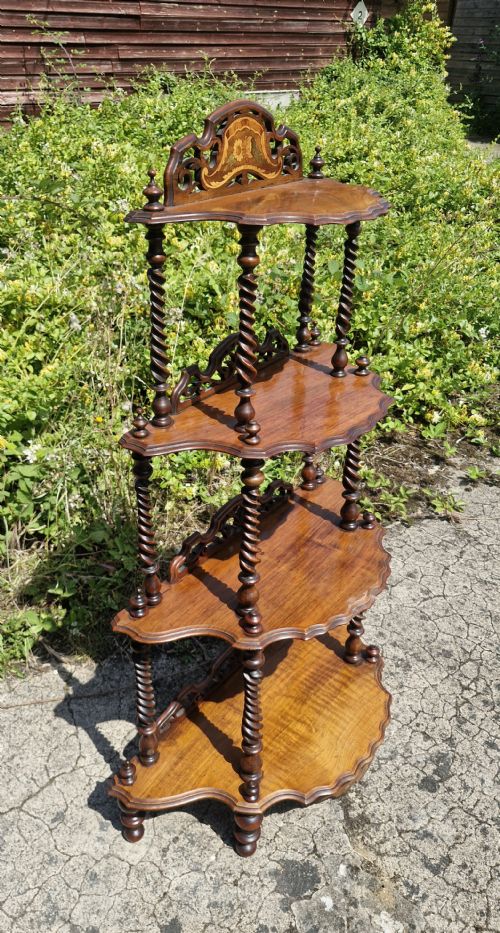
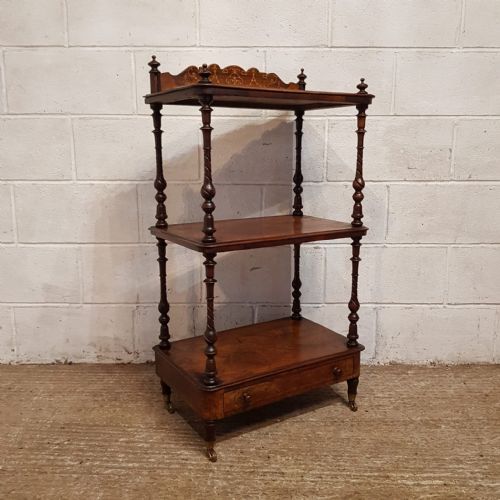
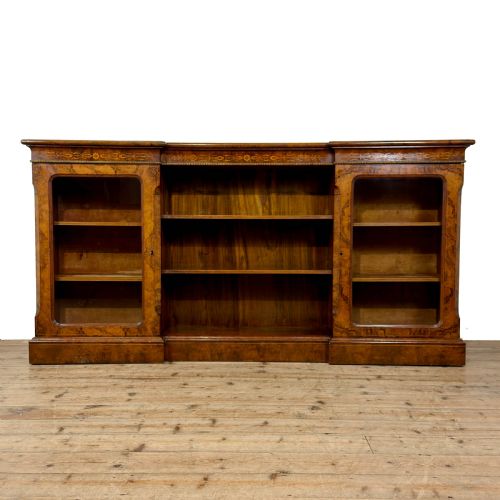
A marquetry display shelf brings together multitiered storage and patterned wood surfaces designed to hold ornaments and books. The pieces encountered here span the Victorian and Edwardian eras, appearing in forms such as etageres, whatnots, corner stands, and wall shelves.
Makers utilised woods like walnut, burr walnut, rosewood, and mahogany as foundations for intricate inlay work. These open and glazed tier structures served domestic interiors as focal points for porcelain, silver, and collection items.
Materials and construction methods
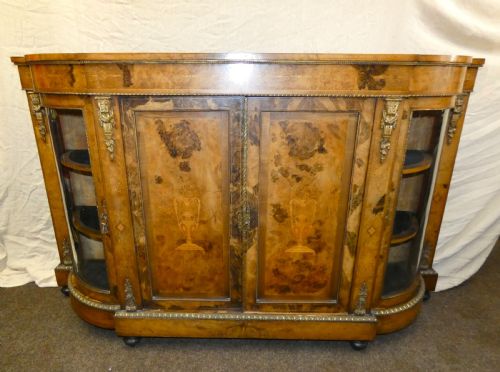
Cabinetmakers built these tiers using walnut, mahogany, and rosewood veneers laid over sturdy secondary timbers. Marquetry and parquetry patterns were hand-cut and fitted into the surface to create floral or geometric pictures.
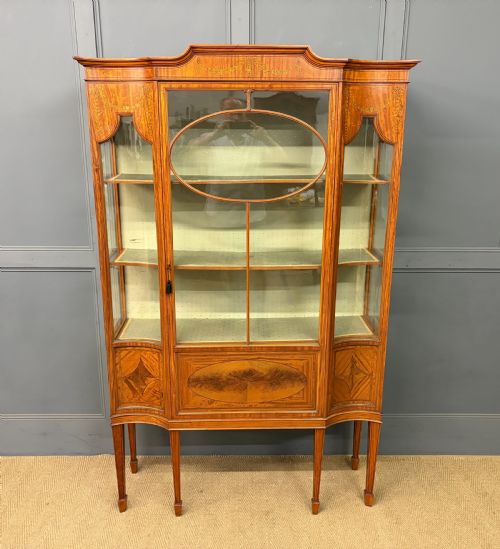
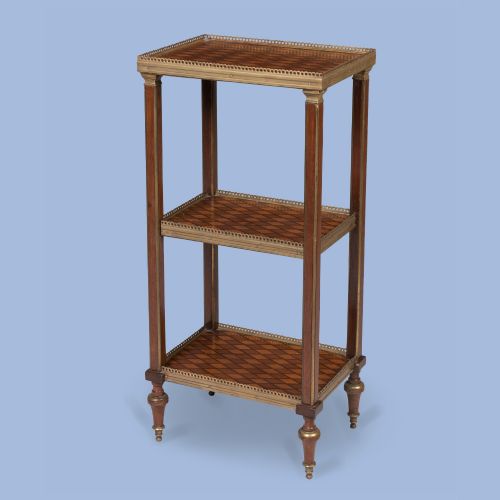
Mounts in cast brass and ormolu often border the shelves, doors, and legs, reflecting French revival influences. Glass panels feature in cabinet and bookcase variants, secured with traditional glazing bars.
Olive wood from Sorrento made a long journey just to hold Victorian trinkets.
Judging execution and design
Quality rests upon the crispness of the wood inlay and the selection of figured timbers like burr walnut and satinwood. Finer examples show precise alignment in the marquetry work and substantial mounts.
The architectural balance of the tiers, the choice of secondary woods, and the refinement of the turned supports separate standard production items from master cabinetmaker output.
Gillows·Maple & Co·Shapland & Petter
The Marquetry Display Shelf Glossary
- Marquetry
- Decorative veneer work assembled in pieces to form pictorial or geometric designs on furniture surfaces. It requires skilled cutting of contrasting wood species.
- Etagere
- A piece of furniture consisting of open shelves for displaying small objects or ornaments. These usually have three or four tiers supported by slender columns.
- Ormolu
- Gilded bronze mounts applied to furniture for decorative accent. This technique was popular in French revival pieces.
- Parquetry
- Geometric mosaic woodwork used for floors and cabinet surfaces. It relies on symmetrical patterns formed from small wooden blocks.
- Burr walnut
- Wood taken from the abnormal growth of a walnut tree, yielding swirling grain patterns. Cabinetmakers prize it for high-status veneering.
Marquetry Display Shelf: Frequently Asked Questions
What is a whatnot shelf?
A whatnot is an open shelving unit with multiple tiers designed for holding ornaments and small decorative objects.
These pieces typically stand in corners or against walls, utilising vertical space efficiently in Victorian drawing rooms.
How do I date an etagere?
Dating relies on timber choices, revival styles, and construction techniques evident in the framework.
Victorian and Edwardian pieces often mix walnut or rosewood with brass mounts and specific inlay motifs characteristic of those decades.
Where should I place a corner shelf?
Corner shelves fit neatly into unused room angles while providing practical display space for porcelain and books.
They work well in studies and reception rooms to break up flat wall expanses without blocking light.
What is the difference between marquetry and parquetry?
Marquetry involves pictorial veneer patterns such as flowers, scrolls, and figures arranged on the surface.
Parquetry uses geometric grids, squares, and diagonal shapes to create repeating abstract patterns.