


Marquetry Desk with Drawers
These marquetry desk with drawers pieces combine meticulous wood inlay with functional storage, offering a sophisticated centrepiece for a study.
Marquetry Desk with Drawers
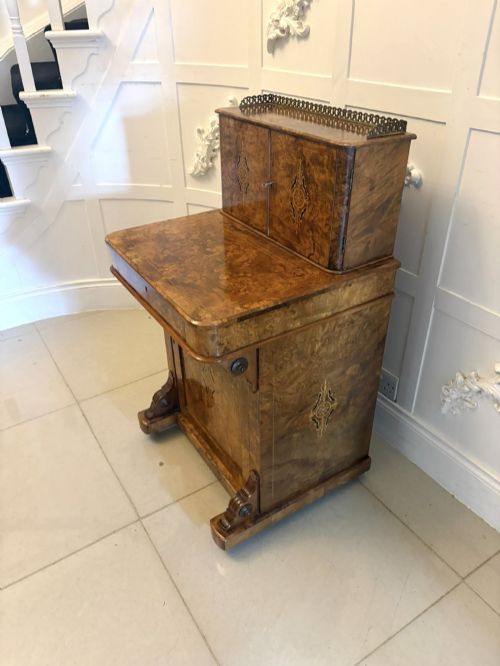
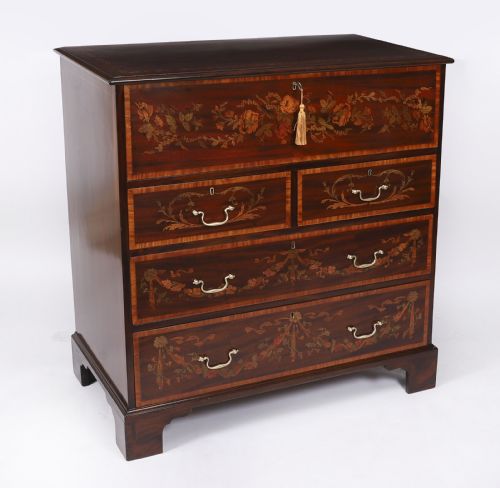
A marquetry desk with drawers brings together decorative surface patterns and practical compartments, appearing across periods from the seventeenth century through to the Edwardian era. You find bureaux, writing tables, and davenports that utilise this elaborate form of wood inlay.
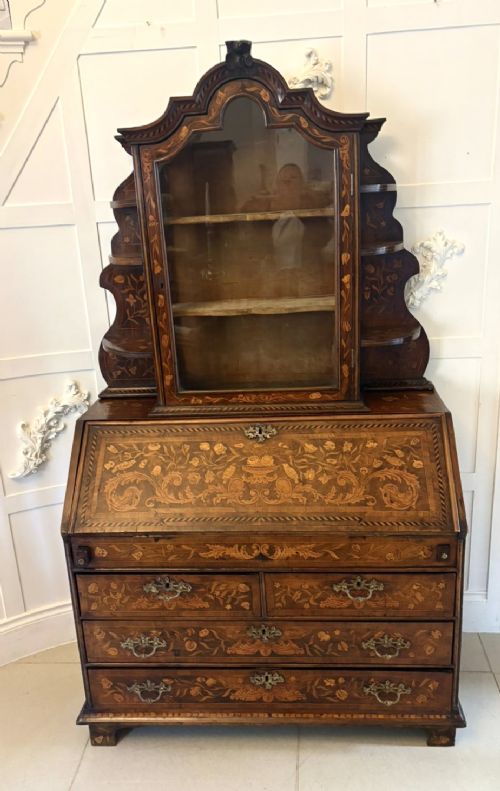
The nineteenth century provides many examples in walnut, mahogany, and rosewood, alongside continental pieces originating from the eighteenth century. Bureau bookcases and writing bureaux dominate the selection, offering multiple drawers alongside fitted writing compartments.
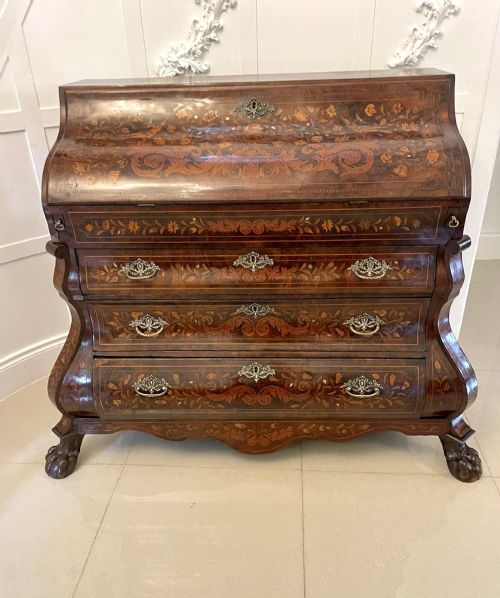
Maltese, Dutch, and Italian origins appear among the regional variations, often displaying floral or geometric inlay across the fall fronts and drawer faces. Victorian iterations frequently pair burr walnut or rosewood with intricate marquetry motifs.
How they were made
Cabinetmakers construct these pieces using primary timbers such as mahogany, walnut, and rosewood, often applying lighter veneers like satinwood and fruitwood for the contrasting inlay. Brass mounts, leather writing surfaces, and ormolu details complete the construction of the finer examples.
Marquetry involves cutting delicate pieces of different coloured woods to form pictorial or floral patterns, which are then pressed into the carcase timber. Drawers are dovetailed by hand and fitted precisely within the frame to ensure smooth operation.
Materials span mahogany, walnut, burr walnut, rosewood, satinwood, fruitwood, brass, and leather.
What varies in quality
The precision and complexity of the wood inlay determine much of the distinction, where tight joints and varied tones separate meticulous execution from simpler work. The choice of underlying timber, such as burr walnut or figured mahogany, also shifts the visual depth.
Superior hardware, including chased ormolu mounts and fitted interior drawers with fine secondary woods, marks out the more ambitious workshops. The integration of the writing surface with the surrounding marquetry shows the maker's overall control of proportion and finish.
Gillows of Lancaster
The Marquetry Desk with Drawers Glossary
- Marquetry
- Decorative veneer work forming pictures or patterns by assembling tiny pieces of various woods. This technique adorns the surfaces and drawer fronts of many desks.
- Bureaux
- Sloping-front writing desks that enclose fitted drawers and pigeonholes. They lift open to provide a flat writing area.
- Davenport
- A compact pedestal desk featuring a sloping top and drawers opening to the side. Victorian makers produced these in numbers using rosewood and walnut.
- Ormolu
- Gilded bronze mounts applied to furniture for decoration. French and continental pieces frequently incorporate these metal accents.
- Secrétaire abattant
- A tall wall-mounted or upright desk with a drop-front writing flap. It conceals internal compartments and drawers.
Marquetry Desk with Drawers: Frequently Asked Questions
How do I clean a marquetry surface?
Dust the surface regularly with a soft, dry cloth to prevent dirt from settling into the fine veneer joints. Avoid using harsh chemical sprays or excess water, which can lift the delicate wood pieces.
Apply a microcrystalline wax periodically to nourish the timber and protect the finish. Buff gently with a clean cloth to maintain a natural lustre without building up heavy residue.
Where should I place my desk?
Position the piece away from direct sunlight to prevent the coloured wood veneers from fading and the timber from drying out. Stable room humidity protects the intricate marquetry from lifting.
Keep the desk away from direct heat sources such as radiators or fireplaces. Sudden temperature shifts cause the underlying wood carcase to expand and contract, straining the veneer.
How do I identify a Victorian piece?
Victorian examples frequently utilise burr walnut or rosewood, often paired with rich marquetry floral patterns. Look at the secondary timbers inside the drawers, as pine or oak frequently indicate this period.
The construction methods display mechanized precision alongside hand-finishing. Brass hardware and leather inserts on writing surfaces also point toward nineteenth-century manufacturing standards.