



Inlaid Mahogany Vanity Table
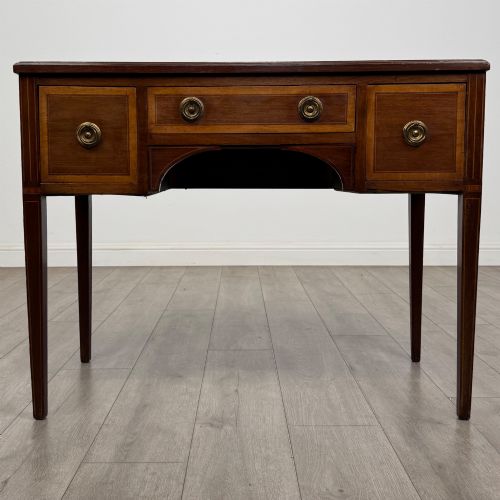
An inlaid mahogany vanity table brings subtle timber figure and fine contrast banding into a bedroom or dressing space.
Inlaid Mahogany Vanity Table
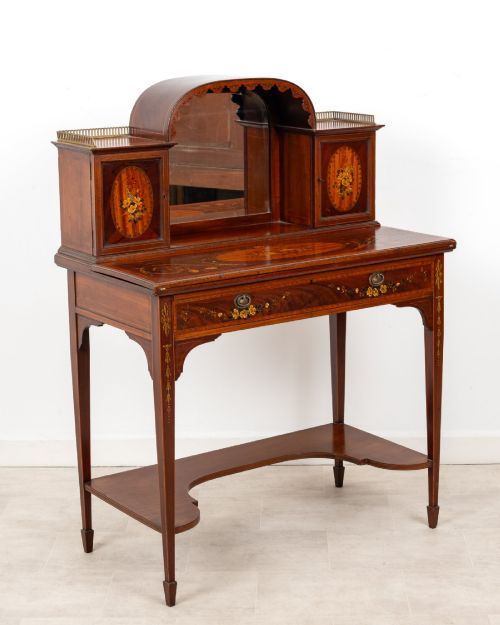
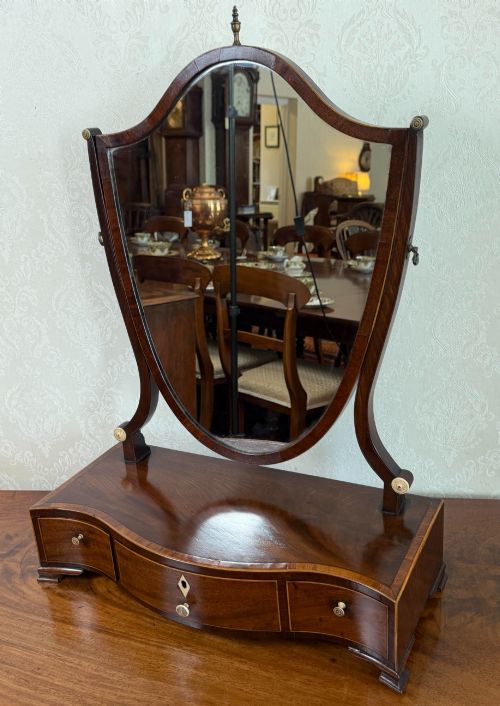
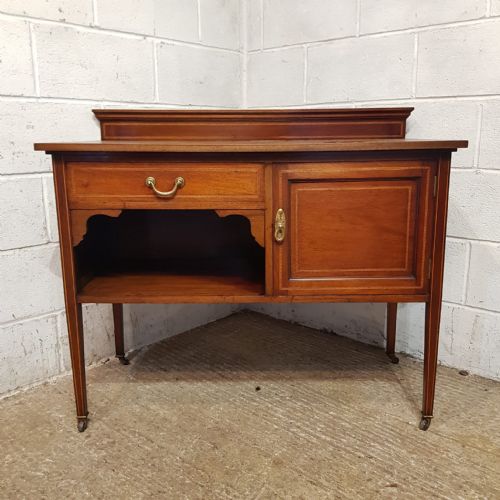
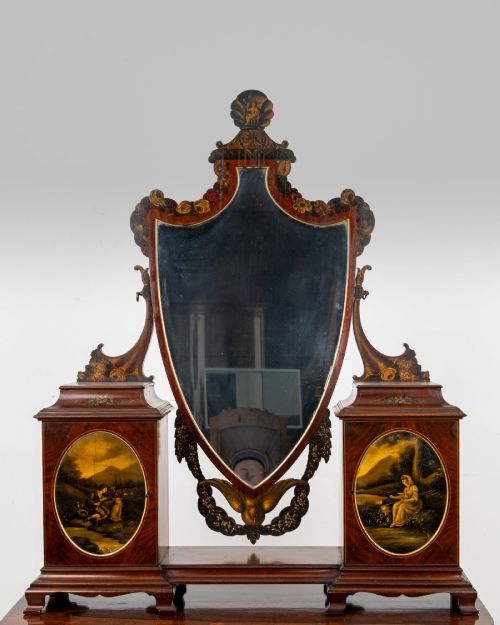
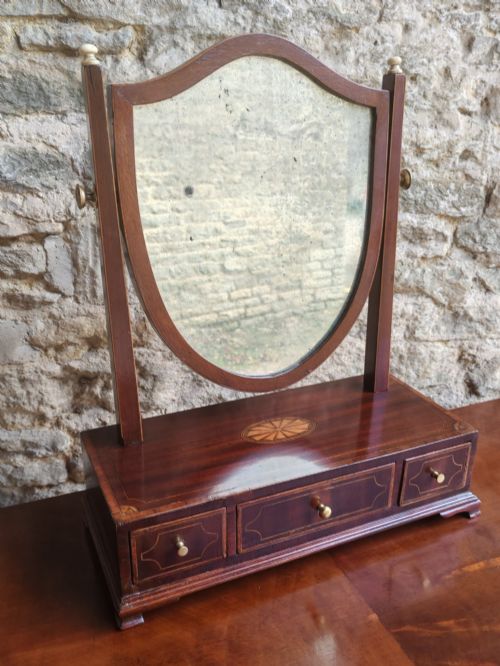
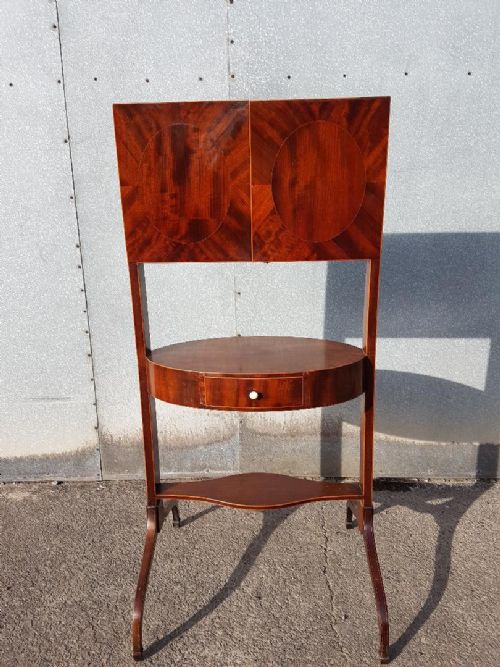
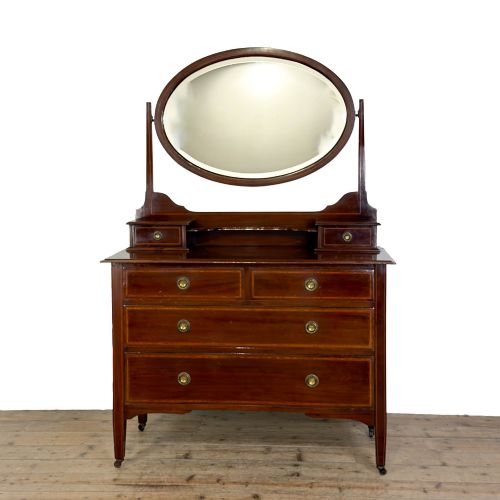
An inlaid mahogany vanity table encompasses dressing tables, dressing mirrors, and washstands originating across the Georgian, Victorian, and Edwardian eras. The most frequent versions met here are Edwardian dressing tables and compact George III or 19th Century toilet mirrors.
Makers and cabinetmakers adapted these forms into kidney desks, lowboys, and washstands, often incorporating satinwood or boxwood inlay. The selection balances larger case pieces with tabletop swing mirrors designed for chest placement.
Surviving examples bridge practical daily grooming functions and decorative cabinetwork, showing how rooms for personal preparation evolved from the eighteenth century onward.
What varies in quality
The refinement of the timber figure and the precision of the boxwood or satinwood inlay set the upper tier apart from simpler utilitarian pieces. Crispness in the carving of mirror horns and the symmetry of marquetry panels indicate superior cabinet workshop output.
Structural integrity relies on the tightness of drawer dovetails and the original state of the glass and brass fittings. Finer pieces demonstrate careful proportion in their legs, supports, and secondary timbers.
Listings span multiple centuries, uniting 18th Century mahogany toilet mirrors with Edwardian satinwood-inlaid washstands and desks.
Edwards & Roberts
The Inlaid Mahogany Vanity Table Glossary
- Inlay
- A technique where contrasting woods such as satinwood or boxwood are inserted into cavities carved into the mahogany surface to form patterns or border lines.
- Swing mirror
- A tabletop or cheval glass mounted on vertical pivots between two upright posts, allowing the user to tilt the reflecting surface.
- Lowboy
- A small low dressing or side table featuring drawers, commonly raised on cabriole or straight legs and dating to the Georgian period.
- Marquetry
- Elaborate decorative veneer work assembled from various tinted woods to create pictorial designs across tabletops and drawer fronts.
- Bonheur du jour
- A light lady's writing desk featuring a small tiered superstructure of drawers and pigeonholes above the main writing surface.
Inlaid Mahogany Vanity Table: Frequently Asked Questions
What is a toilet mirror?
A toilet mirror is a small, portable dressing glass mounted on a wooden frame or miniature chest of drawers. These pieces sat atop larger furniture surfaces to assist with personal grooming in eighteenth and nineteenth-century chambers.
They often incorporate small trinket drawers within their base plinths and showcase fine mahogany framing with brass adjustments.
How do I date an Edwardian piece?
Edwardian examples typically date from the turn of the twentieth century up to the First World War. They frequently combine mahogany with satinwood inlay and draw on Sheraton revival design motifs.
Construction methods during this period often feature machine-sawn secondary timbers alongside hand-finished decorative elements.
Where were washstands placed?
Washstands were designed for bedrooms and dressing rooms to hold basins, ewers, and washing paraphernalia before plumbed bathrooms became standard. Many surviving examples feature low gallery rails to protect walls from splashes.
They often double as compact side tables in modern interiors while retaining their original timber characteristics.
What is Dutch marquetry?
Dutch marquetry involves dense, pictorial floral and urn ornamentation executed in contrasting light and dark veneers. This style frequently appears on nineteenth-century adaptations of earlier forms.
The elaborate floral motifs cover entire drawer fronts and tabletops to create a highly decorative surface effect.