

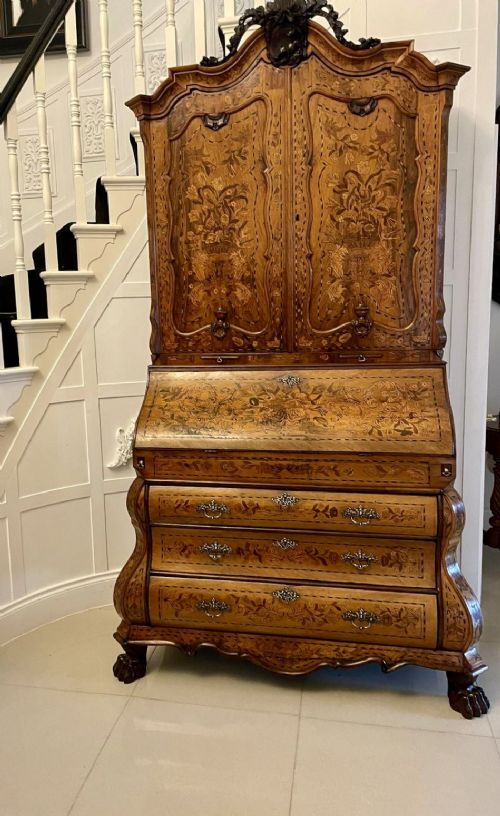

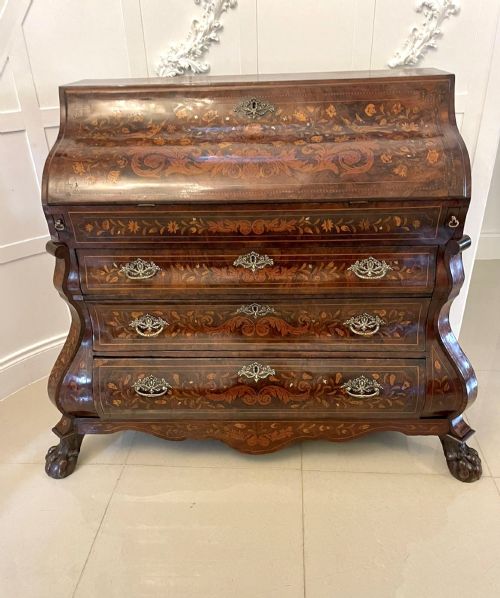
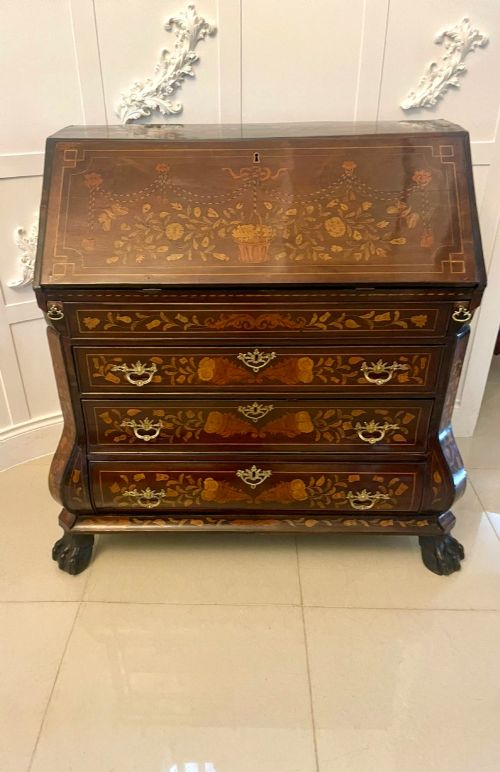

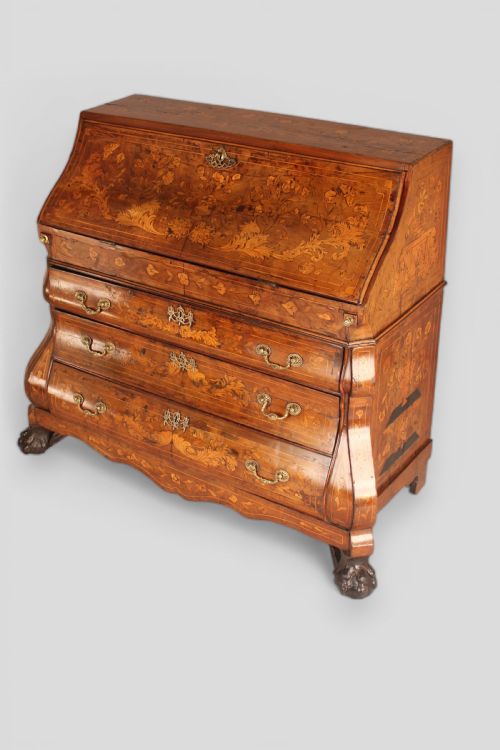


Marquetry Bombe Chest Desk
A marquetry bombe chest desk brings together curved swelling walnut and intricate floral marquetry, offering the definitive statement piece for a period interior.
Marquetry Bombe Chest Desk
A marquetry bombe chest desk combines a sloping writing flap with a swollen, curved lower chest and elaborate inlaid decoration. These practical yet decorative writing houses appear primarily in forms such as bureau bookcases, cylinder bureaux, and writing desks.
The pieces on this page span several key periods, notably the eighteenth century and the Georgian era, alongside later interpretations from the nineteenth century and the nineteen twenties. Buyers most frequently encounter Dutch Baroque and Dutch Rococo stylistic influences across these examples.
Makers shaped these desks using substantial timbers, creating robust forms that served as central functional furniture in historical homes. Their enduring appeal lies in the combination of deep storage capacity and intricate surface ornamentation.
How they were made
Makers shaped the distinctive curved bombe fronts through complex joinery and timber bending techniques. Brass hardware, including handles and escutcheons, was then fitted to complement the dark woods and light floral inlays.
Marquetry Bombe Chest Desk Retail Price Guide 2026
Typical asking prices for marquetry bombe chest desk among the pieces listed under this phrase on Sellingantiques today, from the lower quarter to the upper quarter. They describe what is for sale here now, not the wider market.
The inventory spans the eighteenth century, the Georgian era, the nineteenth century, and the year nineteen twenty.
What varies in quality
The sophistication of the floral marquetry dictates much of the distinction between standard and superior examples. Finer pieces display dense, multi-toned fruitwood inlays with sharp botanical detail across the curved drawer fronts and fall fronts.
Timber selection marks the primary tier of craftsmanship, with burr walnut and rich figured grain commanding greater visual depth than plainer woods. The harmony of the swelling bombe proportions further separates proficient cabinet work from simpler builds.
The Marquetry Bombe Chest Desk Glossary
- Marquetry
- The art of forming decorative patterns by fitting together small pieces of veneer. Craftsmen use various woods to create floral and pictorial designs across the surface.
- Bombe
- A swelling, outward-curved contour found on the sides and fronts of furniture. This curved profile requires skilled shaping of the underlying timber framework.
- Bureau
- A sloping desk designed for writing, typically featuring storage compartments and drawers beneath. The hinged flap folds down to provide a writing surface.
- Bureau bookcase
- A combination furniture form featuring a writing desk base beneath an upper shelved cabinet. These tall pieces offer extensive storage for books and documents.
- Burr walnut
- Timber taken from a tree growth deformity, producing swirling and highly figured grain patterns. Cabinet makers prize this wood for its decorative veneer qualities.
Marquetry Bombe Chest Desk: Frequently Asked Questions
What is a bombe bureau?
A bombe bureau is a writing desk featuring a characteristic convex, swelling front and sides. These pieces combine practical workspace with dramatic curved silhouettes.
Originating in continental workshops, particularly in the Netherlands, they served as prestigious household items for writing and storage.
How do I date a marquetry desk?
Dating relies on examining the timber species, construction methods, and the style of the floral marquetry. Eighteenth-century examples typically feature hand-cut veneers and native European hardwoods.
Later nineteenth-century and twentieth-century revivals often show mechanical sawing marks and different secondary woods upon closer inspection.
Where were these desks placed?
These substantial desks usually stood in principal reception rooms, libraries, or private studies of grand homes. Their finished backs and ornate marquetry allowed them to command attention within a room rather than sit flush against a wall.
They functioned as private spaces for correspondence and financial management.
How do I care for burr walnut?
Burr walnut requires stable indoor humidity and protection from direct sunlight to prevent the delicate veneers from drying and cracking. Regular dusting with a soft, dry cloth preserves the polished surface.
Avoid placing these desks near heat sources or damp areas.